
Finding the best running shoe for flat feet depends on whether your feet “overpronate” (roll inward) or are simply “flat and neutral.”
For runners whose arches collapse, the Brooks Adrenaline GTS 24 and Asics Gel-Kayano 31 are the top stability picks, utilizing lateral “GuideRails” and “4D Guidance” systems to prevent injury. If you have flat feet but a stable gait, the Hoka Clifton 10 and Saucony Triumph 23 provide the high-volume cushioning needed to absorb shock across a larger surface area. For those seeking speed, the Asics Magic Speed 4 is the premier carbon-plated option that offers arch protection without the typical weight of a stability shoe.
First, figure out what kind of flat feet you have. If you have weak arches, you can strengthen them with arch support. You may only need a little arch support if your feet are flat.
About 25% of people have flat feet. If you’re one of them, look for shoes that support your running form and feel comfortable.
Best Running Shoes for Flat Feet
1
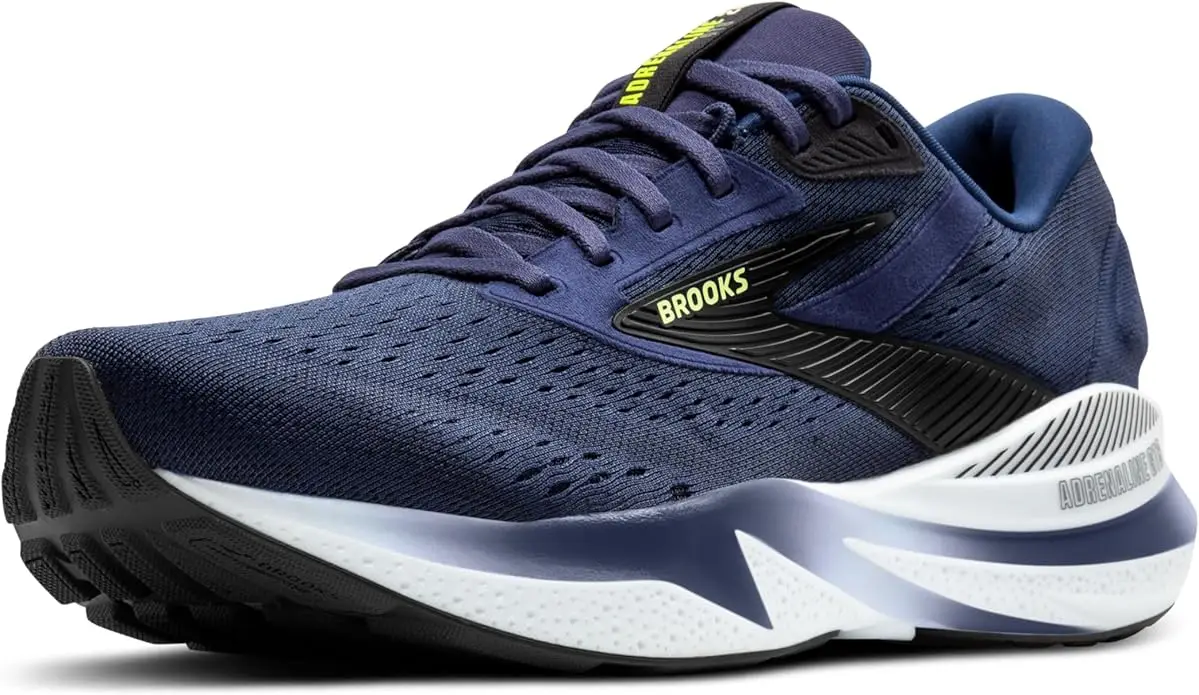
Best Overall – Brooks Adrenaline GTS 24
Weight: Men: 10 oz / 283g | Women: 8 oz / 227g
Drop: 12mm (27 mm forefoot, 39 mm heel)
Sizing: True to Size
Pros
Cons
Overview
The Brooks Adrenaline GTS 24 continues its legacy as the go-to “safety” shoe for runners who need extra stability. The core of this shoe is the GuideRails technology, which acts like a support system for your entire leg by preventing excessive inward foot rolling (overpronation). In this latest version, Brooks has upgraded the cushioning to DNA Loft v3, a nitrogen-infused foam that makes the ride feel more modern, energetic, and slightly lighter than previous models, though it still maintains a firmer, more controlled feel compared to the plush Glycerin.
The shoe is designed with a high “drop,” meaning the heel sits significantly higher than the toe. This setup is a major advantage for heel strikers and those with Achilles issues, as it reduces strain on the lower leg, but it may feel a bit steep for those used to flatter shoes. The build quality remains top-tier, featuring a very durable rubber outsole that provides excellent grip and longevity, along with a redesigned mesh upper that offers better breathability and a secure, “locked-in” fit.
Ultimately, the Adrenaline GTS 24 is a dependable workhorse that prioritizes joint protection over raw speed. While it lacks the extreme bounce of a racing shoe and can feel a bit stiff for some, it excels as a daily trainer for runners who want a consistent, stable experience. It is a no-nonsense choice that focuses on keeping you injury-free during long walks or steady everyday runs.
2
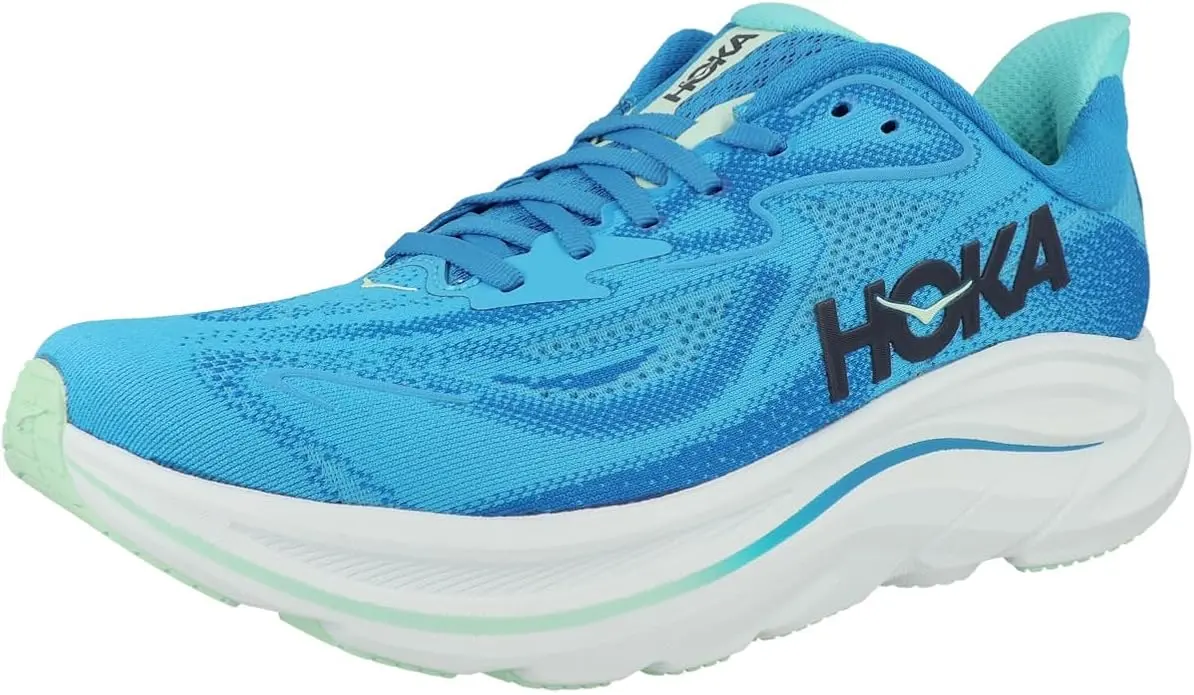
Hoka Clifton 10
Weight: Men: 9.8 oz / 277g | Women: 8 oz / 226g
Drop: 8 mm (34 mm forefoot, 42 mm heel)
Sizing: True to Size
Pros
Cons
Overview
The Hoka Clifton 10 marks a major shift for this iconic line, transforming from a standard daily trainer into a “maximalist” powerhouse. Hoka has significantly increased the stack height to its highest levels yet—exceeding 40mm in the heel—which provides massive shock absorption and joint protection. This update moves the Clifton closer to the feel of Hoka’s most cushioned shoe, the Bondi, making it a “cushion-loaded beast” designed for effortless, impact-free miles.
Under the hood, the shoe has undergone a full overhaul with a redesigned midsole geometry and a new jacquard knit upper. While the extra foam makes the ride incredibly plush, it also results in a noticeable weight gain compared to previous versions. Furthermore, Hoka has increased the “drop” (the height difference between the heel and toe), a change that strongly favors heel strikers by providing extra protection in the rear of the shoe.
Despite these physical changes, the Clifton 10 keeps the series’ signature “MetaRocker” design, which helps roll the foot forward for a smooth transition. While it may feel a bit “dull” or less energetic for fast sprints due to the use of traditional compression-molded foam, it remains a top-tier choice for easy runs, recovery days, and long walks. It is essentially a comfort-first “workhorse” that trades speed and ground feel for maximum protection and a smooth, cruising ride.
3
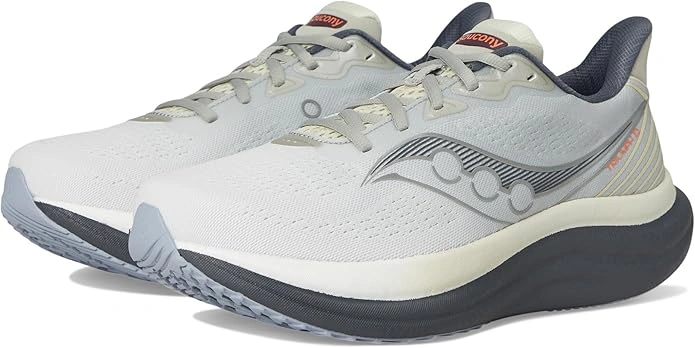
Best for Long Runs – Saucony Triumph 23
Weight: Men: 9.3 oz / 263g | Women: 8.4 oz / 239g
Drop: 10mm (27 mm forefoot, 37 mm heel)
Sizing: True to Size
Pros
Cons
Overview
The Saucony Triumph 23 is a high-end, “max-cushion” daily trainer designed for runners who want a plush, protective ride for long distances and recovery days. This version marks a significant return to form for the series, fixing the “clunky” feel of the previous model (the 22) by shedding a substantial amount of weight while making the cushioning feel even softer and more energetic.
The standout feature is the full-length PWRRUN PB midsole, which is the same high-performance foam Saucony uses in its elite racing shoes, but tuned here for daily comfort rather than raw speed. This provides a “cloud-like” landing that still offers a noticeable bounce, preventing the shoe from feeling too mushy or energy-draining. Because of its wide base and stable geometry, it is an excellent choice for heel strikers and larger runners who need extra impact protection.
The upper is built for luxury, featuring a thick, padded tongue and a soft mesh that holds the foot securely. However, some runners find the toe box a bit narrow or shallow, so those with wider feet may want to look into the wide-fit version. While the shoe is much more versatile than before—handling easy jogs and steady long runs with ease—it is still too bulky for high-speed workouts or sprints. Overall, it’s a premium “comfort cruiser” that prioritizes foot health and a smooth experience over breaking speed records.
4
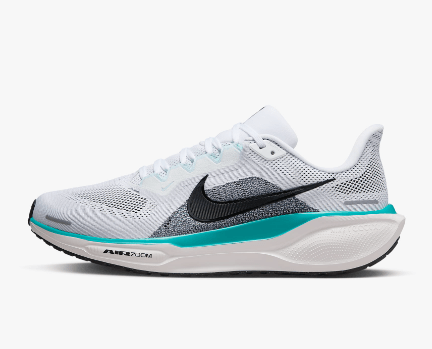
Best for Daily Runs – Nike Pegasus 41
Weight: Men: 10 oz / 283g | Women: 8.7 oz / 247g
Drop: 10mm (27 mm forefoot, 37 mm heel)
Sizing: True to Size
Pros
Cons
Overview
The Nike Pegasus 41 is the latest update to Nike’s most famous “workhorse” running shoe, and it brings some of the biggest changes the line has seen in years. This version moves away from the traditional, firmer React foam and introduces ReactX foam, which is softer, springier, and more eco-friendly. When paired with the signature Air Zoom units in the heel and forefoot, the shoe offers a noticeably more energetic and cushioned ride than the previous Pegasus 40, making it feel more modern and competitive with other top daily trainers.
The design also leans into the “maximalist” trend with a higher stack height, providing better impact protection, especially for heel strikers. The upper has been redesigned with a more breathable engineered mesh and a more secure midfoot lockdown system, though the fit remains classic Nike—snug and streamlined. Despite these upgrades, the Pegasus 41 maintains its reputation for extreme durability; the “Waffle” outsole is still a standout, offering reliable grip on everything from smooth pavement to light gravel paths.
The main trade-off for this added comfort is a slight increase in weight, which keeps it firmly in the “daily trainer” category rather than a lightweight speed shoe. While it has more “pop” than its predecessor, it still feels a bit firm in the forefoot for some runners and lacks the extreme bounce found in high-end racing shoes. Overall, it remains the ultimate “do-it-all” shoe—reliable enough for beginners and versatile enough for experienced runners who need one dependable shoe for almost any type of run.
5
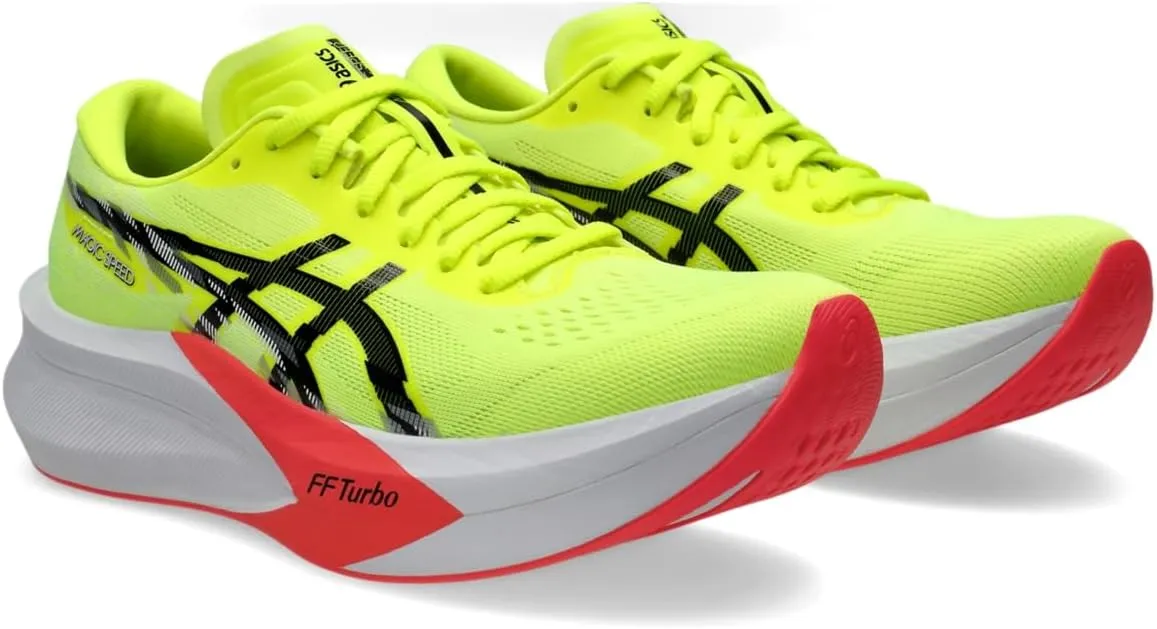
Best for Racing – Asics Magic Speed 4
Weight: Men: 8.5 oz / 242g | Women: 7.3 oz / 207g
Drop: 8 mm (35.5 mm forefoot, 43.5 mm heel)
Sizing: True to Size
Pros
Cons
Overview
The ASICS Magic Speed 4 is a significant overhaul of the series, shifting from a thin, firm tempo shoe to a “super trainer” that looks and feels much more like a high-end racer. It is designed for runners who want the speed of a carbon-plated shoe for workouts and races without the $250+ price tag of elite models like the Metaspeed.
The most dramatic change is the massive increase in cushioning. ASICS added nearly 10mm of foam to the heel, giving it a towering “maximalist” look that provides excellent impact protection, especially for long distances. The midsole now features a mix of standard FF Blast+ foam for durability and a “puck” of premium FF Turbo foam in the forefoot for extra spring. When combined with the full-length carbon plate and a sharp “rocker” shape, the shoe excels at pushing you forward and maintaining a fast turnover.
However, this extra foam makes the shoe taller and heavier than previous versions. While it is much more comfortable for long runs, it can feel a bit “wobbly” or unstable on sharp turns or uneven ground due to the high stack and narrow platform. The ride is still on the firmer side, which makes it feel “snappy” when you run fast but can feel a bit clunky or “slappy” during slow recovery jogs. The fit is narrow and race-like, though the toe box has a bit more room than the previous version. Overall, it’s a high-value speed partner that is best used for tempo runs, intervals, and races up to a marathon.
6
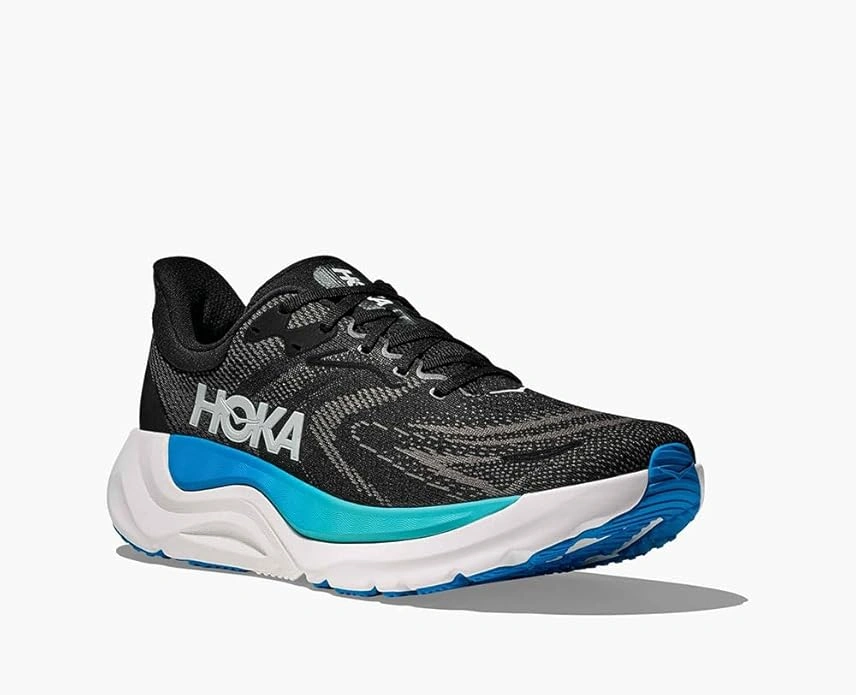
Lightweight Support – Hoka Arahi 8
Weight: Men’s 9.9 oz | Women’s 8.1 oz
Drop: 5mm
Sizing: True to Size
Pros
Cons
Overview
The Hoka Arahi 8 is a major evolution for Hoka’s signature “lightweight stability” shoe, moving away from the firmer, more traditional feel of previous versions toward a much softer and more “maximalist” experience. While many stability shoes can feel stiff and heavy, the Arahi 8 remains impressively light (under 10 oz), making it a versatile choice for everything from daily walks to long-distance road runs.
The most significant technical change is the switch to the H-Frame stability system, replacing the older J-Frame. This new design uses firmer foam along the sides and center to guide the foot forward, acting similarly to Brooks’ GuideRails but with a more integrated, cushioned feel. Combined with a significant increase in stack height and a softer midsole foam, the shoe feels more like a supportive version of the plush Hoka Clifton than a rigid stability trainer. This makes it particularly appealing for runners who found the older Arahi models too firm or “dead” underfoot.
Despite its high-cushion appearance, the Arahi 8 maintains a smooth, rockered ride that helps roll the foot through each step, reducing strain on the joints. The upper has also been refined with a durable double jacquard mesh that provides a secure, comfortable fit, though it is slightly less breathable than the previous version. While it may feel a bit bulky for fast sprints and lacks the high energy return of a racing shoe, it excels as a reliable, comfort-first workhorse for anyone who needs gentle support without sacrificing the “pillowy” feel Hoka is famous for.
FAQ
Do flat feet always need stability shoes?
No. If you have “flexible” flat feet (your arch appears when you lift your foot), you may prefer a neutral shoe like the Hoka Clifton 10. If your feet “collapse” inward while running (overpronation), you need a stability shoe like the Brooks Adrenaline GTS 24
Why do some stability shoes feel firm?
To stop your foot from rolling inward, brands use firmer foam on the inside of the shoe. If you find the Adrenaline too firm, try the Saucony Triumph 23—it’s neutral but has a very wide, stable base that works well for many flat-footed runners.
Why do my arches hurt in new stability shoes?
This is common! If you’ve been wearing flat shoes, your feet aren’t used to the “correction.” Give it about 2-3 weeks to break them in. However, if the pain is sharp, the arch support might be too high or in the wrong spot for your specific foot shape.
Is it better to have more cushion or more support for flat feet?
It depends on your “foot strike.” If your feet are flat but stay straight when you run, go for more cushion. If your ankles roll inward—known as overpronation—you need more support. Cushioning protects your joints, but support protects your alignment.