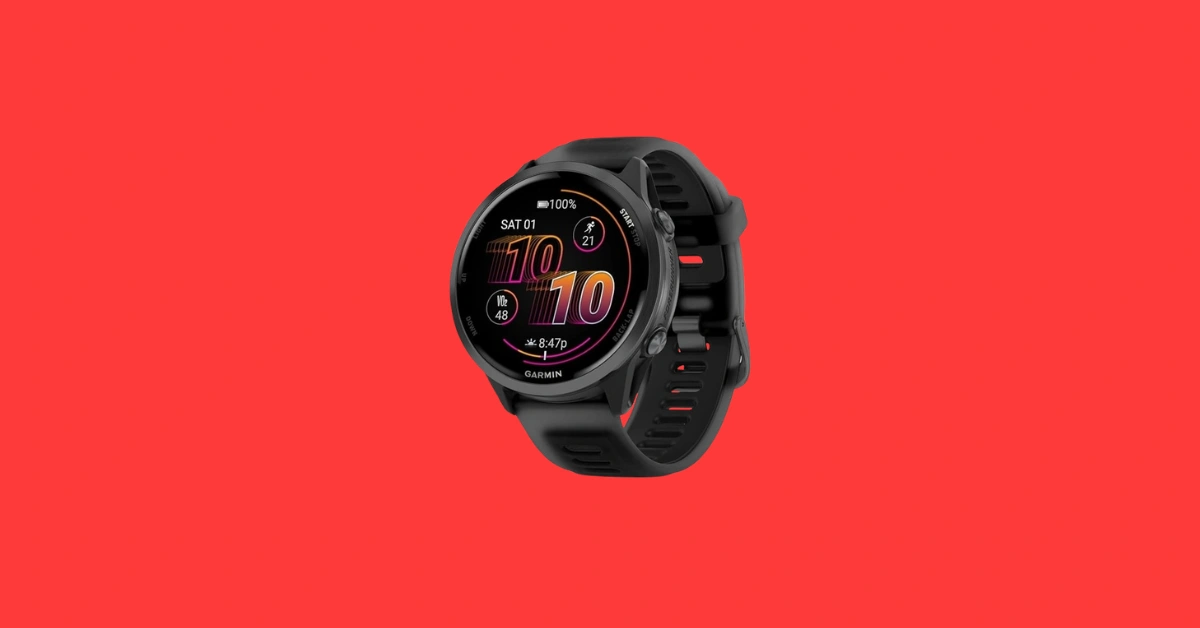

The Garmin Fenix line has been the gold standard for outdoor athletes for over a decade. Trail runners, mountaineers, triathletes, and ultra-endurance athletes have trusted it, it just works, everywhere, in any condition, for as long as you need it to.
The Garmin Fenix 8 is the most significant redesign in years. It absorbs the Epix AMOLED line, kills the Epix brand entirely, adds a built-in speaker and microphone, introduces dive-grade water resistance, and brings a completely refreshed operating system.
Personally, I upgraded from the 6X Pro to the Fenix 8 AMOLED 51mm Sapphire and I love it. The screen is beautiful, and the HR and multiband GPS absolutely rock. It has everything the 6X has and more.
The interface is a little different, but it’s intuitive once you use it don’t let the learning curve frustrate you. Default faces are a bit lame, but more are surely coming. Two days and two runs in, I highly recommend it. If you’re on a 6 or below, go for it. If you’re on a 7 and have the $1200 to spare, do it.
It starts at $999.99, and that price is impossible to ignore.
Is the Garmin Fenix 8 actually worth it? Here’s the Garmin Fenix 8 review everything you need to know.
Quick Verdict
Overall Rating: 4.4 / 5
| Best For | Serious outdoor athletes, trail runners, triathletes, hikers, divers |
| Skip If | You’re budget-conscious or already own a recent Fenix 7 Pro or Epix Pro |
| Starting Price | $999.99 (AMOLED 43mm) |
| Standout Feature | Full offline topographic maps + 1,000-nit AMOLED display + built-in speaker/mic |
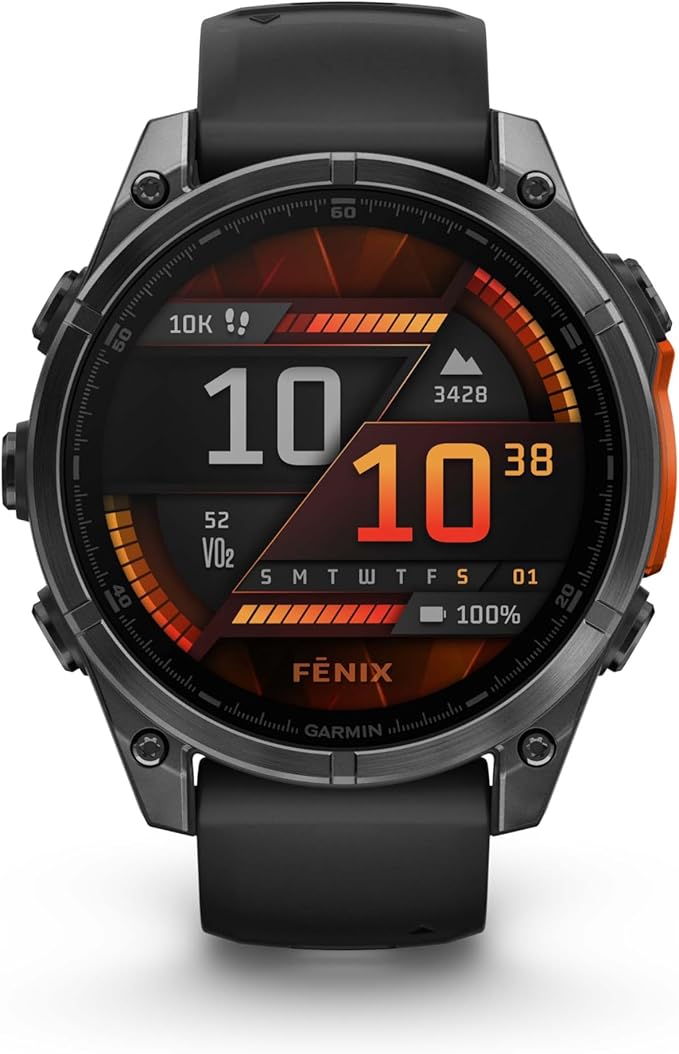
Garmin Fenix 8
Pros
Cons
Specs Overview
| Spec | 43mm AMOLED | 47mm AMOLED | 51mm AMOLED | 47mm Solar | 51mm Solar |
|---|---|---|---|---|---|
| Display | 1.3″ AMOLED | 1.4″ AMOLED | 1.4″ AMOLED | 1.3″ MIP | 1.4″ MIP |
| Resolution | 454×454 | 454×454 | 454×454 | 260×260 | 280×280 |
| Battery (Smartwatch) | Up to 16 days | Up to 18 days | Up to 29 days | Up to 40 days | Up to 48 days (solar) |
| Battery (GPS) | Up to 40 hrs | Up to 57 hrs | Up to 89 hrs | Up to 90 hrs | Up to 158 hrs (solar) |
| GPS | Multi-band (GPS, GLONASS, Galileo, BeiDou, QZSS + SatIQ) | ||||
| Heart Rate | Elevate Gen 5 (ECG capable) | ||||
| Water Rating | 10 ATM / Dive rated to 40m | ||||
| Flashlight | All models | ||||
| Speaker/Mic | All models | ||||
| Maps | TopoActive (preloaded on Sapphire) | ||||
| Storage | 32GB | ||||
| Starting Price | $999.99 | $999.99 | $1,099.99 | $999.99 | $1,099.99 |
Price
The Garmin Fenix 8 starts at $999.99 a significant jump from the Fenix 7’s $799 entry price, and an even bigger leap when you consider you can find heavily discounted Fenix 7 Pro units for $429–$749 right now.
Here are the competitors:
| Watch | Price | Maps | AMOLED | ECG | Dive |
|---|---|---|---|---|---|
| Garmin Fenix 8 (AMOLED) | From $999 | ✅ | ✅ | ✅ | ✅ |
| Garmin Fenix 7 Pro | From ~$429 (discounted) | ✅ | ❌ | ✅ | ❌ |
| Garmin Fenix 8 Pro | From $1,199 | ✅ | ✅ | ✅ | ✅ + LTE |
| Garmin Epix Pro (Gen 2) | From ~$649 (discounted) | ✅ | ✅ | ✅ | ❌ |
| Apple Watch Ultra 2 | $799 | Limited | ✅ | ✅ | ❌ |
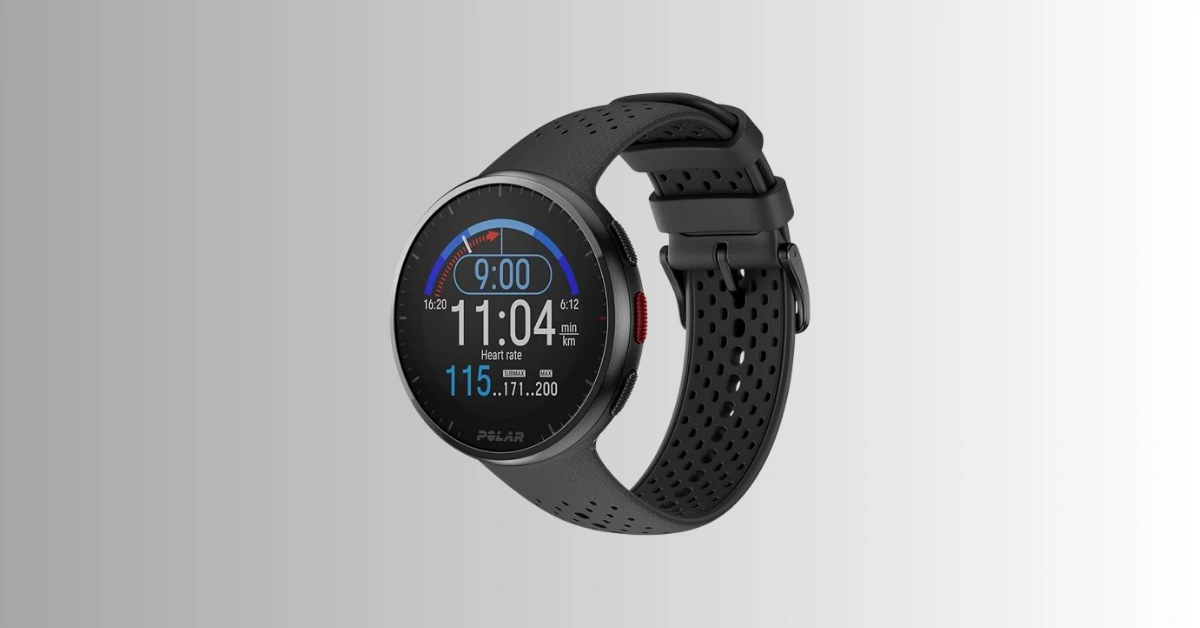
| Coros Vertix 2S | $699 | ✅ | ❌ | ❌ | ❌ |
Related: Best GPS Watches For Running
The price growth is real and worth sitting with. If you already own a Fenix 7 Pro or Epix Pro, the upgrade path is harder to justify than it would normally be both are still excellent watches available at meaningful discounts. But if you’re starting fresh or upgrading from an older generation, the Fenix 8 consolidates everything Garmin does best into one package.
Design
The Fenix 8 is built the way serious outdoor watches should be chunky enough to feel substantial, refined enough to wear off the trail. The case is available in stainless steel or titanium (titanium sheds about 7g per model), with sapphire crystal glass on premium variants.
The most notable design change this generation is the buttons. Garmin redesigned them to be leak-proof using inductive sensor technology, which was necessary for the 40-meter dive rating. The tradeoff is a lighter, shallower press with an electronic buzz rather than the deep mechanical click of older Fenix models.
In normal conditions, this is barely noticeable. In cold weather with gloves, or when you’re exhausted mid-race, the older buttons gave clearer tactile confirmation a subtle but real downgrade for some users.
The LED flashlight returns and is improved this generation brighter, with a cleaner beam that lights up trails and tent interiors more effectively than the Epix Pro version. Activating it is as simple as double-tapping the top-left button or triggering it by voice.
A new metal sensor guard protects the optical HR sensors on the underside — a smart durability upgrade for athletes who spend time in rocky terrain.
The 47mm AMOLED model weighs 65g in stainless steel and 58g in titanium — heavier than the Forerunner line, but completely manageable for all-day wear and multi-day adventures.
Available in multiple colorways across stainless and titanium options, with both AMOLED and Solar (MIP) display variants.
Bottom line on design: Rugged, premium, and purpose-built. The button feel change is the only genuine step backward from previous generations.
Display
For the first time in Fenix history, you have a choice:
AMOLED Option
The 1,000-nit AMOLED display is vivid, crisp, and renders maps with impressive detail. At 454×454 resolution on the 47mm and 51mm models, topographic lines, trail names, and data fields are all easily readable at a glance. Outdoors in direct sunlight, the AMOLED holds up well. Reviewers consistently describe map readability as excellent.
One real-world issue: night auto-dimming. The Fenix 8’s AMOLED automatically dims more aggressively than the older Epix Pro at night, with no manual override currently available. For athletes moving fast in the dark trail runners, night hikers this is a frustration Garmin needs to address via firmware.
Solar MIP Option
For athletes who need maximum battery life above all else, the Solar MIP models sacrifice display vibrancy for extraordinary endurance. The 51mm Solar can last up to 48 days in smartwatch mode with solar charging a 50% improvement over the Fenix 7X Pro Solar’s solar performance. The transflective MIP display is readable in direct sunlight without any backlight, which is genuinely useful in extreme outdoor conditions.
Both display types support the same software features, training tools, and maps.
Bottom line on display: The AMOLED is the better everyday experience. The Solar MIP is the right choice for multi-day expeditions where charging isn’t an option.
Training Features
The Fenix 8 is loaded. Here’s what matters across different use cases:
Running
- Training Readiness, HRV Status, Body Battery — the full Garmin recovery suite
- Morning Report & Evening Report — daily overviews of sleep, readiness, and scheduled workouts
- ClimbPro — visualizes individual climbs and descents in real time along a loaded course, showing grade, distance, and remaining ascent
- Suggested Workouts — AI-adapted daily recommendations based on your current fitness and recovery
- Race predictor, Endurance Score, Hill Score — advanced running performance metrics
- Advanced strength training plans — 4-6 week targeted plans for sport-specific athletes, including trail runners, surfers, and skiers
Navigation & Outdoor
- TopoActive maps preloaded on Sapphire models — topographic maps covering multiple continents with trail names, POIs, and road routing
- Turn-by-turn navigation with NextFork map guide for trail junctions
- Dynamic round-trip routing — enter a distance, and the watch suggests routes
- Golf maps for thousands of courses worldwide
- Ski resort maps with run tracking
Triathlon & Multisport
Full triathlon profiles with seamless discipline switching. Compatible with Garmin Triathlon Coach for adaptive training plans.
Dive
The Fenix 8’s biggest new sport feature is a full dive mode rated to 40 meters with a built-in depth gauge, scuba and apnea activity profiles, and dive log tracking. No subscription required, everything is built in. A significant addition for open-water swimmers, divers, and water sports athletes.
Smart Features
Built-in speaker and microphone for on-wrist phone calls, voice commands (start activity, set timer, do not disturb), Siri/Google Assistant access
Offline music from Spotify, Amazon Music, and YouTube Music, plus MP3 support. Music can play through the speaker itself if needed.
Garmin Messenger app integration for two-way text messaging from the wrist
Contactless payments, weather, notifications, and calendar
Focus Modes customizable setting groups for Sleep and Activity (more modes expected via future updates)
ECG available on Fenix 8 (currently US only)
Bottom line on training features: This is the most complete all-sport feature set Garmin has ever packed into a single watch. Running, hiking, triathlon, diving, golf, skiing it handles all of them with depth.
Performance
GPS Accuracy
The Fenix 8 uses multi-band GNSS with support for GPS, GLONASS, Galileo, BeiDou, and QZSS expanded from the Fenix 7 Pro’s GPS, GLONASS, and Galileo. The SatIQ system intelligently switches between GPS modes to balance accuracy and battery life automatically.
In real-world testing across runs, hikes, and multi-hour outdoor sessions, GPS performance is described as essentially identical to the Epix Pro, which is to say, best-in-class. Tracks are clean, switchbacks are logged accurately, and multi-band mode handles dense forest and canyon environments reliably.
Heart Rate Accuracy
The Elevate Gen 5 optical sensor, the same found in the Forerunner 570, delivers strong accuracy across steady-state and interval efforts. During indoor cycling with mixed intensity, readings closely matched chest strap and arm-based monitors. As with any optical HR sensor, high-intensity intervals and cold-weather sessions can occasionally produce brief inaccuracies, but overall performance is among the best available on a wrist-worn sensor.
ECG capability is built in (US only at launch).
Maps
Offline TopoActive maps are preloaded on Sapphire models. Map rendering is detailed and legible on the AMOLED display. Topo lines, trail names, and points of interest are all clear at a glance. One persistent limitation: map redraws are slow, a consequence of the same efficient processor that delivers excellent battery life. This is a known Garmin limitation that hasn’t changed significantly from previous generations.
An optional Outdoor Maps+ subscription ($99.99/year) adds satellite imagery and enhanced topographic detail for power users.
Bottom line on performance: GPS and HR accuracy are class-leading. Maps are detailed and functional. The slow map redraw remains a minor but persistent frustration.
Who Should Buy It?
Buy the Garmin Fenix 8 if:
- You’re an outdoor athlete who needs offline maps, real navigation, and multi-day battery life
- You’re upgrading from a Fenix 6, 7 (non-Pro), or older Epix — the hardware and software leap is meaningful
- You dive or swim in open water and want integrated dive tracking without a subscription
- You want the complete Garmin ecosystem in one watch — running, triathlon, hiking, golf, skiing, diving
- You want AMOLED display quality without sacrificing serious outdoor capability
Skip it if:
- You already own a Fenix 7 Pro or Epix Pro — the upgrade doesn’t justify the price for most users
- Battery life above everything is your priority — the Garmin Enduro 3 offers up to 320 hours of GPS with solar
- You’re primarily a road runner or gym athlete — the Forerunner 570 or 970 delivers most of the training features at a lower price
- Budget is a concern — discounted Fenix 7 Pro units at $429–$500 offer 95% of the performance for half the price
- You need LTE/satellite messaging — that’s the Fenix 8 Pro territory at $1,199+
Final Verdict
The Garmin Fenix 8 is the best outdoor multisport watch Garmin has ever made. The AMOLED display is stunning, the GPS and HR accuracy are class-leading, the training feature set is unmatched in depth, and the addition of a speaker, microphone, dive mode, and ECG makes it genuinely more capable than its predecessor in meaningful ways.
The price, however, demands an honest conversation. At $999.99 and up, the Fenix 8 is a premium product aimed at athletes who use the full breadth of what it offers. If you’re a trail runner who navigates, a triathlete who tracks recovery obsessively, a diver, or a hiker who needs multi-day GPS reliability this watch earns every dollar.
If you’re a casual runner who spends most of their time on familiar roads, the Forerunner 570 or a discounted Fenix 7 Pro will serve you just as well for considerably less money.
Scores:
| Category | Score |
|---|---|
| Design | 4.3 / 5 |
| Display | 4.6 / 5 |
| Training Features | 5.0 / 5 |
| Performance | 4.8 / 5 |
| Value | 3.8 / 5 |
| Overall | 4.4 / 5 |
Frequently Asked Questions
Is the Garmin Fenix 8 worth it?
For serious outdoor athletes, trail runners, triathletes, hikers, and divers, yes. For casual runners or athletes who won’t use maps, dive mode, or advanced navigation, the value is harder to justify. Discounted alternatives like the Fenix 7 Pro offer strong competition.
What is the difference between the Fenix 8 AMOLED and Solar?
The AMOLED model delivers a vivid 1,000-nit color display with excellent readability. The Solar model uses a Memory-in-Pixel (MIP) transflective display with a solar charging ring, offering dramatically longer battery life up to 48 days with solar on the 51mm. Choose AMOLED for display quality; choose Solar for maximum endurance.
What’s the difference between Fenix 8 and Fenix 8 Pro?
The Fenix 8 Pro adds satellite and LTE messaging via the Skylo network (requires an inReach subscription from $7.99/month), a brighter display, louder speaker, and a thicker case. It’s only available in 47mm and 51mm in titanium. Starting at $1,199, it’s aimed at athletes who need communication capability in remote areas without a phone.
Should I upgrade from Fenix 7 Pro to Fenix 8?
For most users, no, not at full retail price. The Fenix 7 Pro already has the Elevate Gen 5 sensor, multi-band GPS, LED flashlight, and offline maps. The Fenix 8 adds speaker/mic, dive mode, and an AMOLED display option, plus a refreshed UI. If those additions matter to you, yes. If not, the Fenix 7 Pro at a discount is an exceptional value.
This review is based on aggregated expert testing data, long-term user reports, and technical specifications compiled from across the running, hiking, and multisport communities. We bring together the most accurate and up-to-date information so you can make a confident buying decision.