
A fluid deficit of just 2% of body weight — roughly 1.4 litres for a 70kg runner — measurably reduces aerobic capacity by 10–20%, elevates perceived effort at any given pace, and impairs thermoregulation. By 3% deficit, cognitive function and concentration begin to decline. These numbers hold across temperature conditions, though heat significantly accelerates the rate at which you reach those thresholds. The good news: dehydration at performance-impairing levels is preventable with a simple strategy start hydrated, drink before you feel thirsty, and replace sodium alongside fluid on efforts over 90 minutes.
Use our running calculator to find your training paces, then factor in session duration when planning your hydration needs — longer and harder sessions deplete fluid faster.
- How Much Does Dehydration Actually Affect Performance?
- Understanding Hydration: Key Terms
- Factors That Affect Your Sweat Rate
- How to Calculate Your Sweat Rate
- How Much to Drink: Before, During, and After Running
- What to Drink When Running
- Hydration Across Different Distances
- Signs of Dehydration vs. Overhydration
- Frequently Asked Questions
How Much Does Dehydration Actually Affect Performance?
The relationship between fluid loss and performance decline is well-established. Here’s what the research shows:
| Fluid loss (% body weight) | Effect on running performance |
|---|---|
| 1% | Thirst begins; minor thermoregulatory effect |
| 2% | Aerobic capacity reduced 10–20%; perceived effort increases meaningfully |
| 3% | Cognitive function impaired; strength and endurance both decline |
| 5% | Heat exhaustion risk significantly elevated; performance severely compromised |
| 7–10% | Serious medical emergency territory — heat stroke risk |
For most recreational runners, the actionable zone is the 1–3% range. You are unlikely to reach dangerous dehydration levels during a road race with aid stations; the greater risk for many runners on long training runs is running the 1–2% deficit that doesn’t feel severe but is already meaningfully slowing you down.
It’s not just race day. A runner who finishes their long run 2–3% dehydrated and doesn’t recover fluid properly before the next session is starting Tuesday’s workout already behind. Hydration is part of recovery, not just racing.”
Understanding Hydration: Key Terms

Dehydration is the progressive loss of body fluid and electrolytes, primarily through sweat during running and through breathing. It is inevitable during sustained exercise your job is to manage the rate and limit its effects on performance.
Rehydration is restoring body fluid and electrolytes after or during a run. Effective rehydration requires sodium alongside fluid plain water alone cannot fully restore the body’s water-electrolyte balance after significant sweat loss.
Overhydration (Hypo-osmolality / Exercise-Associated Hyponatraemia) is as important to understand as dehydration, particularly for marathon runners. It occurs when a runner drinks excessive volumes of plain water, diluting blood sodium concentration below the safe range. Counterintuitively, overhydration produces similar symptoms to dehydration — nausea, dizziness, confusion — but treating it with more water worsens the condition. Exercise-associated hyponatraemia (EAH) is a genuine medical emergency and one of the leading causes of preventable exercise-related deaths in distance running events.
How to tell the difference: A runner experiencing mild dehydration will typically have concentrated dark urine, dry mouth, and elevated heart rate. A runner experiencing EAH from overhydration may have clear urine, swollen hands and face, and feel unexpectedly unwell despite drinking consistently throughout the race. If in doubt at a race medical station, do not encourage a symptomatic runner to drink more without clinical assessment.
Practical implication: Drink to thirst during running, not according to a fixed schedule that ignores your body’s signals. Drinking more than you sweat common among slower marathon runners at well-stocked races — is the primary risk factor for EAH.
Factors That Affect Your Sweat Rate
Hydration needs vary enormously between individuals. Two runners doing the same long run in the same conditions can have sweat rates that differ by a factor of three or more. The key variables:
- Air temperature and humidity — both increase sweat rate significantly; high humidity impairs evaporative cooling, increasing sweat loss further
- Altitude — increases respiratory fluid loss
- Running intensity — higher effort = more heat generated = more sweat
- Training status — well-trained runners often sweat more efficiently (more sweat per degree of core temperature rise) than beginners
- Individual physiology — genetics significantly influences sweat rate and sodium concentration in sweat
- Acclimatisation — training in heat over 7–14 days reduces the sodium concentration of sweat and expands plasma volume
The practical consequence: generic “drink X ml every 15 minutes” guidance cannot be accurate for all runners. Personalised hydration planning starts with knowing your own sweat rate.
How to Calculate Your Sweat Rate
The most reliable way to personalise your hydration strategy is a simple pre/post run weight comparison:
- Weigh yourself without clothes immediately before a run of known duration (ideally 60 minutes at a consistent effort)
- Run without drinking (for a single test session only — not appropriate for long runs)
- Weigh yourself again immediately after, without clothes
- Calculate: For every 1kg of weight lost ≈ , 1 litre of fluid is lost
Example: A 70kg runner who weighs 68.6kg after a 60-minute run has lost 1.4kg a sweat rate of approximately 1.4 litres per hour, or about 350ml every 15 minutes.
For a rough guideline after running this test a few times across different conditions:
| Sweat rate | Fluid target per hour of running |
|---|---|
| Low (<750ml/hr) | 500–600ml/hr |
| Moderate (750ml–1.25L/hr) | 600–900ml/hr |
| High (>1.25L/hr) | 900ml–1.2L/hr |
You cannot fully replace sweat loss during running. The goal is to limit the deficit to 2–3% body weight, not to drink equal to the sweat rate. Attempting to drink more than you sweat is the primary cause of EAH.
How Much to Drink: Before, During, and After Running
Before Running
Arrive at every session already hydrated don’t use the pre-run window to compensate for a poorly hydrated day.
- The night before a long run or race: Drink normally throughout the day, aiming for pale yellow urine (straw-coloured is ideal)
- 2–3 hours before a run: 400–600ml of water, consumed gradually, not in one sitting
- 15–30 minutes before: An additional 150–250ml if conditions are hot or if you know you sweat heavily
During carbohydrate loading in the days before a marathon, include electrolytes alongside increased fluid intake. The extra glycogen stored requires additional water (each gram of glycogen is stored with approximately 3g of water), and sodium helps retain it. For the full race-week nutrition framework, see our marathon nutrition plan.
During Running
For runs under 45–60 minutes in moderate conditions: Water is sufficient; you may not need to drink at all if well-hydrated at the start.
For runs of 60–90 minutes: Sip 150–200ml every 15–20 minutes. Don’t wait for thirst — by the time you feel thirsty, you’re already at ~1% deficit.
For runs over 90 minutes: Add electrolytes — primarily sodium — to your fluid intake. This is where sports drinks or electrolyte tablets replace plain water. Sodium in your drink improves absorption, replaces what you’re losing in sweat, and reduces EAH risk. For the full comparison of sports drinks versus electrolyte tablets, see our dedicated sports drinks vs electrolyte tablets guide.
In heat (above 25°C): Increase frequency and volume. Consider pre-cooling (cold drinks, ice in the cap) and plan routes around shade and water sources.
After Running
Aim to replace approximately 150% of fluid lost the extra 50% accounts for continued urinary losses during rehydration.
- Immediate: 500ml water or electrolyte drink within 30 minutes
- Over the following 2 hours, continue drinking gradually to restore normal urine colour
- With a recovery meal: Include sodium (salt in food, electrolyte drink) to aid fluid retention
What to Drink When Running
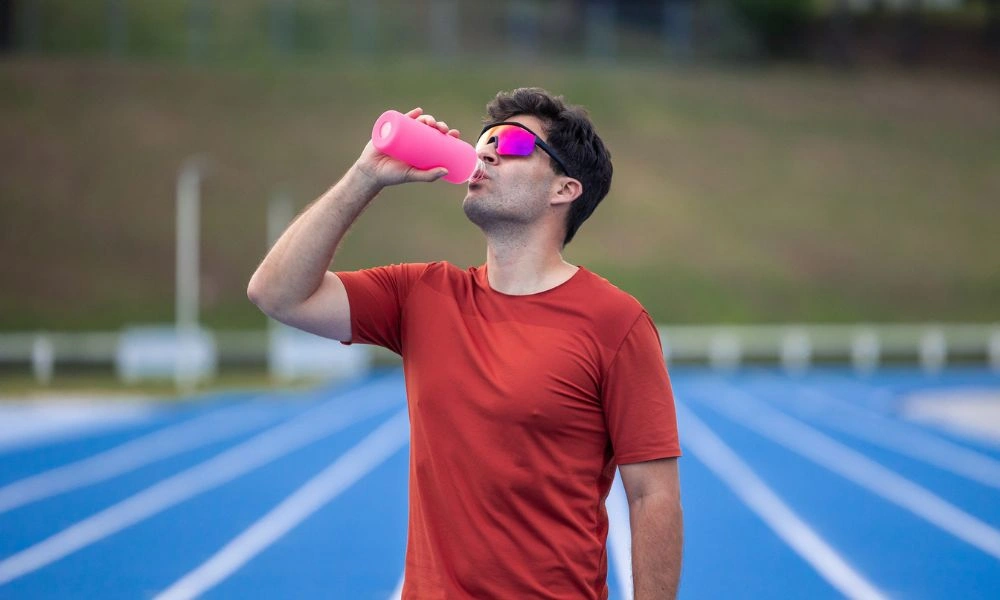
Water is the right choice for runs under 60 minutes in moderate conditions. It’s absorbed quickly, has no GI side effects, and is available everywhere.
Isotonic sports drinks (6–8% carbohydrate concentration with electrolytes) are the best all-in-one option for runs over 90 minutes — they replace electrolytes and provide carbohydrates simultaneously, and their carbohydrate concentration matches the optimal range for gastric emptying during exercise.
Electrolyte tablets dissolved in water give you sodium and other electrolytes without added sugar or calories ideal if you’re fuelling with gels and want to keep hydration separate from carbohydrate intake.
Caffeinated drinks (cola, coffee) are used at ultra-distance races — 100km and above — when athletes need a late-race caffeine stimulus alongside sugar. Cola’s carbonation can cause bloating and GI distress at running intensity, and its concentration (~10% sugar) is hypertonic. It’s not an appropriate mid-run choice for road marathons and below; caffeinated gels provide caffeine with better GI tolerance.
Fruit juice and tea can contribute to daily hydration but are generally not appropriate during running due to their acid content, variable sugar concentrations, and (in the case of tea and coffee) mild diuretic effects.
For specific product recommendations on sports drinks and electrolyte tablets, see our gear hub.
Hydration Across Different Distances
5K and 10K
For most recreational runners at these distances (30–65 minutes of effort), carrying water is unnecessary. Focus on arriving well-hydrated. Races with a single mid-course water station are adequate.
Half Marathon
Drink at every aid station typically every 2–3km in major races. This approximates 150–200ml every 15–20 minutes. For runs over 90 minutes in the heat, add electrolytes. If you’re following a structured half marathon training plan, test your hydration strategy in the long runs of weeks 10–14.
Marathon
This is where hydration strategy matters most and where EAH risk is highest. Key principles:
- Drink at every aid station — don’t skip stations in the early kilometres
- Use isotonic drinks rather than plain water at most stations
- Do not drink excessively above thirst — slower runners at well-stocked events are most at risk of EAH through overdrinking
- Include sodium from electrolyte sources throughout, not just water
Ultra Marathon
Personalised planning is essential. Fluid needs, sodium targets, and calorie delivery all require testing across multiple long-term training efforts. Real food (bananas, potatoes, rice) supplements drinks and gels at ultra distances.
Signs of Dehydration vs. Overhydration
Recognising which condition you’re dealing with matters the interventions are different.
| Sign | Dehydration | Overhydration (EAH) |
|---|---|---|
| Urine colour | Dark yellow/amber | Clear or very pale |
| Thirst | Pronounced | Absent or mild |
| Swelling | Absent | Hands, face, feet |
| Nausea | Possible | Common |
| Weight vs. start | Lower | Higher or unchanged |
| Mental state | Alert but fatigued | Confused, disoriented |
If any runner at an event shows confusion or swelling alongside nausea, seek medical assistance immediately rather than encouraging more fluid intake.
Frequently Asked Questions
How much water should I drink before a run?
Drink 400–600ml of water in the 2–3 hours before any significant run, consumed gradually rather than all at once. If your urine is pale yellow before you set off, you’re well-hydrated. Dark yellow urine is a reliable sign you need more fluid before starting.
How do I know if I’m dehydrated while running?
Thirst is the first signal, but by the time you feel thirsty, you’re already at roughly 1% body weight deficit. More reliable during a run: elevated perceived effort at your usual pace, headache, and difficulty concentrating. Post-run: weigh yourself — each kilogram of weight loss below your pre-run weight represents approximately one litre of fluid deficit.
What causes hyponatraemia in runners?
Exercise-associated hyponatraemia (EAH) is caused by drinking excessive volumes of plain water without sodium replacement, which dilutes blood sodium below the safe range. It occurs most commonly in slower marathon runners who drink at every station throughout a long event. Symptoms include nausea, swelling, and confusion. Treatment requires medical assessment — EAH should not be treated by drinking more fluid.
Is it safe to run without water for short distances?
Yes — for runs under 45 minutes in moderate conditions, arriving well-hydrated at the start is sufficient. Carrying water for short easy runs is a personal preference, not a physiological requirement. In hot conditions or at race intensity, even shorter efforts may benefit from access to water.
Do I need electrolytes for every run?
No — for runs under 60–75 minutes in moderate conditions, water alone is sufficient. Electrolytes become important on runs over 90 minutes, in heat, or for runners with high sweat rates or those prone to cramping. The primary electrolyte to replace is sodium.