
The best Brooks running shoes are defined by the transition to DNA LOFT v3 and the elite DNA Gold nitrogen-infused foams. The Glycerin 22 is our top overall pick for its new ‘DNA Tuned’ tech, while the Adrenaline GTS 24 remains the premier stability choice. For race day, the Hyperion Elite 5 now officially competes with top-tier carbon-plated ‘super shoes.
Best Brooks Running Shoes
| 2026 Brooks Model | Best For | Cushion Tech | Heel Drop |
| Glycerin 22 | Overall Daily Training | DNA Tuned (Nitrogen) | 10 mm |
| Adrenaline GTS 24 | Stability / Arch Support | DNA Loft v3 + GuideRails | 12 mm |
| Hyperion Elite 5 | Marathon and Races | DNA Gold (PEBA) | 8 mm |
| Hyperion Max 3 | Long Distance / Heavy | DNA Gold (Max Stack) | 6 mm |
| Cascadia 19 | Trail / All-Terrain | DNA Loft v3 + Trail Adapt | 6 mm |
| Revel 8 | Budget / Gym | DNA Loft v2 | 8 mm |
Related: Best Nike Running Shoes
1
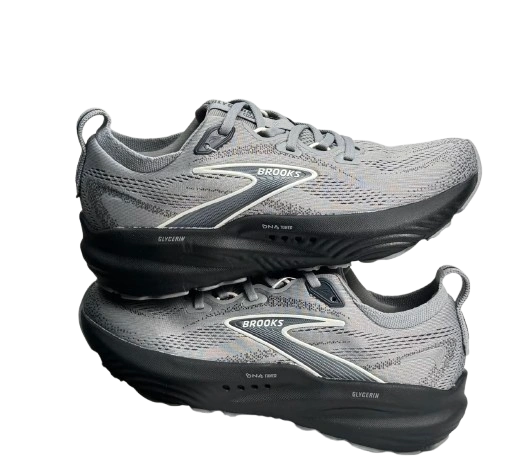
Best Overall – Brooks Glycerin 22
Pros
Cons
Overview
The Brooks Glycerin 22 is a premium daily trainer that prioritizes comfort and reliability above all else. In this latest version, Brooks has introduced a “DNA Tuned” midsole, which uses nitrogen-infused foam that is specially engineered to be softer in the heel for cushioned landings and firmer in the front for a more energetic push-off. The shoe has gained a bit of height and weight compared to previous models, it remains a stable and durable “workhorse” designed for high-mileage runs and easy recovery days.
The upper features a plush, breathable knit that provides a secure and luxurious fit, though the toe box is notably shallower than before, which might feel snug for some runners. On the road, the shoe provides a smooth, consistent ride that protects your legs from impact without feeling overly “mushy.” While it isn’t built for breaking speed records or fast tempo workouts, it excels as a dependable, long-lasting shoe for anyone who values a soft, protected feel for their daily miles.
2
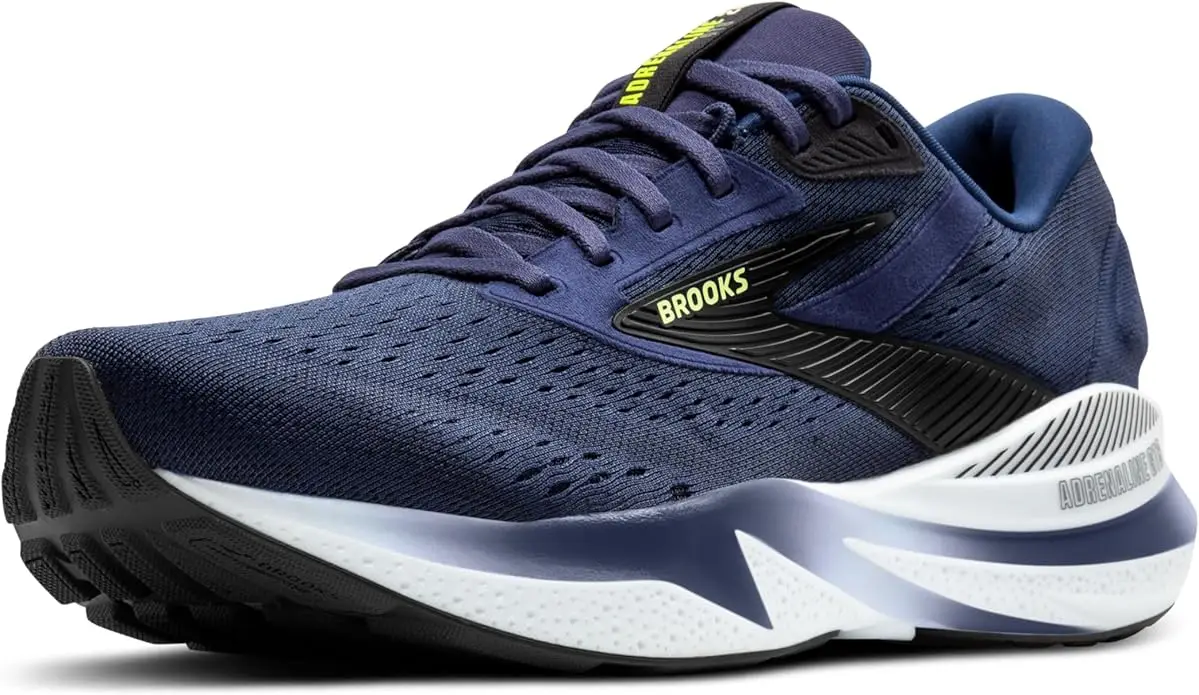
Best for Arch Support – Brooks Adrenaline GTS 24
Pros
Cons
Overview
The Brooks Adrenaline GTS 24 is essentially the “safety-first” counterpart to the Glycerin. While the Glycerin focuses on pure softness, the Adrenaline is a stability shoe designed specifically for runners who overpronate (when your feet roll inward too much). It uses Brooks’ signature “GuideRails” technology, which acts like bowling alley bumpers to keep your feet and knees aligned as you move.
The biggest update in this version is the move to a nitrogen-infused foam (DNA Loft v3), which makes the shoe feel more responsive and energetic than previous versions. However, because it is a stability shoe, the ride is noticeably firmer than the Glycerin. It provides a very secure, locked-in feel, especially around the heel, making it a reliable choice for daily training and long walks.
On the downside, the shoe features a high “drop” (the height difference between the heel and the toe), which is great for heel strikers but can feel a bit steep or aggressive for people who land on their midfoot. It is also a bit of a “no-nonsense” trainer—it isn’t the lightest or fastest shoe on the market, but it’s exceptionally durable and built to withstand hundreds of miles of steady, supported running.
3
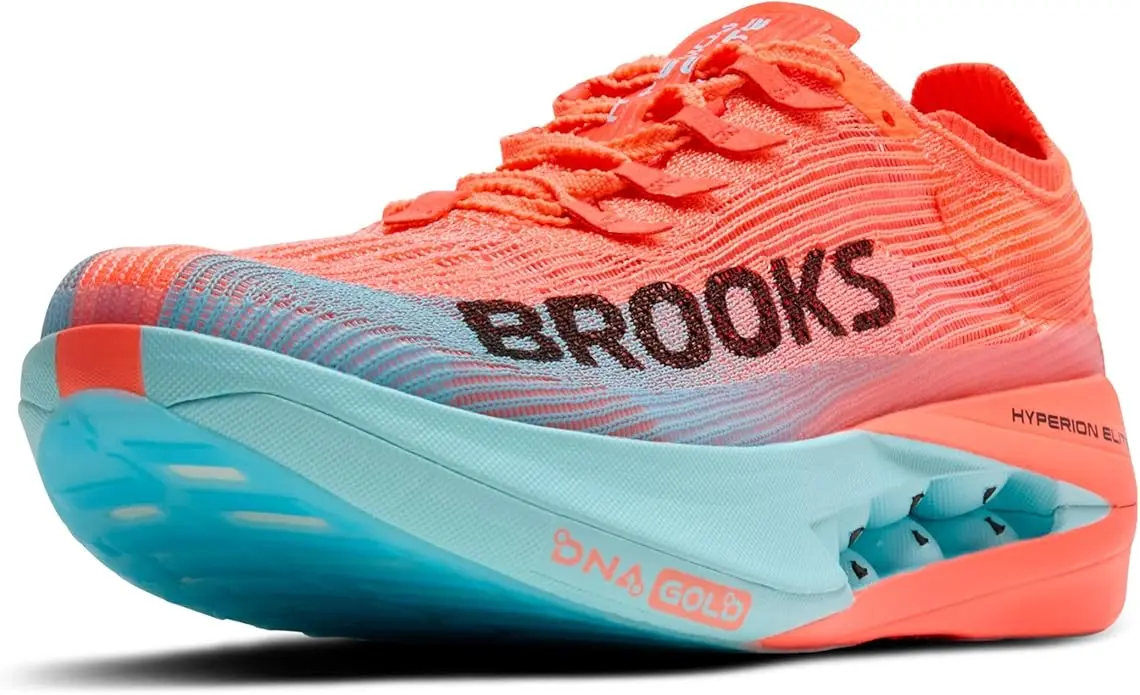
Best for Races -Brooks Hyperion Elite 5
Pros
Cons
Overview
The Brooks Hyperion Elite 5 is a high-performance “super shoe” built specifically for racing and speed. Unlike the Glycerin or Adrenaline, which are meant for everyday training, this shoe is designed to help you run as fast as possible during races like 5Ks, 10Ks, or marathons. It is Brooks’ most competitive racing model to date, featuring their newest and springiest foam (DNA Gold) and a full-length carbon fiber plate that acts like a springboard to launch you forward with every stride.
The design focuses on extreme weight reduction and maximum energy return. The upper is made of a paper-thin, highly breathable mesh that feels almost like a second skin, though it offers very little in terms of traditional support or plush padding. In the lab and on the road, it has been noted for having a very “snappy” and aggressive feel, similar to legendary racers like the Nike Vaporfly. It excels at fast turnovers and maintaining a high pace, making it ideal for serious runners chasing a personal best.
However, because it is a specialized racing tool, it comes with some trade-offs. It is significantly more expensive than standard trainers and is not built for daily wear or slow recovery runs. Stability is also a secondary concern here; the soft, high-stack foam can feel a bit “wobbly” or unstable if you aren’t running at high speeds or if you are a heavy heel striker. It’s essentially a high-tech racing machine—built for speed and performance, but less forgiving than the more comfortable daily models in the Brooks lineup.
4
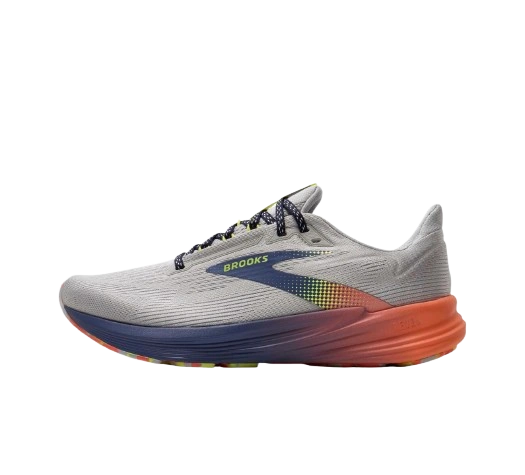
Best Budget – Brooks Revel 8
Pros
Cons
Overview
The Brooks Revel 8 is widely considered the best “bang for your buck” shoe in the Brooks lineup. While the Glycerin and Adrenaline are high-end specialized trainers, the Revel 8 is a versatile, budget-friendly
option designed for beginners or casual runners who want a shoe that can handle a few short runs a week, a gym session, and everyday walking.
The main update in this version is the move to a slightly better foam (DNA Loft v2), which makes the shoe feel a bit more modern and comfortable than previous versions. However, compared to Brooks’ premium shoes, the Revel 8 has a much “thinner” feel. It sits closer to the ground, offering more “road feel” and less of that pillowy, marshmallow-like cushioning found in the Glycerin. This makes it more agile and lightweight, but it also means it isn’t the best choice for very long distances or for runners who need heavy impact protection.
The fit is straightforward and reliable, featuring a classic breathable mesh upper that works well for most foot shapes. Because it has a high “drop” (the heel is significantly higher than the toe), it is particularly well-suited for people who land on their heels. The biggest drawback is that the foam doesn’t offer much “pop” or energy return—it’s a simple, honest shoe that does exactly what it’s supposed to do without any expensive bells and whistles. It’s the ideal pick if you want a reliable Brooks shoe without spending the premium price of their top-tier models.
5
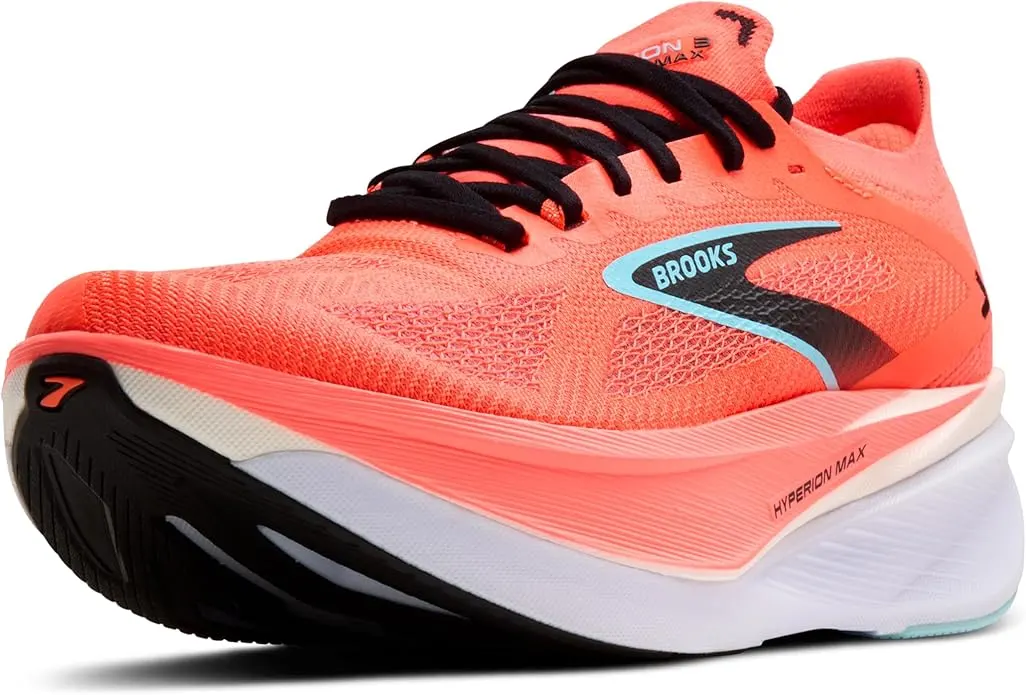
Best for Heavy Runners – Brooks Hyperion Max 3
Pros
Cons
Overview
The Brooks Hyperion Max 3 represents a massive shift for this model, moving away from being a lightweight, firm speed shoe toward what is now called a “super trainer.” It is designed to bridge the gap between a daily comfortable shoe and a high-performance racer, making it ideal for long-distance training where you want to protect your legs but still maintain a decent pace.
The most noticeable change is the “max” cushioning. Brooks significantly increased the stack height (adding about 10mm of foam), giving it a towering, protective feel underfoot. It now uses a dual-foam setup, featuring their top-tier DNA Gold foam, which provides much more bounce and energy return than previous versions. A built-in nylon plate and an aggressive “rocker” shape help roll your foot forward, making transitions feel smooth and efficient even as your legs get tired.
However, these upgrades come with a trade-off: the shoe has become heavier and bulkier. While the previous versions were nimble and sharp, the Hyperion Max 3 feels more like a “cruiser.” It excels at steady long runs and “uptempo” daily miles, but it might feel a bit too clunky for track intervals or lightning-fast sprints. The fit remains secure with a premium, sock-like upper, though it runs a bit warm and the toe box is on the snug side. Overall, it’s a high-tech, highly cushioned powerhouse for runners who want a fun, bouncy ride for the majority of their miles.
6
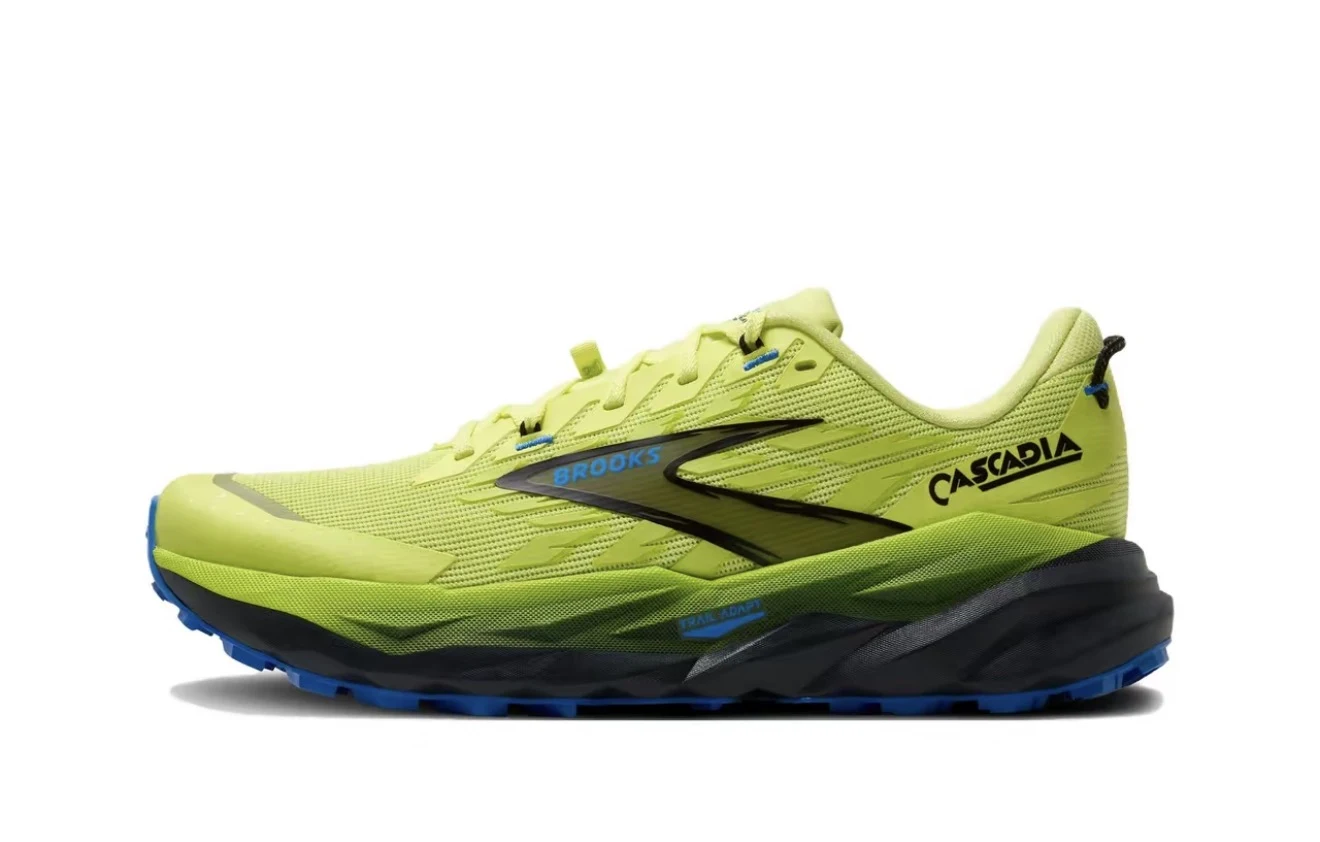
Best for Trail – Brooks Cascadia 19
Pros
Cons
Overview
The Brooks Cascadia 19 is the flagship “all-terrain” trail shoe from Brooks, built for durability, protection, and stability. While the previous version was often criticized for feeling a bit stiff and dull, the Cascadia 19 receives a major upgrade with the introduction of DNA Loft v3 foam. This nitrogen-infused cushioning makes the shoe feel significantly softer and more energetic underfoot without losing the “tank-like” stability the series is known for.
The standout feature of this model is the Trail Adapt System, which combines the midsole foam, an integrated rock plate, and a grippy outsole. This system allows the shoe to flex and adapt to uneven ground—like rocks and roots—while keeping your foot stable and protected from sharp objects. It’s a highly reliable choice for technical trails where safety and foot protection are more important than pure speed.
However, the Cascadia 19 remains a relatively heavy shoe compared to modern “speed” trail racers. It is best described as a versatile workhorse; it excels at long-distance hiking, daily trail miles, and rugged mountain adventures. While it may feel a bit bulky for fast, nimble running, it offers a secure and breathable fit that makes it a “safe bet” for beginners and experienced trail runners alike who want a shoe that can handle almost any surface they encounter.
FAQ
What is the main difference between Glycerin 22 and Adrenaline GTS 24?
Glycerin 22 is a neutral shoe focused on maximum softness with “DNA Tuned” foam, while the Adrenaline GTS 24 is a stability shoe featuring GuideRails® technology to support runners who overpronate.
Is the Brooks Hyperion Elite 5 a carbon-plated shoe?
Yes, the Hyperion Elite 5 features a full-length carbon fiber plate paired with Brooks’ springiest DNA Gold foam, designed specifically for race-day energy return.
Are Brooks shoes good for heavy runners in 2026?
The Brooks Hyperion Max 3 and Glycerin 22 are ideal for heavier runners due to their massive stack heights and high-density nitrogen foams that provide superior shock absorption.