
Nike’s best running shoe for most people is the Pegasus 42. It’s durable, versatile, and priced fairly at $140. But if you’re training for a marathon, the Alphafly 3 is in a different league. And if you just want the softest possible long-run shoe, the Vomero Plus is Nike’s most cushioned daily trainer.
Eight picks below, covering every runner type from beginners to marathoners. Each recommendation is grounded in published specs, independent lab measurements, and verified runner feedback with honest trade-offs on every shoe. Here’s the breakdown.
How We Selected These Shoes
Each shoe in this roundup was chosen based on four criteria: published specs verified against Nike’s official product pages, independent lab measurements from RunRepeat and WearTesters (used where Nike’s stated figures differed from real-world results), runner feedback aggregated from structured running communities, and value relative to price tier. Shoes were not personally tested by the author for this roundup. Where independent lab data or runner consensus strongly contradict manufacturer claims, that’s noted in the review. Prices were confirmed at Running Warehouse in May 2026.
Nike Running Shoe Comparison: At a Glance
| Shoe | Best For | Foam | Drop | Price | Buy |
|---|---|---|---|---|---|
| Pegasus 42 | Daily training | ReactX + full-length Air Zoom | 8 mm | $140 | Amazon / Nike |
| Vomero 18 | Max cushion value | ZoomX + ReactX | 10 mm | $150 | Amazon / Nike |
| Zoom Fly 6 | Speed training / tempo | ZoomX + carbon plate | 8 mm | $170 | Amazon / Nike |
| Vomero Plus | Max cushion / recovery | Full ZoomX | 10 mm | $180 | Amazon / Nike |
| Vaporfly 4 | 10K & half marathon racing | ZoomX + carbon plate | 6 mm | $260 | Amazon / Nike |
| Structure 26 | Stability / overpronation | ReactX | 10 mm | $145 | Amazon / Nike |
| Alphafly 3 | Marathon racing | ZoomX + Dual Air Pods | 8 mm | $285 | Amazon / Nike |
| Vomero Premium | Ultimate softness / recovery | Ultra-plush ZoomX | 10 mm | $220 | Amazon / Nike |
Looking for shoes across all brands? See our full Running Gear hub →.
Best Nike Running Shoes
Related: Best Brooks Running Shoes
1
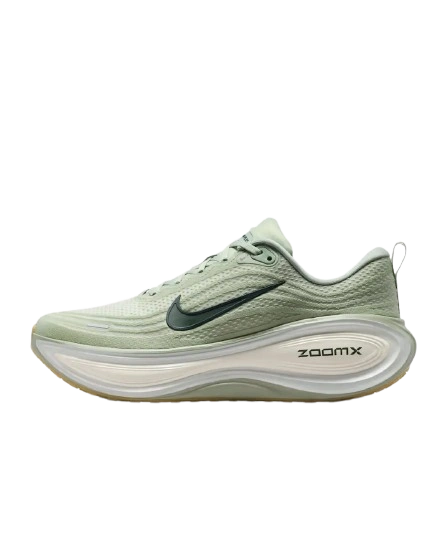
Best Overall – Nike Vomero Plus
Pros
Cons
What the Data Shows
The Vomero Plus runs a full-length ZoomX midsole, the same foam Nike uses in its racing shoes, tuned here for protection rather than propulsion. Lab-measured stack height sits at 42mm in the heel and 33mm in the forefoot, making it one of the most high-heeled non-racing shoes Nike has produced. RunRepeat’s lab recorded shock absorption of 147 SA in the heel among the highest in the daily trainer category, which translates directly to less leg fatigue on high-mileage days.
The trade-off is weight. At 10.3 oz, it’s heavier than competitors like the ASICS Gel-Nimbus or Hoka Bondi. The wide midsole geometry and tall sidewalls deliver stability despite the stack height, but the rocker is mild this is a traditional, ground-connected feel, not a propulsive one.
The toebox is snug in classic Nike fashion. Runners with wider feet should size up half a step or consider a different model.
Best for: easy miles, long slow distance runs, recovery days, heel strikers wanting maximum protection.
Not for: speedwork, racing, runners with wide feet.
2
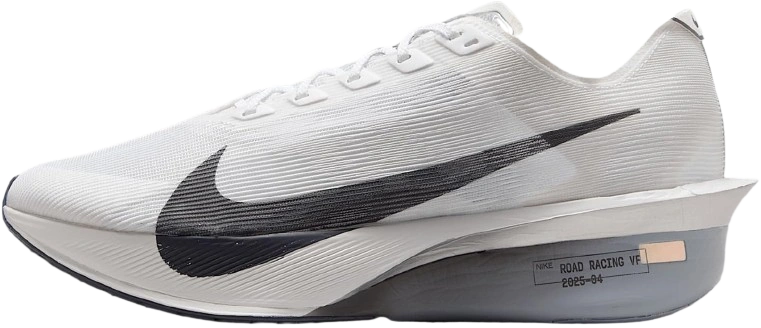
Best for 10k & HM Races – Nike Vaporfly 4
Pros
Cons
What the Data Shows
The Vaporfly 4 is Nike’s dedicated 10K-to-half-marathon racing shoe. The carbon FlyPlate is shaped like a spoon inside the midsole; it stores energy through the loading phase and releases it at toe-off, a mechanism that lab testing confirms changes stride mechanics measurably. RunRepeat’s durometer found the ZoomX foam 5.2% softer than the super shoe category average cushioned landing without energy loss.
At 6.5 oz for men’s and 5.8 oz for women’s, the Vaporfly 4 is 10% lighter than the Vaporfly 3 and sits well below the category average of around 7.3 oz. The Atomknit-style upper is breathable and minimal built for race day, not daily training.
The main limitation is the narrow mid-foot profile. What keeps the weight down also reduces the base stable enough for 10K and half-marathon efforts, but multiple runner reports flag reduced confidence in the back half of a full marathon. For that distance, the Alphafly 3’s wider platform and dual AirPods are a better match.
Best for: 10K races, half marathons, tempo training, runners chasing PBs on shorter courses.
Not for: full marathons, runners wanting a wide, stable platform, or budget shoppers.
3
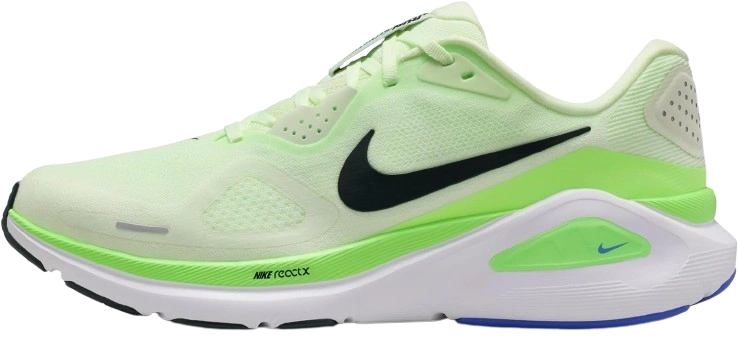
Best For Stability – Nike Structure 26
Pros
Cons
What the Data Shows
The Structure 26 replaces its older Cushlon/Zoom Air midsole with a full-length ReactX setup and a new Midfoot Support System, triangles of dense foam at the medial midfoot and lateral heel that guide the foot without a rigid medial post. The result is stability that doesn’t feel locked down, which WearTesters describe as “unobtrusive but helpful.” Nike athlete Cole Hocker trains daily in this shoe — relevant credibility for a stability model.
The ReactX midsole is firmer than the Vomero family, which is intentional — stability shoes need a predictable platform, not a bouncy one. The forefoot stack at 28mm is low by current standards, meaning forefoot strikers will notice less cushioning up front than they might expect from the heel height.
Best for: mild overpronators, heel strikers, daily training, runners who prioritize durability and support.
Not for: forefoot strikers, runners wanting a light or fast-feeling shoe, hot-weather running.
4

Best for Marathon – Nike Alphafly 3
Pros
Cons
What the Data Shows
The Alphafly 3 is Nike’s most technically complex running shoe. The dual Air Zoom pods in the forefoot work alongside a stiff FlyPlate and two-layer ZoomX midsole, one firmer layer (29.3 HA) for stability, one softer (18.1 HA) for comfort. RunRepeat measured the FlyPlate at 89.3% stiffer than the average racing shoe plate, giving it genuine propulsive leverage rather than just stiffness for its own sake. Runner consensus across structured communities is consistent: the shoe’s propulsion system takes a few sessions to fully engage with your gait, but once it does, the sensation is distinct from ZoomX foam alone.
At 7.0 oz, it sits 6.1% lighter than the racing shoe category average. The Atomknit upper is minimal and breathable, appropriate for a shoe you’re unlikely to train in daily. The key durability caveat: the outsole rubber is optimised for race day, not high-mileage training. Heel strikers logging regular sessions in this shoe will see the rear outsole wear faster than the forefoot.
For training leading into race day, pair it with a marathon training plan → and use the Zoom Fly 6 for workout days instead.
Best for: marathon racing, experienced runners chasing time goals, and anyone running sub-3:30 pace.
Not for: everyday training use, heel strikers running high volume, budget-conscious runners.
5
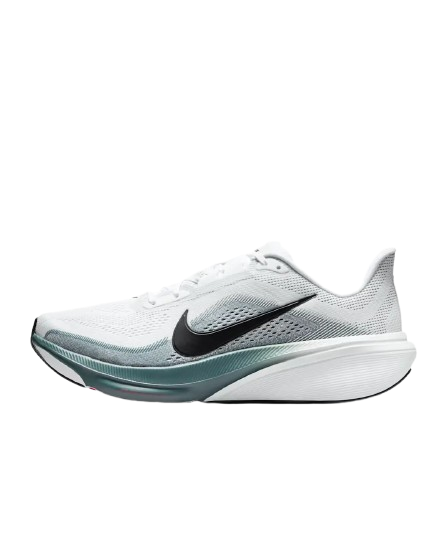
Best for Daily Training – Nike Pegasus 42
Pros
Cons
What the Data Shows
The Pegasus 42, released April 9, 2026, is the most significant update to the franchise in several years. The headline change is a curved, full-length Air Zoom unit that replaces the smaller, flat unit of the Pegasus 41. Nike claims 15% more energy return; independent lab testing from RunRepeat measures the gain as real but modest, with the ride feeling improved rather than reinvented. The drop decreases from 10 mm to 8 mm, nudging the geometry toward a slightly more natural, forward-leaning stride.
The new anatomical last is measurably wider in the toebox — lab mold testing shows about 2mm more room than the Pegasus 41, which addresses one of the most consistent runner complaints about previous Pegasus generations. The redesigned waffle outsole provides better multi-directional traction.
What’s unchanged: the ReactX foam base, the ~10 oz weight, and the Pegasus’s character as a versatile, moderate-stack daily trainer.
If you’re building toward a half-marathon or 10K, the Pegasus 42 is the reliable workhorse for bulk mileage in a training block. See our half-marathon training plans → or 10K training plans → for structured programs built around a shoe like this.
Best for: daily training, recreational runners, first-time Nike buyers, most gait types, runners who found the Pegasus 41 slightly narrow.
Not for: racing, runners wanting max-bounce supercritical foam, forefoot strikers who want high forefoot stack.
6
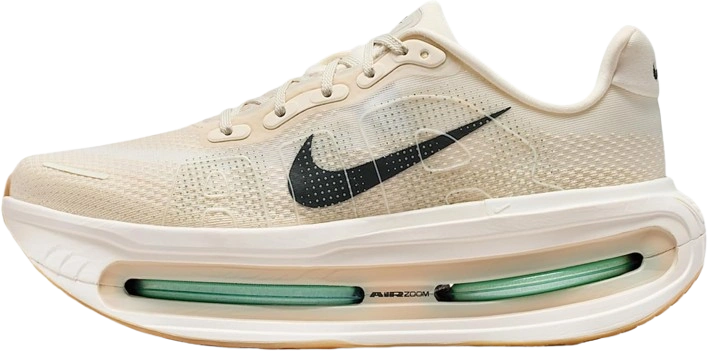
Best for Extreme Cushioning — Nike Vomero Premium
Pros
Cons
What the Data Shows
Nike marketed the Vomero Premium around an “Alter G anti-gravity” sensation. Independent runner feedback and review consensus are more measured: the shoe is not springy or propulsive — it’s a dedicated protection platform. What it does deliver is genuine: shock absorption that ranks at the top of any retail running shoe category, thanks to a massive ZoomX stack combined with dual visible Air Zoom units at heel and forefoot.
The ultra-plush ZoomX tuning is notably different from the Vomero Plus — softer and less responsive, tuned for absorption rather than energy return. The wide midsole base delivers more stability than the stack height would suggest. The outsole performs reliably on both dry and lightly wet road surfaces based on runner reports.
The honest case against it: it’s heavy, it’s slow, and at $220 it costs far more than far more versatile shoes. The tapered toebox may bother wide-footed runners. But as a dedicated recovery shoe — the one you reach for the morning after a long race or a hard workout — the Vomero Premium has a clear purpose.
Best for: recovery days, post-race running, high-mileage runners who want a dedicated soft-day shoe.
Not for: speedwork, tempo runs, racing, performance training of any kind, wide-footed runners.
7
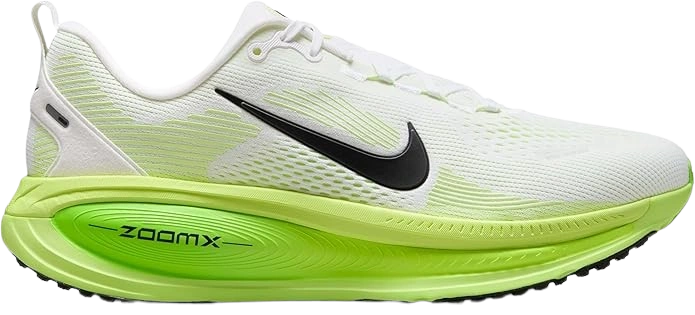
Best Max Cushion Value — Nike Vomero 18
Pros
Cons
What the Data Shows
The Vomero 18 anchors Nike’s max-cushion family as the entry point before the Vomero Plus ($180) and Vomero Premium ($220). RunRepeat ranked it their top Nike road running shoe overall for 2025, citing the combination of ZoomX top layer and ReactX base as a setup that delivers cushioning without the dead, flat feel common in purely foam-stacked trainers. Lab-recorded shock absorption of 147 SA in the heel places it among the best-protected daily trainers available at any price.
The 44mm heel stack and pronounced rocker geometry produce smooth heel-to-toe transitions that multiple testers note are better than expected for a shoe this tall. The full inner sleeve upper is notably roomier in the toebox than most Nike models a meaningful differentiator for runners who’ve historically found Nike’s fit too narrow.
The trade-offs are real: at 11.4 oz, it’s one of the heavier options in the category, and the ReactX base limits bounce compared to the full-ZoomX Vomero Plus. It’s not a versatile shoe pure easy-day and recovery-run territory. But at $150 with this cushioning stack, the value case is strong.
For high-mileage marathon training blocks, a dedicated easy-day shoe like the Vomero 18 protects legs between hard sessions. See our marathon training plans → for how to structure easy day volume.
Best for: easy runs, recovery days, high-mileage runners, heel strikers, runners transitioning from Hoka Bondi or ASICS Nimbus.
Not for: tempo runs, speedwork, runners who want a versatile all-conditions shoe, wide-footed runners who need extra toe room beyond standard.
8
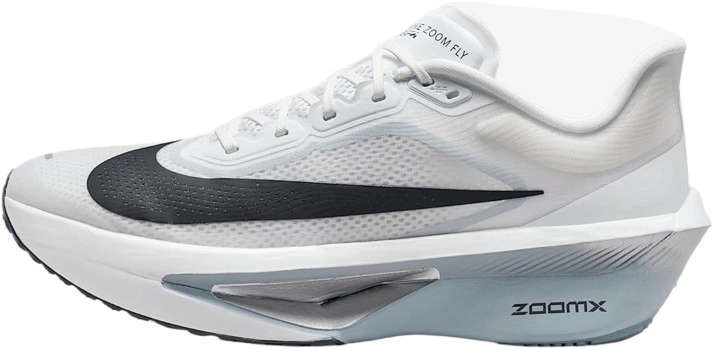
Best for Speed Training — Nike Zoom Fly 6
Pros
Cons
What the Data Shows
The Zoom Fly 6 fills the gap that sits in most structured training rotations: a carbon-plated shoe capable of handling tempo runs, threshold intervals, and marathon-pace long runs without costing $260. The midsole is a ZoomX top layer over an SR-02 base foam, with a full-length carbon Flyplate between them. Solereview describes the personality split as 50/50 trainer and racer — more useful for weekly training volume than a pure super shoe, which is the entire point.
The plate geometry is deliberately different from the Vaporfly — softer transitions, more forgiving at slower training paces — so it doesn’t punish easy-day running the way a race shoe would. At 8.6 oz, it’s 10% lighter than the Zoom Fly 5, and the first version in the series to use genuine (non-recycled) ZoomX, which reviewers across RunRepeat, Solereview, and The Run Testers all note as a meaningful improvement in feel.
The fit caveat is consistent across reviews: the upper runs very low-volume and close to the foot. Wide-footed runners or those with high insteps should go half a size up. The thin outsole rubber is lightweight but not built for 500+ training miles, plan on replacing it around 300–350 miles of hard use.
For runners pairing this with the Alphafly 3 on race day, the Zoom Fly 6 is the right training companion for workout days. See our marathon training plans → for how to structure tempo and threshold sessions in a build.
Best for: tempo runs, threshold sessions, marathon-pace long runs, runners wanting a plated trainer without paying racing shoe prices, experienced runners building race-specific fitness.
Not for: easy days, recovery runs, wide-footed runners, runners wanting maximum outsole durability.
Verdict Box
| Your Goal | Best Nike Shoe |
|---|---|
| Best all-around daily trainer | Pegasus 42 |
| Max cushion — best value | Vomero 18 |
| Speed training/tempo runs | Structure 26 |
| Maximum cushion/recovery | Zoom Fly 6 |
| 10K & half-marathon racing | Vomero Plus |
| Ultimate softness | Vomero Premium |
| 10K & half marathon racing | Vaporfly 4 |
| Marathon racing | Alphafly 3 |
Our pick for most runners: the Pegasus 42. It handles daily training, long runs, and tempo work without complaint, lasts 400+ miles, and costs $140. If you’re following a structured plan with dedicated workout days, add the Zoom Fly 6 as your second shoe — it’s the best-value carbon trainer Nike makes.
Ready to Start Training?
Training plans are designed and reviewed by Ilya Tyapkin, Rio 2016 Olympian. Find the plan that matches your goal:
FAQ
Which Nike running shoe is best for beginners?
The Pegasus 42 is the right starting point. It’s forgiving across gait types, priced at $140, built to last, and versatile enough to handle any training run from a 20-minute jog to a 16-mile long run. The Structure 26 ($145) is worth considering if you know you overpronate. If budget is tighter, the Vomero 18 at $150 gives beginners more cushion for the same money.
Which Nike shoe should I race a marathon in?
The Alphafly 3 ($285) is Nike’s dedicated marathon racer. The dual Air Zoom pods and stiff FlyPlate are engineered specifically for 26.2-mile efforts. The Vaporfly 4 is faster-feeling at shorter distances but less stable late in a full marathon.
What’s the difference between ZoomX and ReactX foam?
ZoomX is Nike’s lightest, most responsive foam — optimized for energy return and used in the Alphafly, Vaporfly, and Zoom Fly 6 racing shoes. ReactX is more durable and eco-friendly (40%+ lower carbon footprint), returning about 13% more energy than the original React. Daily trainers like the Pegasus 42 and Structure 26 use ReactX; the Vomero 18 uses both (ZoomX top, ReactX base).
What is the Zoom Fly 6 and who is it for?
The Zoom Fly 6 ($170) is Nike’s carbon-plated training shoe — it sits between the Pegasus 42 and the Vaporfly 4 in both price and performance. It’s built for tempo runs, threshold sessions, and marathon-pace long runs. Think of it as the shoe you train in when you want to practice race mechanics without burning through an expensive pair of racing shoes. Best for runners doing structured speed work 1–2 times per week.
How many miles do Nike running shoes last?
Daily trainers (Pegasus 42, Vomero 18, Structure 26) typically last 300–500 miles. The Vomero Plus and Vomero Premium sit in a similar range given their durable outsoles. The Zoom Fly 6 with its thin outsole is best replaced around 300–350 miles of hard use. Racing shoes (Alphafly 3, Vaporfly 4) have a significantly shorter peak life — 150–200 miles before they lose noticeable snap.
Is the Alphafly 3 worth it if I’m not an elite runner?
Yes, with a caveat. You’ll get the most out of the Alphafly 3 if you’re running a marathon sub-3:45. At slower paces, the shoe still works fine, but the propulsion system requires some foot speed to fully engage. For recreational runners training through their first marathon, the Pegasus 42 is a better value for training miles — save the Alphafly for race day only.