
Affiliate disclosure: This post contains affiliate links. If you buy through them, esenbay.com may earn a commission at no extra cost to you.
The verdict
For most marathoners, NormaTec boots are a genuine recovery luxury, not a necessity. They reliably make tired legs feel fresher and modestly reduce next-day soreness, but research shows they’re not clearly better than free recovery like sleep, easy walking, and legs-up-the-wall.
If you’re running high mileage with back-to-back hard days and you’ll actually use them 20–30 minutes most days, the $799 Normatec 3 Legs earns its place in a peak marathon block. Run 25 miles a week, or you’d skip sleep to afford them? Spend the money elsewhere.
Check the current price on Normatec →
Do NormaTec boots actually help marathon recovery?
You’ve seen the boots. Every pro marathoner’s Instagram story, every recovery studio, $799 to $1,099 of inflatable leg sleeves that promise to flush your legs after a 20-miler. The question isn’t whether they feel good. They do. The question is whether they do enough to justify the price during a marathon build, and that’s where you need an honest answer, not a sales pitch.
Here’s what the research actually shows. NormaTec uses sequential pneumatic compression, the boot inflates in zones from your foot up to your hip, squeezing blood and lymph back toward your core, then releases. A 2020 systematic review pooling 17 trials found that compression devices produce a moderate, statistically significant reduction in delayed-onset muscle soreness compared to doing nothing, but the effect sizes were small to moderate, not dramatic. A 2021 crossover trial on recreational runners doing downhill running (a DOMS-maker) found lower soreness at 24 hours and faster recovery of muscle power.
Now the part the brands skip. A 2024 comprehensive review concluded that compression boots are roughly as effective as standard recovery methods, not clearly better than active recovery, compression socks, or plain rest. One study found a single 20-minute session reduced muscle fatigue on average, with no evidence of long-term recovery benefit. Some of what you feel is likely expectation, too.
So, the honest summary, NormaTec boots reliably make your legs feel better and modestly reduce soreness. They have not been proven to outperform free recovery in your actual next-day performance. What you’re buying is comfort and convenience, 25 hands-off minutes versus lying on the floor with your legs up the wall.
NormaTec models compared: Which for marathoners?
Hyperice (which owns NormaTec) sells three tiers. Prices below are current as of June 2026 and move with sales. Verify before you buy.
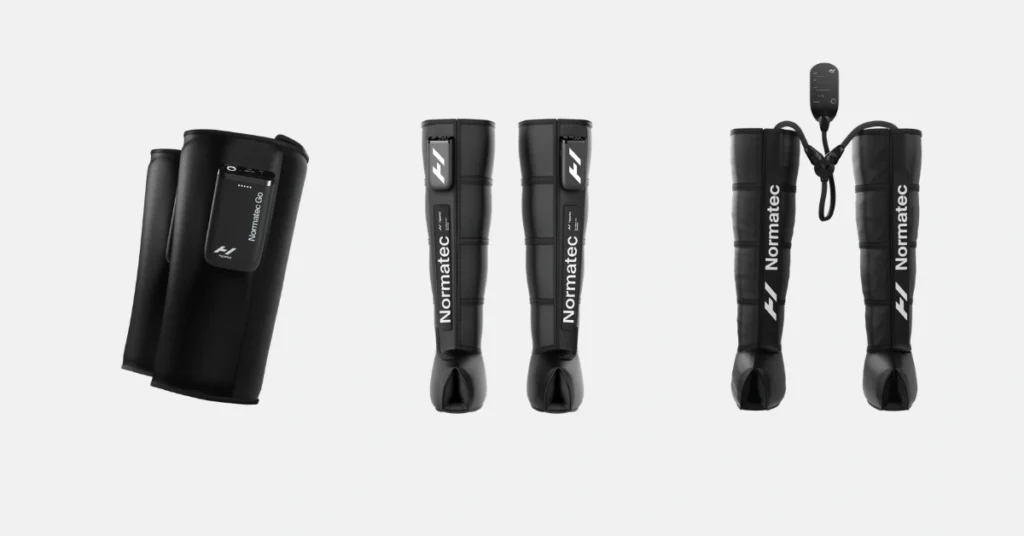
| Model | Price* | Coverage | Portability | Key feature | Best for |
|---|---|---|---|---|---|
| Normatec Go | $379 | Calves only | Fully portable, worn | Targeted calf relief on the go | Budget / travel / calf-focused |
| Normatec 3 Legs | $799 | Foot to hip | Hose + control unit | Expandable to hips/arms | Most marathoners (value pick) |
| Normatec Elite Legs | $1,099 | Foot to hip | Cordless, hoseless, 3.2 lb/boot | Wireless, 4-hr battery, app | Travel-heavy athletes who hate cords |
Sale prices appear regularly, the Normatec Go has dropped to $329, and bundles knock $150–$200 off.
For the average marathoner, the Normatec 3 Legs is the sensible buy. Same seven pressure levels, same five-zone ZoneBoost technology, and the same core leg recovery as the Elite for $300 less. You deal with a hose and a control unit, which matters only if you want to use them away from an outlet. The Elite’s selling point is the cordless, hoseless design and a 4-hour battery; useful if you travel to races constantly, hard to justify otherwise. The Go covers calves only fine as an entry point or a travel piece, but it skips the quads and hamstrings that take the most damage over 26.2 miles.
One caution: the Elite is sold as final-sale/non-returnable at several retailers. At $1,099, try a session at a studio or gym before you commit.
Pros and cons
Pros
- Reliably makes legs feel fresher; moderate research support for reduced soreness.
- Hands-off: 20–30 minutes while you answer email or watch TV is easier to stay consistent with than foam rolling.
- Covers the whole leg, foot to hip, in a way that self-massage can’t reach.
- Cheaper per session than a recovery studio if you use them regularly.
- NormaTec is the original and most-studied system; seven pressure levels and ZoneBoost zone targeting.
Cons
- Expensive: $799 for the Normatec 3 Legs, $1,099 for the Elite.
- Not proven better than free recovery (sleep, easy walking, legs up the wall) for actual performance.
- Bulky to store; the hose-based 3 is a faff to set up, and even the Elite is two 3.2 lb boots.
- Some of the benefits are likely placebo.
- The Elite is often non-returnable and an expensive commitment, sight unseen.
- Overkill for low-mileage runners who’d gain more from an extra hour of sleep.
Coach’s Take
I’d plug a runner into NormaTec boots during the heaviest three weeks of a marathon block in a heartbeat. I would also talk a lot of runners out of buying them.
Here’s where they genuinely help. In a peak marathon phase when you’re stacking a long run on Sunday onto a tempo on Tuesday, on 50-plus miles a week, the limiting factor is how fast your legs turn around between hard days. Twenty-five minutes in the boots after a long run won’t repair the muscle, but it gets blood moving when all you want to do is sit still, and it makes you feel recovered enough to hit the next session honestly. For a high-mileage marathoner, that’s worth something real. The convenience is the point: a tool you’ll use beats a tool you won’t.
Now the reservation, and it’s a big one. I’ve watched runners spend $1,000 on recovery boots while running their easy days at tempo pace and sleeping six hours a night. That’s backwards. The boots are the last 5% of recovery, and they only matter once the free 95% is handled: sleep, easy running that’s actually easy, and fueling the work. If your easy runs are too hard, no amount of pneumatic compression saves you. Keep them honest with our heart rate zone calculator before you spend a cent on boots.
So my rule is simple. If you’re a 50-to-80-mile-a-week marathoner who’s already nailing the basics, the Normatec 3 is a fair luxury that you’ll use. If you’re running 25 miles a week, or the basics are a mess, put the $799 toward decent shoes, a coach, or a training plan that structures your recovery for free and just lie on the floor with your legs up the wall after long runs. It’s nearly as effective, and it costs nothing.
How to use NormaTec boots in a marathon block
This is the protocol I give athletes. It isn’t on the box.
- Timing: Use the boots within 30–60 minutes after a long run or hard session, when the recovery window is widest. A session before bed also helps legs feel less heavy in the morning.
- Duration: 20–30 minutes. Research shows little extra benefit beyond that, and longer sessions can cause temporary numbness.
- Pressure: Start mid-range (levels 3–4 of 7) and build up. It should feel like a firm squeeze, never painful. Pain isn’t the goal; circulation is.
- Base phase: Optional. Once or twice a week after your longest efforts is plenty.
- Peak phase: The high-value window. Most days, especially after long runs and quality sessions.
- Taper: Keep using them to keep legs feeling fresh as volume drops.
- Race week: A short, light session the day before can ease heavy legs. Don’t do a long, intense session you’ve never done before.
- Post-race: Excellent for the sore days after the marathon. Gentle pressure, daily, while you recover.
A note on cost-per-use: a single recovery-studio session runs $25–$40. If you use boots two or three times a week across a 16-week block, the Normatec 3 pays for itself versus paying per visit. Versus free recovery, it’s pure convenience, judge it on that.
NormaTec boots vs. a massage gun: which first?
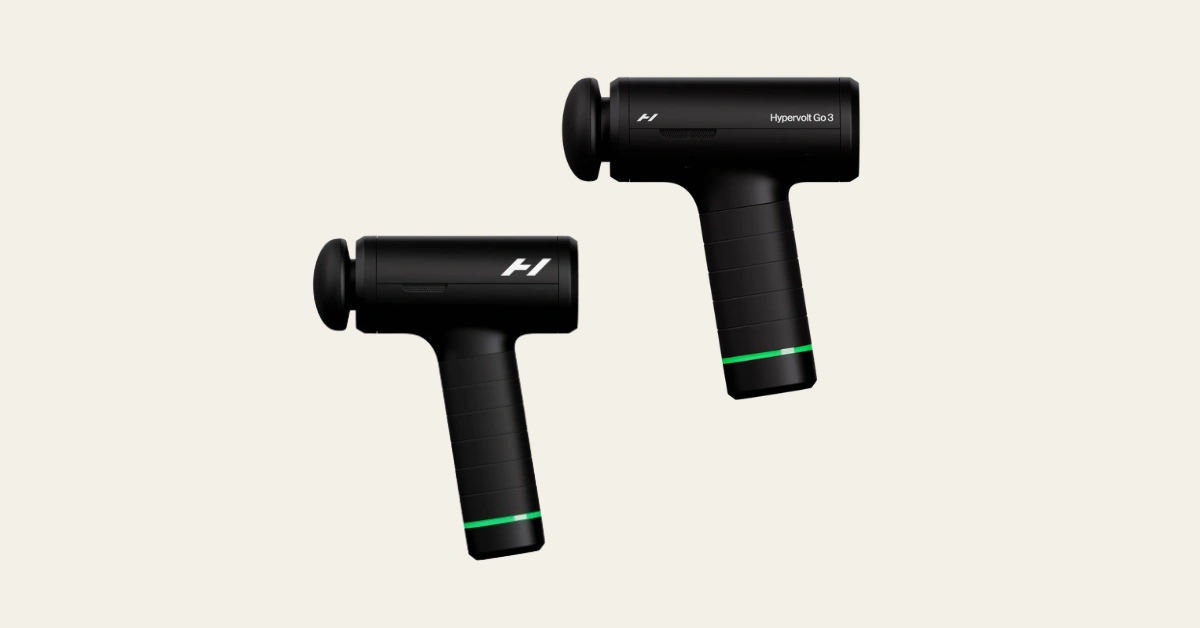
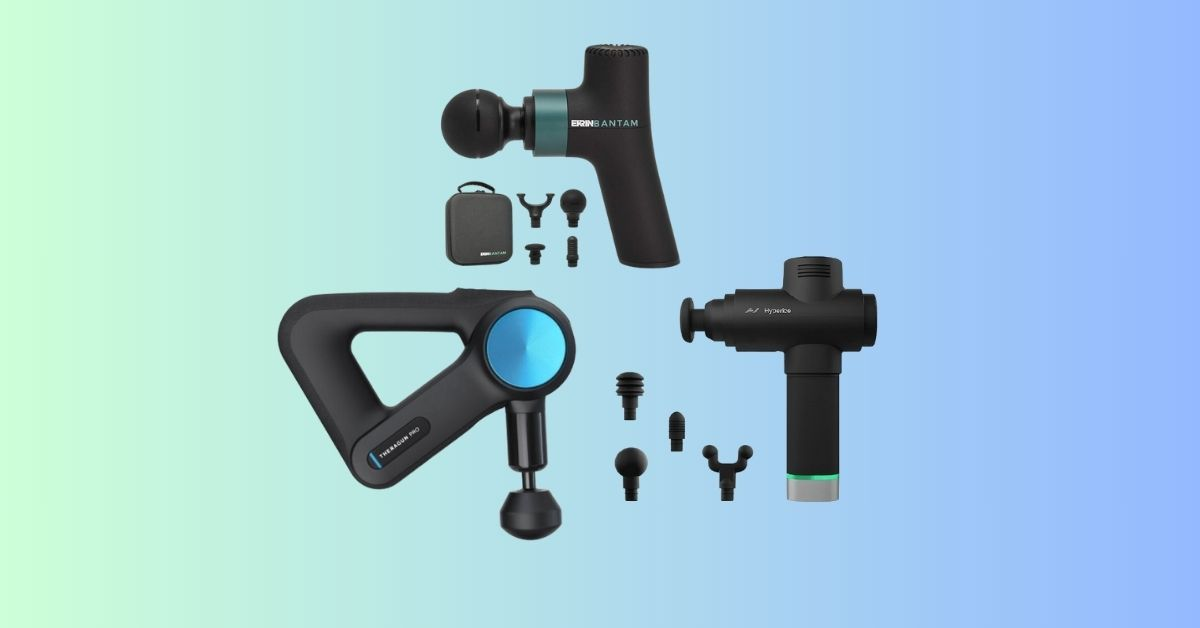
Different jobs. A massage gun targets a specific tight muscle with deep pressure, your knotted calf, your sore quad. Compression boots flush the whole leg, gently, all at once. If you have a budget for one tool and a specific problem area, a massage gun does more for less money. If you’re a high-volume runner who wants whole-leg recovery you’ll actually sit through, the boots win on consistency. Plenty of runners use both: gun the trouble spots, then boot the whole leg. (See our gun picks in the recovery section of our Gear We Recommend hub.)
Who should skip the NormaTec boots
Be honest with yourself before spending.
- Low-mileage runners. Under 30 miles a week, you don’t accumulate the fatigue that makes boots worth it. Sleep more.
- Anyone whose basics are a mess. Fix easy-pace discipline, sleep, and fueling first. The boots are the cherry, not the cake.
- Tight budgets. Legs up the wall for 15 minutes is free and nearly as effective for soreness.
- Frequent travelers on a budget. The portable Go is fine, but the full boots are bulky, and the Elite is a $1,099 non-returnable commitment.
Are NormaTec boots worth it for marathon recovery?
If you’re a high-mileage marathoner who’s already handling sleep and easy running, and you’ll genuinely use them most days through your peak weeks, then yes, the Normatec 3 Legs at $799 is a fair luxury that makes a hard block more comfortable and keeps you feeling fresh enough to train. Buy it for the convenience and consistency, not because you think it’ll make you faster than the rest would.
If any of that doesn’t describe you, keep your money. The single biggest recovery upgrade for most runners isn’t a $1,000 pair of boots, it’s an extra hour of sleep and easy days run, actually easy. Get those right, follow a plan that builds recovery into the schedule, and add the boots later if you still want them. They’ll still be there.
See the rest of our recovery picks in the Gear We Recommend hub, and if you’re chasing a marathon goal, our training plans build the recovery you need into every week.