
Affiliate disclosure: This post contains affiliate links. If you buy through them, we may earn a commission at no extra cost to you.
For most runners, the Hyperice Hypervolt 3 is the best massage gun, quiet enough to use at 10 pm, powerful enough to flush a 20-miler out of your quads, and the pressure sensor stops you from leaning in too hard on a tender calf.
Bottom line: if you want one device that handles pre-run activation and post-run recovery without thinking about it, get the Hypervolt 3. Want it lighter and cheaper? The Hypervolt Go 3. Want maximum deep-tissue depth for dense legs? Pay up for a 16mm gun like the Theragun PRO. On a budget? The numbers below still hold.
Check the current price on the Hypervolt 3 →
Do runners actually need a massage gun?
No. You can train for a marathon with a tennis ball and a foam roller, and runners have done so for decades.
Here’s the part nobody selling you a device wants to say out loud: a massage gun is a convenience tool. It does, in about three minutes, what a foam roller does in ten, and it reaches your soleus and the deep part of your calf in a way a roller never will. For a runner logging 40+ miles a week, that time saving is the whole point. You’re more likely to actually recover when recovery takes three minutes instead of fifteen.
What a massage gun is good for: increasing blood flow to a worked muscle, loosening tight calves and quads before a session, and taking the edge off post-long-run stiffness so your next easy day stays easy. What it is not: a fix for ramping your mileage too fast, racing in dead shoes, or skipping sleep. Tools don’t fix training errors.
If you want to keep your easy runs genuinely easy, which is where recovery actually happens, pair your recovery routine with our heart rate zone calculator so you’re not turning recovery days into junk miles.
Amplitude vs. stall force: what the specs actually mean
Two numbers decide how a massage gun feels. Ignore the marketing around everything else.
Amplitude (or stroke length) is how far the head punches in and out, measured in millimeters. Bigger amplitude reaches deeper. Most guns land between 7mm (vibration-y, surface-level) and 16mm (deep, percussive, borderline aggressive). For runners, 10–14mm is the sweet spot. You rarely need a 16mm jackhammer on your calves, and a lot of people find it uncomfortable down there.
Stall force is how hard you can press before the motor gives up and stops. Higher stall force means the gun keeps working when you lean into a dense muscle. A mini with 30 lbs of stall force is fine for your forearms; it’ll quit on a marathoner’s glutes. Big full-size guns run 50–70 lbs.
The honest takeaway: a mid-amplitude gun (12mm) with strong stall force (50+ lbs) will outperform a high-amplitude gun with a weak motor for almost every runner. Depth means nothing if the motor stalls the second you apply pressure.
Related: Best GPS Running Watches / Best Affordable Watches
The best massage guns for runners in 2026
1
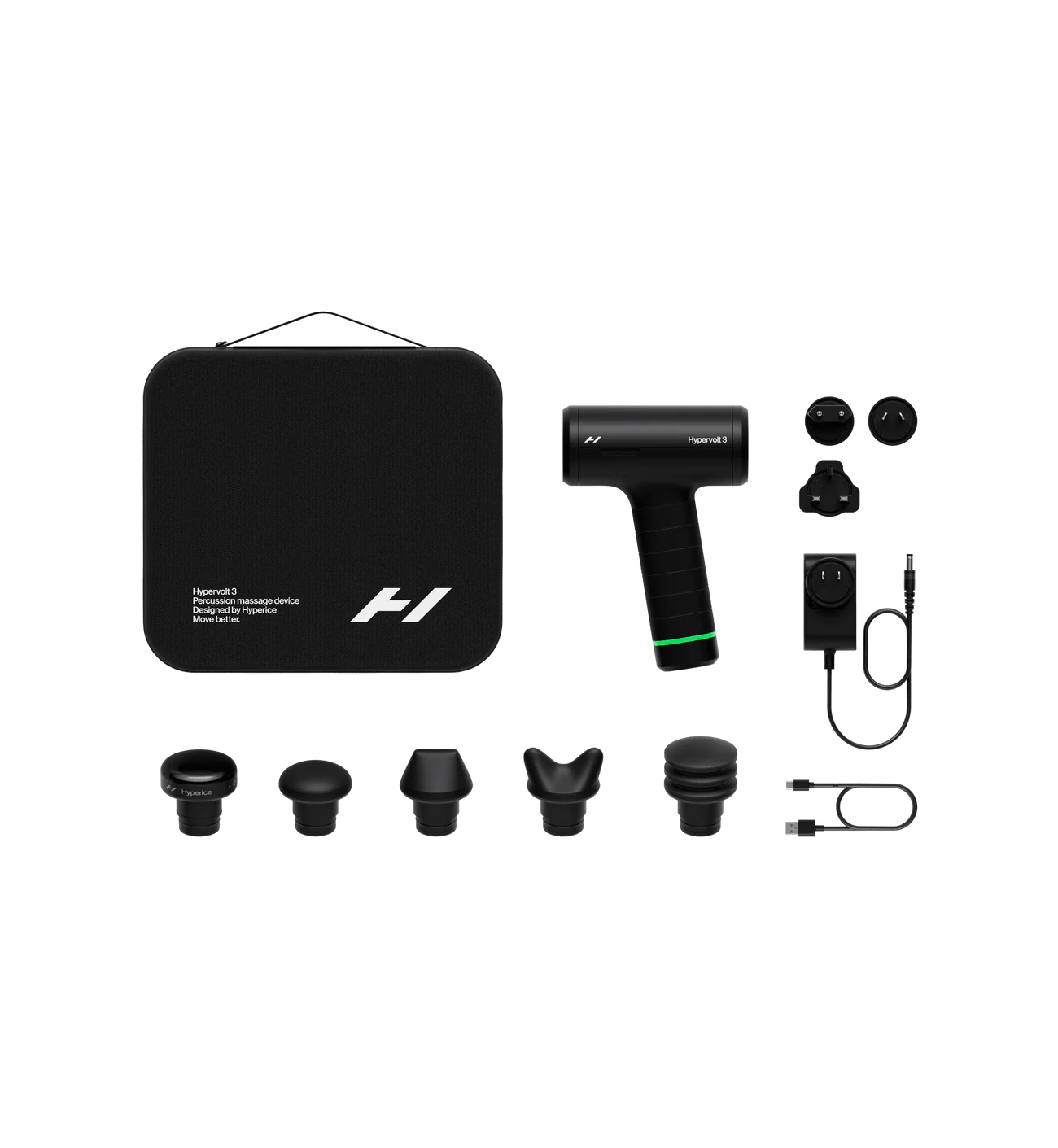
Best overall for runners – Hyperice Hypervolt 3
The Hypervolt 3 hits the balance most runners actually need.
Five speeds, near-silent QuietGlide operation, and a pressure sensor that tells you when you’re pressing too hard are useful when you’re working a calf that’s been grumpy all week. It ships with the redesigned Heated Head attachment, which warms tissue before you go deep, and it pairs with the Hyperice app for guided warm-up and recovery routines. Four-hour battery, TSA-friendly, FSA/HSA-eligible.
It’s not the deepest gun here. Hyperice doesn’t publish an amplitude figure, and third-party testing puts it around 14mm, plenty for legs, but if you specifically want 16mm depth, look at the Theragun below.
2
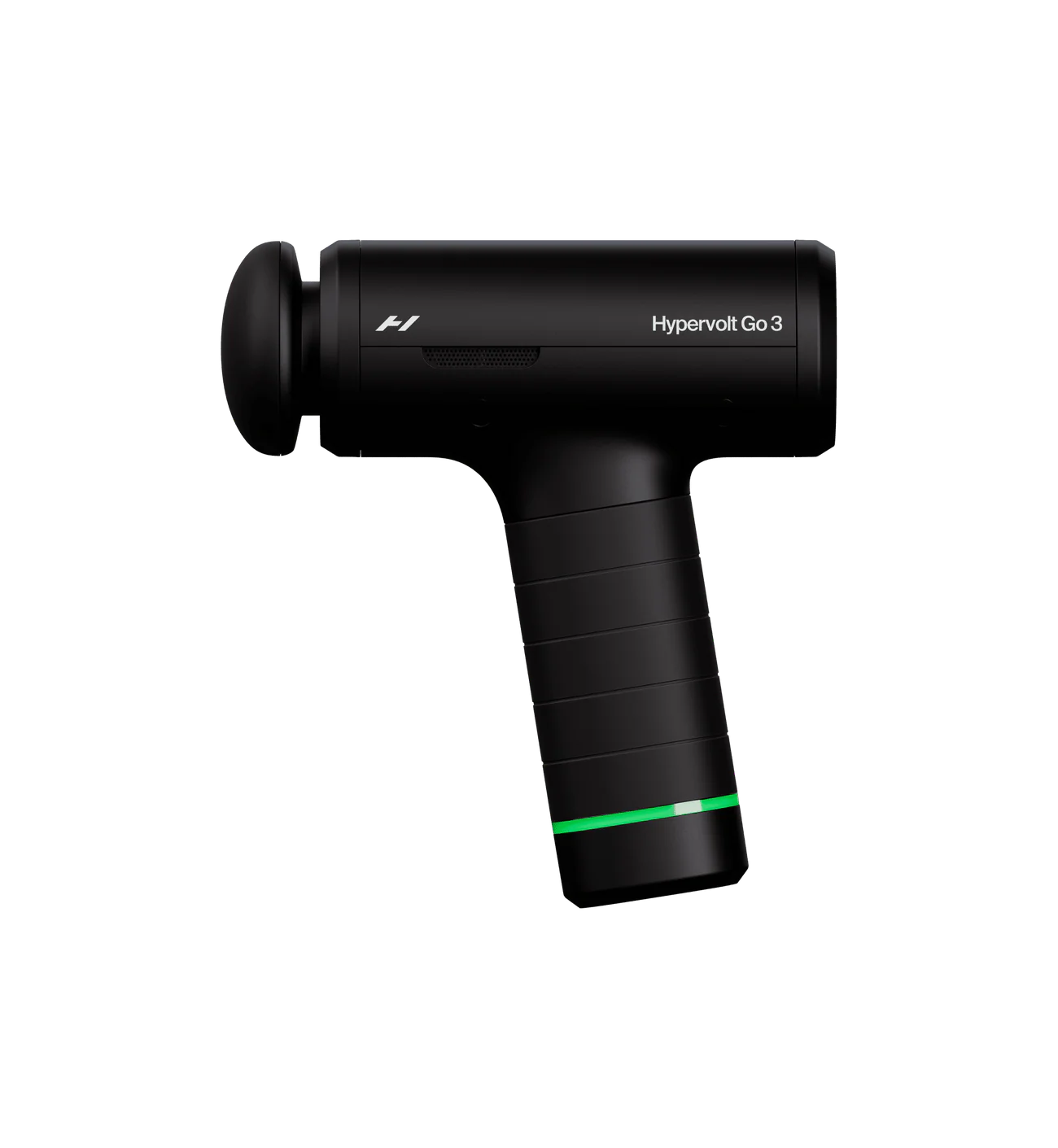
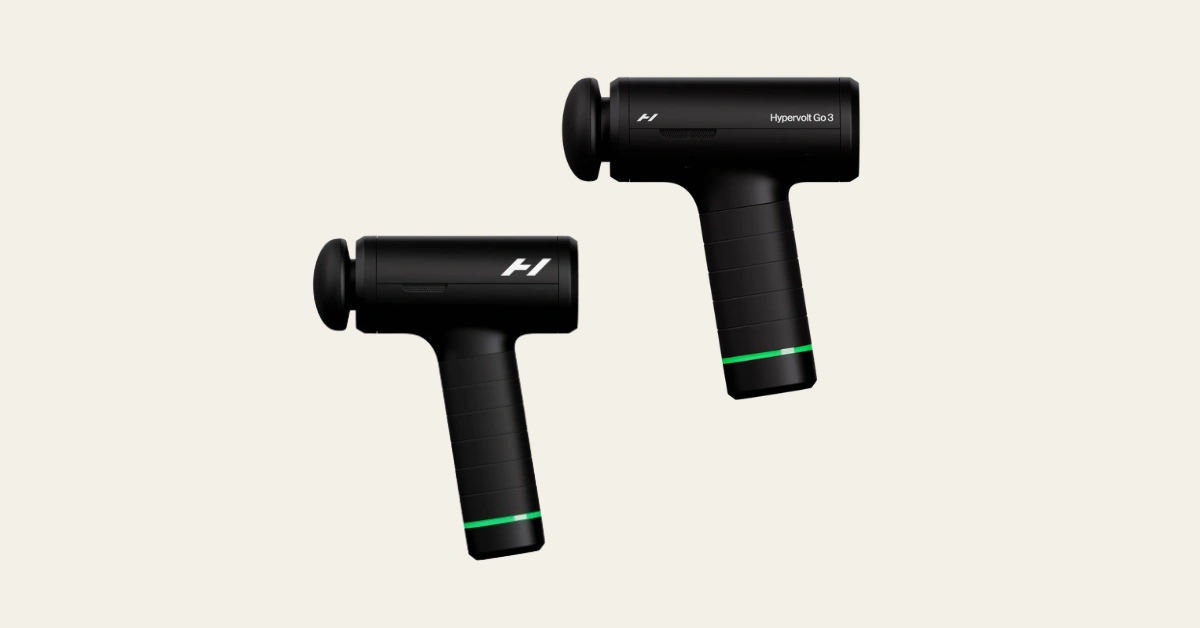
Best lightweight – Hyperice Hypervolt Go 3
At 1.6 lb with a USB-C charger and five speeds, the Go 3 is the one I’d point a new runner toward. It has 45 lbs of stall force less than the full-size models, but more than enough for calves, quads, and hamstrings. You lose the pressure sensor and ship with two attachments instead of five, and the Heated Head is sold separately. For half the price of the flagship, that’s a fair trade.
Best for: Newer runners, smaller budgets, anyone who wants something light enough to toss in a gym bag daily.
3
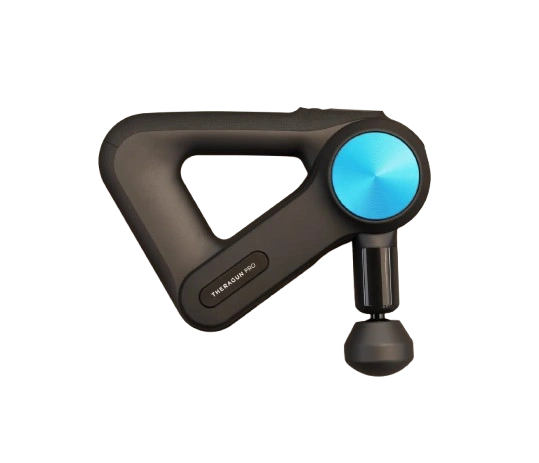
Best for deep-tissue depth – Theragun PRO (5th Gen)
This is the gun for runners with dense, stubborn legs, think heavily muscled quads or chronically tight calves that a 12mm gun just glances off. The full 16mm amplitude reaches deeper than anything else on this list; the motor holds about 60 lbs of stall force, and the rotating triangular handle genuinely helps when you’re trying to reach your own mid-back or hamstrings. OLED screen, app, six attachments.
The reservation: it’s loud-ish compared to the Hyperice line, it’s heavy in extended sessions, and you’re paying a premium for depth a lot of runners don’t need. Buy it because you want 16mm, not because of the badge.
Best for: Bigger, stronger runners and anyone who finds mid-amplitude guns too gentle.
4
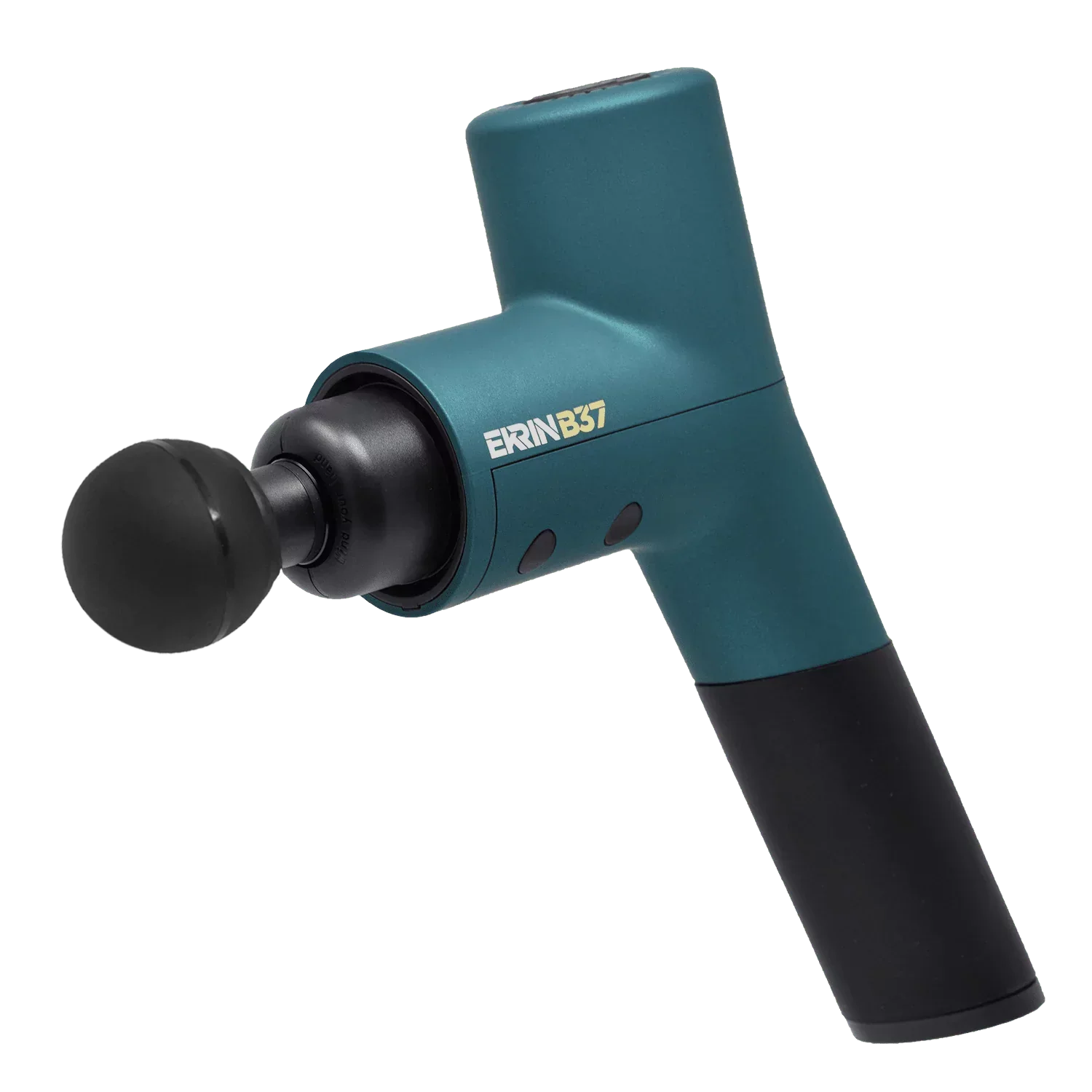
Best value full-size gun – Ekrin Athletics B37
The quiet overachiever. The B37 delivers 12mm amplitude and a manufacturer-stated 56 lbs of stall force within striking distance of guns. Five speeds (1400–3200 RPM), USB-C charging on the current version, a battery that runs for hours, and a 15-degree angled handle that takes strain off your wrist when you’re working your own upper back. No app, no smart features. What sells it is Ekrin’s lifetime warranty, which none of the big names match.
Best for: Runners who want big-gun performance and durability without paying for connected features.
5
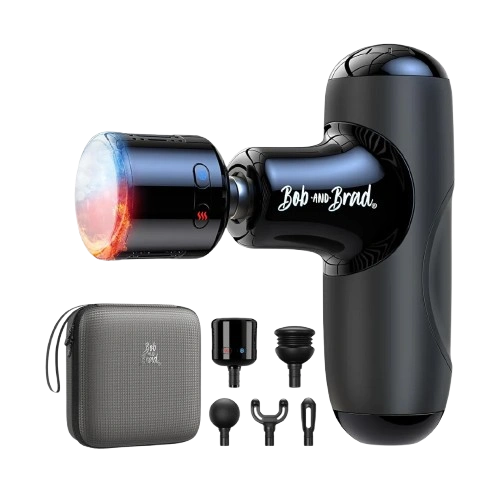
Best for travel and race trips – Bob and Brad Q2 Pro Mini
Built by two physical therapists, the Q2 Pro Mini weighs under a pound, runs whisper-quiet (under 30 dB), and fits in a jacket pocket. Five speeds, 1800–3000 percussions per minute, and a hot/cold head that genuinely gets hot (up to 113°F) and cold (down to 50°F) are useful for pre-race warm-up and post-race calming. It’s a 7mm amplitude device, so it’s vibration-leaning rather than deep percussive, with around 32 lbs of stall force. It won’t dig into your glutes like a full-size gun. For a carry-on recovery tool before a destination marathon, it’s hard to beat.
Best for: Travel, race weekends, desk-bound runners, and anyone who wants heat/cold in their bag.
6
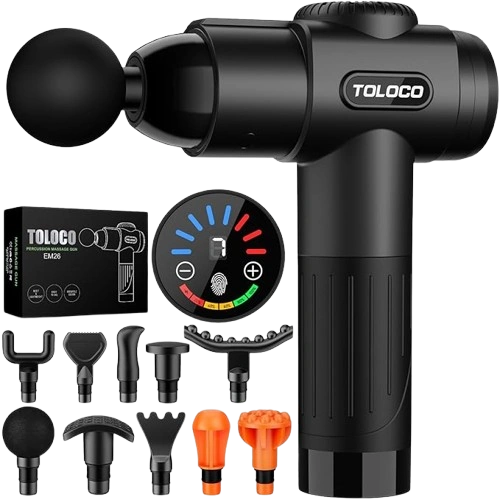
Best budget pick – TOLOCO EM26
Amazon’s perennial bestseller, and for good reason at this price. The EM26 advertises 12mm amplitude (independent testing measures it closer to 10mm), up to 3200 RPM, a six-hour battery, ten attachment heads, and quiet sub-50 dB operation. It’s a vibration-leaning gun with no smart features and a build that won’t last a decade. But if you’ve never owned a massage gun and don’t want to spend $200 to find out whether you’ll use one, start here.
Best for: First-time buyers, tight budgets, students, runners who want to test the concept.
Compare prices on the Hyperice lineup →
Comparison at a glance
| Model | Amplitude | Stall force | Key feature | Best for |
|---|---|---|---|---|
| Hyperice Hypervolt 3 | 14mm (unpublished) | — | Pressure sensor + heated head | Best overall |
| Hyperice Hypervolt Go 3 | — | 45 lbs | 1.6 lb, USB-C | Lightweight / value |
| Theragun PRO (5th Gen) | 16mm | 60 lbs | Deepest reach, rotating handle | Deep-tissue depth |
| Ekrin B37 | 12mm | 56 lbs | Lifetime warranty | Value full-size |
| Bob and Brad Q2 Pro Mini | 7mm | 32 lbs | Heat + cold, pocket-sized | Travel / race trips |
| TOLOCO EM26 | 10mm (measured) | — | 10 heads, cheap | Budget / first gun |
Coach’s Take: What actually matters for a runner
I’d hand a massage gun to every athlete in a marathon block. I would not let most of them near their own calves at full speed the night before a race.
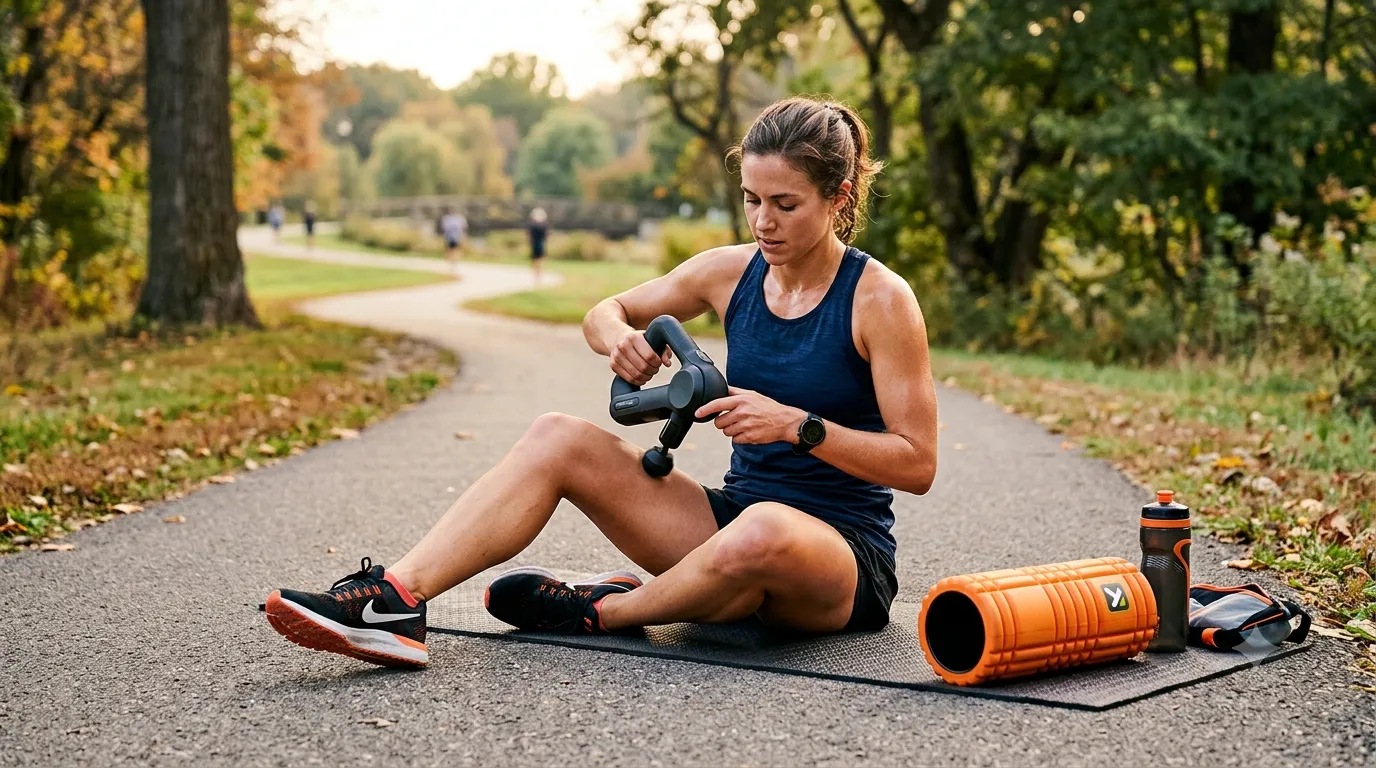
Here’s where it earns its place. In a marathon build, the failure point I see most often isn’t the lungs or the long run; it’s the lower leg. The soleus and the deep calf take a beating over weeks of volume; they get tight, and that tightness creeps up into the Achilles. A foam roller can’t properly reach the soleus. A massage gun can. Two minutes per calf at a low-to-moderate speed, after your long run, keeps that tissue moving. That single habit has kept more of my athletes off the physio table than any fancy attachment.
So when runners ask me which gun to buy, I don’t care about the badge or the app. I care about two things: can it sustain pressure on a dense muscle without stalling, and is it comfortable enough that you’ll actually pick it up four times a week. A gun you don’t use is worse than a tennis ball you do. That’s why I rate the mid-amplitude options here so highly. You don’t need 16mm of stroke pounding your calf; you need consistent pressure and a device that doesn’t feel like punishment.
Where I push back on the marketing: more power is not always better for a runner. The day before a hard session or a race, you want light, warming work to bring blood to the muscle, not a deep, aggressive treatment that leaves the tissue tender. Save the deep work for after sessions, not before them. And keep it off the bone, off the Achilles tendon itself, and off the IT band directly. Work the muscles around those structures, not the structures themselves.
Recovery is what lets you absorb the training; it’s the whole reason our training plans build easy days and down weeks into every block. A massage gun is one small lever inside that. Pull it consistently, and it helps. Treat it as a substitute for sleep and easy running, and it does nothing.
How to use a massage gun across a training block
This is the protocol I give athletes. It’s not on the box.
Before a run (warm-up): 30–60 seconds per major muscle group, calves, quads, glutes — on a low speed. The goal is blood flow and activation, not depth. Quick and light.
After an easy run: Optional. If something’s tight, 1–2 minutes on the tight spot, moderate speed.
After a long run or hard session: This is the high-value window. 2–3 minutes per muscle group calves and soleus first, then quads, hamstrings, glutes at a low-to-moderate speed. Slow, gliding passes. You’re flushing, not drilling.
During taper: Dial it back. Lighter pressure, shorter sessions. Your tissue is already sensitive as the volume drops.
Race week: Light activation only. Do not introduce deep or novel work in the 48 hours before a race. If you’ve never gunned your calves hard, race week is the worst time to start.
A few hard rules: never more than 15 minutes total in one session, never on a joint or directly on the spine, and never to push through a sharp pain. Sharp pain is a stop signal, not a target.
Who should skip a massage gun
Be honest with yourself before you spend the money.
- If you have an acute injury, a flaring Achilles, shin splints, or a recent strain, put the gun down and see a professional. Percussing an inflamed area can make it worse.
- If you use it to mask pain and keep training through something that needs rest, it’ll hurt you more than help.
- If you already foam roll consistently and have no specific problem areas, you may not need one at all. The marginal gain over a roller you already use is small.
Everyone else: if you run regularly, the recovery time you save is real, and the lower-leg access you gain is genuinely useful.
Ready to Start Training?
Training plans are designed and reviewed by Ilya Tyapkin, Rio 2016 Olympian. Find the plan that matches your goal: