
The Coros Pace 4 delivers a bright AMOLED display, dual-frequency GPS, 41 hours of GPS battery life, a redesigned heart rate sensor, a new Action button, and a built-in microphone, all packed into a watch that weighs just 32 grams with the nylon band.
Positioned between the Coros Pace 3 ($199) and Coros Pace Pro ($299), it’s now the most compelling entry point for athletes who don’t need offline maps.
Is it the best budget running watch? Here’s the full picture in the Coros Pace 4 Review.
Quick Verdict
Overall Rating: 4.4 / 5
| Best For | Lightweight-obsessed runners, triathletes, and daily trainers who want AMOLED and dual-frequency GPS under $250 |
| Skip If | You need offline maps, smartwatch features, or streaming music |
| Price | $249 |
| 32g weight + AMOLED display + 41-hour GPS battery at $249 — a combination that nothing else at this price matches | 32g weight + AMOLED display + 41-hour GPS battery at $249 — a combination nothing else at this price matches |
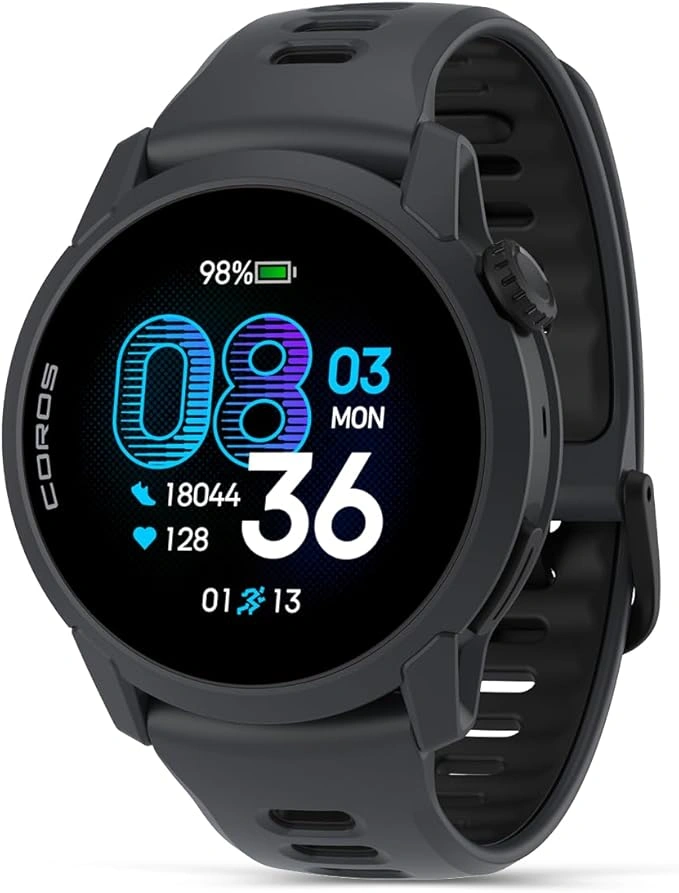
Coros Pace 4
Pros
Cons
Related: Best GPS Watches For Running
Specs Overview
| Spec | Details |
|---|---|
| Display | 1.2″ AMOLED touchscreen, 390×390, 2.5D curved edge |
| Case Size | 42mm |
| Thickness | 11.8mm |
| Weight | 32g (nylon band) / 37g (silicone band) |
| Battery (Smartwatch) | Up to 19 days (raise-to-wake) / ~6 days (always-on) |
| Battery (GPS Standard) | Up to 41 hours |
| Battery (Dual-Frequency GPS) | Up to 31 hours |
| GPS | All-Systems + Dual-Frequency (multi-band) |
| Heart Rate | Redesigned optical sensor with larger LEDs |
| Water Rating | 5 ATM (50m) |
| Microphone | Yes (Voice Pins, training log notes) |
| Speaker | No |
| Maps | Breadcrumb navigation only (no offline maps) |
| Music | MP3 storage + phone control |
| Charging | USB-C |
| Price | $249 |
| Released | November 10, 2025 |
Price
The Coros Pace 4 retails at $249, positioned intentionally between the Coros Pace 3 (now $199). Both sibling watches had their prices adjusted at launch to make room for the Pace 4 in the lineup.
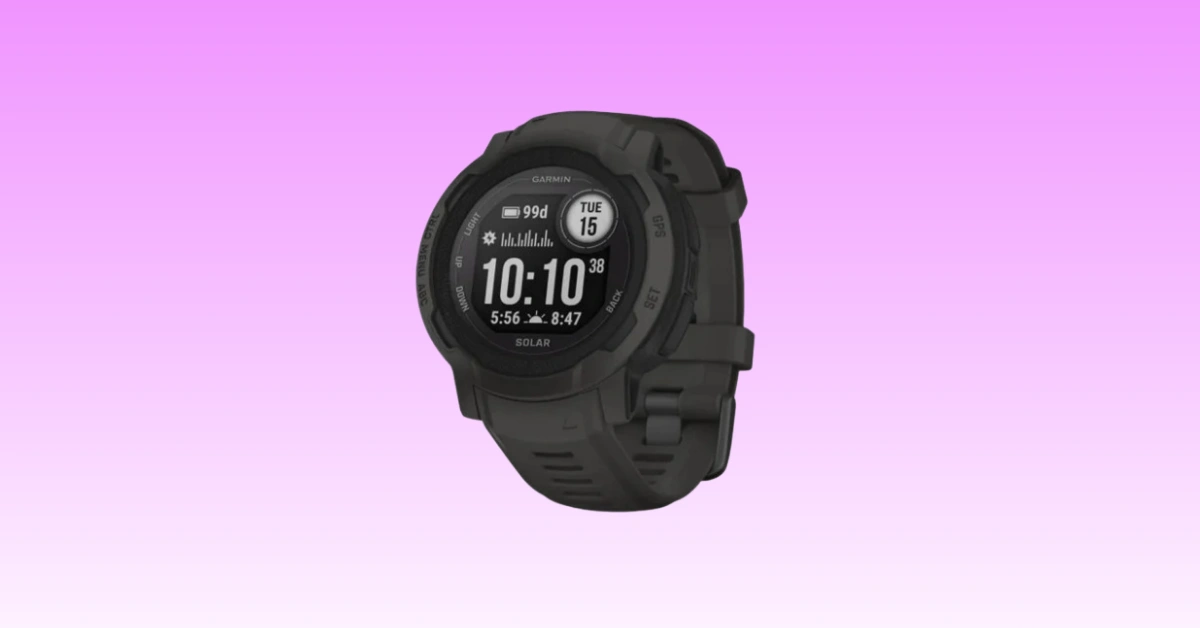
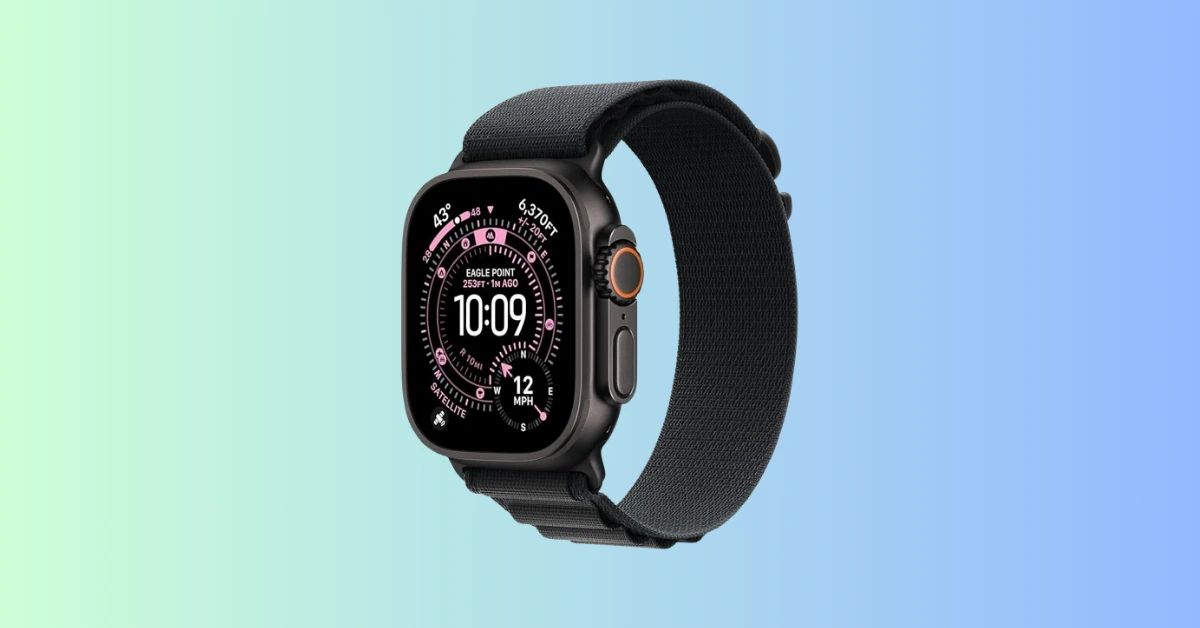
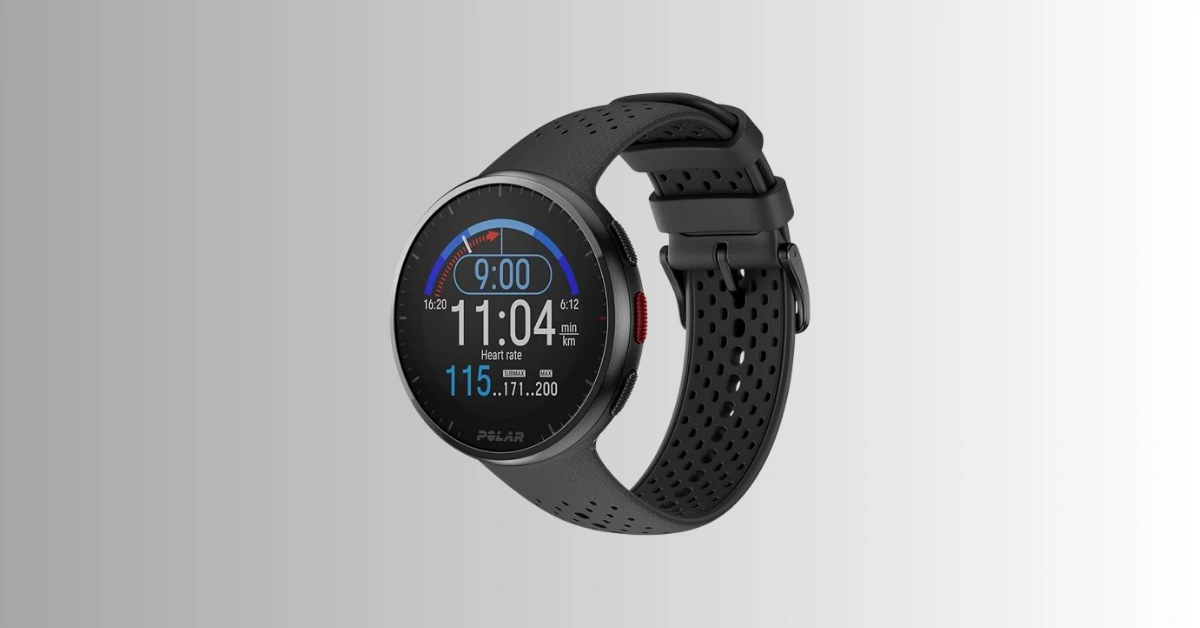
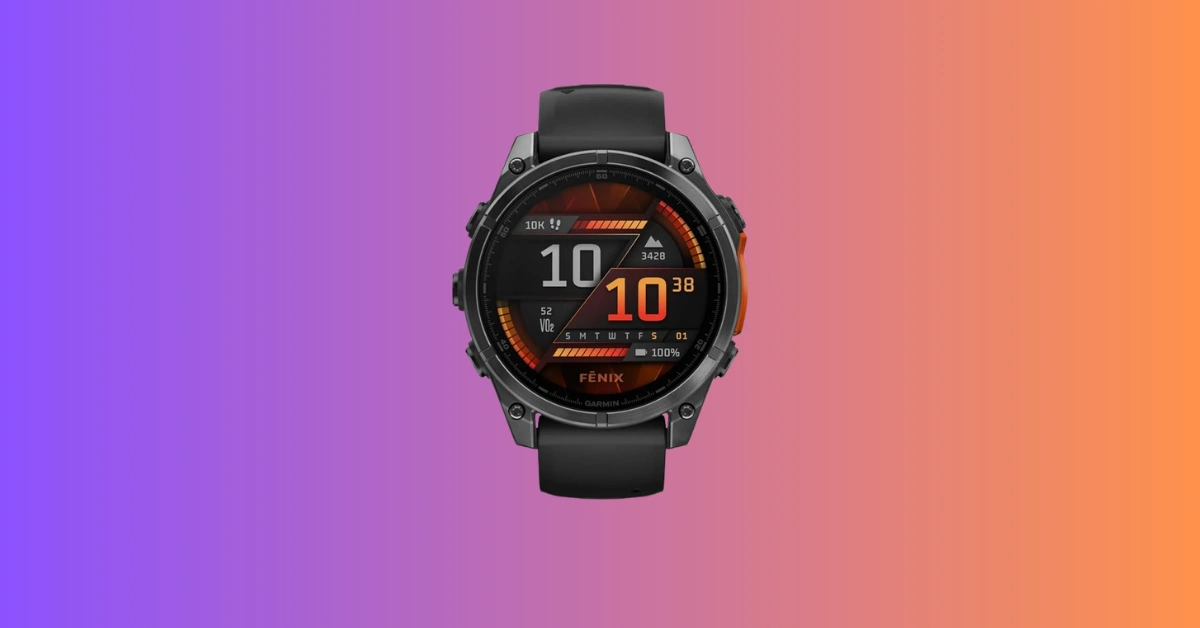
Here’s how it stacks up against the most direct competition:
The value case is clear. For $249, the Pace 4 offers an AMOLED display, dual-frequency GPS, and a 41-hour GPS battery, a combination that the Garmin Forerunner 165 at the same price can’t match on battery or GPS accuracy. The Suunto Run is a close rival, but the Coros training ecosystem and Pace 4’s weight give it an edge for dedicated runners.
Design
The Coros Pace 4 is built around one overriding principle: get out of your way. At 32g with the nylon band and 11.8mm thin, it’s one of the lightest and slimmest GPS watches with dual-frequency GPS on the market. Athletes who wear it consistently report that it genuinely disappears on the wrist — even during sleep tracking.
The 42mm case is all-plastic, a meaningful step down from the titanium bezel and sapphire glass of the Coros Apex 2, but a deliberate trade-off in weight. The 2.5D curved AMOLED display gives it a more premium look than the materials alone suggest, with a tapered edge that blends cleanly into the case.
Three physical controls give you precise watch management:
- Digital crown (scroll, select)
- Back/lap button
- New Action button a dedicated shortcut to breadcrumb navigation, media controls, or Voice Pins without navigating menus
The Action button is a quality-of-life addition borrowed from Coros’s higher-end lineup. Mid-run access to navigation or voice notes without fumbling through menus is a small but real improvement over the Pace 3.
The touchscreen is responsive for data screen swiping and map dragging, but like the Apex 2, reviewers note it can trigger accidentally when wearing gloves or a jacket sleeve in cold weather, requiring the use of the screen lock setting during winter training.
Ships with both a silicone and a nylon band. The nylon band is the lighter option and provides a 32g weight breathable, quick-drying, and comfortable for all-day wear. USB-C charging means you can use any standard cable, eliminating the proprietary charging adapter frustration common to Garmin and older Coros models.
Available in black and white colorways, clean and unobtrusive.
Display
The jump from MIP to AMOLED is the Pace 4’s single biggest upgrade over the Pace 3, and it’s a significant one. The 1.2-inch AMOLED touchscreen at 390×390 resolution delivers 164% higher resolution than the Pace 3’s 240×240 MIP display. Colors are vivid, contrast is sharp, and the 2.5D curved edge gives it a premium finish that belies its $249 price tag.
In direct sunlight, the crucial test for a running watch, the AMOLED holds up well. Reviewers tested it against the Garmin Forerunner 970, Apple Watch Ultra 3, and Suunto Vertical 2 and consistently found the display readable across all conditions.
One notable addition: a display-based flashlight that boosts to maximum brightness to function as a usable flashlight. It’s not the dedicated LED found on the Garmin Fenix 8 or Forerunner 970, but it’s a practical touch at this price point.
Battery trade-off with always-on display: switching from raise-to-wake (19 days smartwatch) to always-on drops to approximately 6 days smartwatch mode. For most runners using raise-to-wake during daily wear and GPS during workouts, the 41-hour GPS battery is the figure that matters most — and it’s exceptional.
Training Features
Running Tools
A composite metric tracking fitness level based on recent training shown on the watch face and updated after each workout
Estimates target finish times for 5K, 10K, half-marathon, and marathon based on current fitness data
Customized training plans built around your current fitness and goal race date
Set a target virtual pace and receive real-time alerts when you drift above or below it
Tracks training load across running and multisport disciplines
Calculates recommended recovery time after each workout based on effort and HRV data
Daily readiness informed by recent training and recovery data
Lactate Threshold estimate
VO2 Max estimate
Strava Live Segments (via firmware update)
PacePro pacing tool (added March 2026 update)
ClimbPro-like climb tracking (added March 2026 update)
HYROX support (added March 2026 update)
Voice Features
Record voice notes mid-activity, pinned to a GPS location in your route. Review them in the Coros app post-run. Useful for course notes, coaching feedback, or marking points of interest
Post-activity voice training log gives you the ability to record a verbal debrief after finishing a run, automatically saved and transcribed in the activity summary
Note: No speaker voice features are record-only, not playback
Navigation
Follow uploaded GPX routes with off-course deviation alerts
Instantly switch to navigation view mid-run without navigating menus
Sync routes from Strava, RidewithGPS, Wikiloc, or the Coros app
No offline topographic or landscape maps
Health Tracking
Sleep tracking with Automatic detection and sleep quality scoring
Overnight HRV monitoring feeds recovery calculations
Blood oxygen (SpO2)
Stress tracking
Menstrual cycle tracking
Barometric altimeter for elevation data
Smart Features
- Smartphone notifications
- MP3 music storage with Bluetooth headphone pairing
- Phone music control (streaming music controls coming via update)
- Strava, TrainingPeaks, Wikiloc, Apple Health, Stryd integration
Performance
GPS Accuracy
The Pace 4 supports All-Systems + Dual-Frequency (multi-band) GPS an upgrade over the Pace 3’s single-band options. In testing alongside the Garmin Forerunner 970, Suunto Vertical 2, and Apple Watch Ultra 3, the Pace 4 consistently produced accurate GPS tracks across road runs, trail runs, and cycling routes.
Real testing over 50+ hikes and trail runs confirmed distance accuracy in both mountain terrain and flat trails remained consistent without notable drift or spikes. Multi-band mode burns through battery faster (~31 hours vs 41 hours in standard mode). Most runners will use standard GPS daily and switch to multi-band for technical trail races or challenging environments.
Heart Rate Accuracy
The redesigned optical sensor features larger LEDs and a more secure fit geometry aimed specifically at reducing the spikes and drops that frustrated some Pace 3 users. Testing shows meaningful improvement. Most reviewers found it accurate during steady-state and moderate-intensity running, with the occasional brief lag during sudden intensity shifts consistent with the optical HR category overall.
External sensor pairing is fully supported, Stryd, chest straps, speed/cadence sensors via Bluetooth and ANT+.
Battery Life
Battery life is one of the Pace 4’s most impressive achievements, given its AMOLED display. In testing with always-on display and multi-band GPS, real-world GPS use came in at approximately 35 hours, closely matching Coros’s claim of 41 hours in standard mode. For multi-day event use, testers completed 3 consecutive days of hiking with 18 total hours of GPS time before needing a charge.
For most runners doing 1–2 hours of GPS training per day, the Pace 4 requires charging roughly once every 10–14 days in raise-to-wake mode exceptional for an AMOLED watch at this size.
Who Should Buy It?
Buy the Coros Pace 4 if:
- Weight is your top priority. 32g is extraordinary for a fully capable GPS running watch
- You want an AMOLED display + dual-frequency GPS under $250 nothing else at this price delivers both
- You’re a road runner or triathlete whose training is primarily on known routes
- You value a clean, simple training app, and the Coros app consistently rates above Garmin Connect for ease of use
- You’re upgrading from a Garmin Forerunner 165 and want better battery life and GPS accuracy
- You use Strava, TrainingPeaks, or Stryd for full integration
- You want a watch that improves over time. Coros’s update cadence is excellent
Skip it if:
- You need offline maps. The Coros Pace Pro at $299 adds this for $50 more, and is worth serious consideration
- You want streaming music MP3 only, no Spotify or Apple Music
- Smartwatch features matter, no contactless payments, and limited notification interaction
- You prefer a premium build, but the plastic case lacks the sapphire and titanium of the Apex 2
- You’re invested in Garmin’s ecosystem Garmin Coach, Connect IQ, and the broader Garmin software stack aren’t available
- You run frequently in cold weather with gloves, and the touchscreen sensitivity can frustrate you
Final Verdict
The Coros Pace 4 is one of the best running watches of 2025. At $249, it packs an AMOLED display, dual-frequency GPS, 41-hour GPS battery, Voice Pins, and the full Coros training analytics suite into a 32g body that disappears on your wrist. No other watch at this price does all of that simultaneously.
The gaps are honest and consistent: no offline maps, no speaker, no streaming music, no contactless payments. These aren’t oversights, they’re deliberate trade-offs that keep the watch light, affordable, and focused on what runners actually need during training.
For road runners, triathletes, and weight-conscious athletes who want serious training tools without paying high prices, the Coros Pace 4 is the most compelling choice under $250 in 2025. If you ever want offline maps, spend the extra $50 on the Pace Pro. But if you don’t, and many runners genuinely don’t the Pace 4 is hard to beat.
Scores
| Category | Score |
|---|---|
| Design | 4.3 / 5 |
| Display | 4.7 / 5 |
| Training Features | 4.4 / 5 |
| Performance | 4.5 / 5 |
| Value | 5.0 / 5 |
| Overall | 4.4 / 5 |
Frequently Asked Questions
Is the Coros Pace 4 worth?
Yes, for runners who want an AMOLED display, dual-frequency GPS, and long battery life under $250, it’s the strongest option available. The main reasons to skip it are if you need offline maps or smartwatch features.
What is the difference between the Coros Pace 4 and the Pace 3?
The Pace 4 adds an AMOLED display (vs MIP), 16+ more hours of GPS battery, dual-frequency GPS, a new Action button, a built-in microphone for Voice Pins, and USB-C charging. The Pace 3 retains a slight weight advantage at 30g vs 32g and costs $50 less at $199. For most runners, the Pace 4 is the better buy.
Does the Coros Pace 4 have dual-frequency GPS?
Yes — All-Systems + Dual-Frequency (multi-band) GPS is included, improving accuracy in urban environments, dense forests, and challenging terrain compared to single-band watches.
This review is based on aggregated expert testing data, official firmware release notes, and real user feedback compiled from across the running and multisport community. We bring together the most accurate and up-to-date information so you can make a confident buying decision.