
Runner’s Knee & IT Band Syndrome Guide
This post provides general educational guidance. Persistent, worsening, or severe knee pain should be assessed by a GP, physiotherapist, or sports medicine physician before resuming normal training.
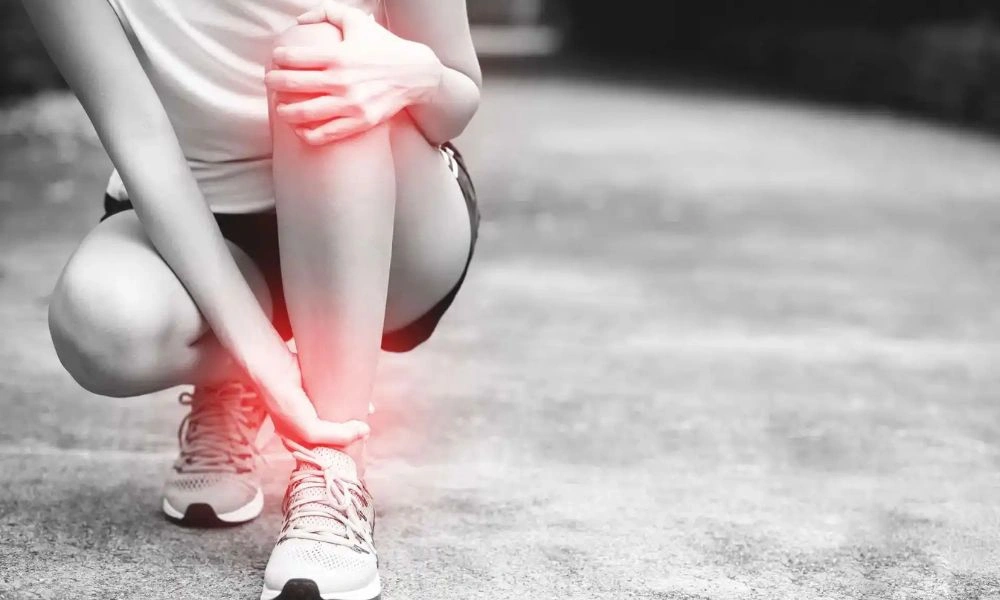
Location is the fastest diagnostic tool for runner’s knee pain. Pain around or behind the kneecap — especially when going downstairs, squatting, or sitting for long periods — points to patellofemoral pain syndrome (PFPS), also called runner’s knee. Pain on the outer side of the knee, typically appearing after a consistent distance into every run and resolving at rest, points to iliotibial band syndrome (ITBS). These are the two most common causes of knee pain in runners; they have different causes, and they require different treatments. Both are driven by weak hip muscles and respond well to targeted strengthening.
Use our running calculator to plan your training load while you manage knee pain — most runners can continue some form of aerobic activity during rehabilitation if the work is managed carefully.
Patellofemoral Pain Syndrome (Runner’s Knee)
What Is It?
Patellofemoral pain syndrome (PFPS) is the most common injury in recreational runners, affecting approximately 11–17% at any given point in training. The kneecap (patella) sits in a groove on the front of the thigh bone (femur) and glides through this groove with each bend of the knee. When the muscles that control this tracking are weak or imbalanced, the kneecap moves slightly off-track, creating friction and pressure on the cartilage underneath.
Signs of PFPS:
- Dull ache around, behind, or just above the kneecap
- Pain that worsens going downstairs, squatting, or sitting with the knee bent for extended periods (the classic “cinema sign”)
- Pain during or after downhill running
- Tenderness when pressing directly on the kneecap
- Occasional clicking or grinding sensation under the kneecap
What PFPS is not: Do not confuse PFPS with patellar tendinopathy (jumper’s knee), which causes pain specifically in the tendon below the kneecap connecting it to the shinbone. Patellar tendinopathy is a tendon overuse injury with a different treatment pathway.
Why Runners Get PFPS
Research over the past decade has significantly shifted the understanding of PFPS. The traditional focus on knee-specific mechanics, particularly the vastus medialis oblique (VMO), the inner quad muscle thought to control kneecap tracking, has largely given way to a broader recognition that hip weakness is the primary driver.
Specifically, weakness in the hip abductors and external rotators causes the femur to rotate inward during running, which moves the kneecap laterally relative to the groove it should track through. The kneecap doesn’t move outward; the thigh bone moves inward beneath it. This distinction matters for treatment: the fix is hip strengthening, not localised knee work.
Contributing factors:
- Rapid mileage increase loading the patellofemoral joint before it has adapted
- Weak quadriceps — particularly the VMO — that allow kneecap tracking dysfunction
- Tight quadriceps and calf muscles that increase forces at the kneecap
- Overstriding, which increases braking force and patellofemoral compressive load
- Downhill running and hard surfaces, which elevate patellofemoral stress per stride
PFPS is more prevalent in women, not, as older theories suggested, because of wider hips, but likely due to differences in neuromuscular control patterns and historically lower strength training participation rates. The treatment is the same regardless of gender.
Treatment: Conservative Phase (Weeks 1–6)
Priority 1: Hip Strengthening
This is the evidence base and the most important intervention. Begin with these exercises immediately:
Hip abductor strengthening:
- Side-lying leg raise: Lie on your side, stack legs, raise the top leg to 45 degrees with the foot slightly turned down, and lower slowly. 3 sets of 15 reps, once daily. The operative word is slowly — the eccentric (lowering) phase drives the strengthening adaptation.
- Clamshell with resistance band: Same side-lying position, band around the thighs above the knee, feet together. Open the top knee like a clamshell against band resistance. 3 sets of 15 reps.
Hip external rotation and glute strengthening:
- Glute bridge: Lie on your back, feet hip-width apart, drive hips up until body forms a straight line from knee to shoulder. Hold 2–3 seconds at the top, lower slowly. 3 sets of 15 reps.
- Single-leg glute bridge: Progress from two-leg to single-leg as strength improves. Maintain pelvic level — do not let the unsupported side drop.
Quadriceps strengthening:
- Straight-leg raise: Lie on your back, bend the non-injured leg, straighten the injured leg and raise it to 45 degrees. Lower slowly. 3 sets of 15 reps. Activates the VMO without patellofemoral compressive load.
- Terminal knee extension (with resistance band): Loop a band around a fixed object, step back to create tension, slightly bend the knee, then straighten against resistance. Specifically trains VMO in the range where it most influences kneecap tracking.
Functional strengthening (progress to these after 2–3 pain-free weeks of the above):
- Partial squats on a step: Stand on a step, lower slowly onto one leg to 45–60 degrees of knee bend. Do not let the knee cave inward. 2 sets of 15, progressing to 3 sets.
- Single-leg balance: Progress to unstable surfaces (balance cushion, Bosu) as control improves.
Priority 2: Load Management
Reduce mileage and avoid the specific activities that reproduce the pain downhill running, stairs, prolonged sitting with bent knees. Running on flat surfaces at reduced volume is generally manageable if pain stays below 4/10 and doesn’t worsen afterwards. If you’re following a structured training plan, reduce to the point at which you can run without significant pain, maintain that for 2 weeks while strengthening, then rebuild.
Priority 3: Soft Tissue Work and Taping
- Foam rolling: Target the quadriceps and IT band (lateral thigh). Move slowly — 2–3 cm per second. Pause on tender spots for 20–30 seconds. 5–10 minutes after runs.
- Quadriceps and calf stretching: Static stretches held 30–60 seconds after every run. Do not stretch into pain — discomfort should be the limit.
- Kinesiology tape (KT tape) or a McConnell tape technique: Research shows patellar taping reduces pain for many PFPS sufferers, likely by improving proprioceptive feedback rather than mechanically repositioning the kneecap. If it helps, use it during the rehabilitation period. A physiotherapist can show you the McConnell technique for more precise application.
On ice: Ice for pain relief (10 minutes on, 10 off, once or twice daily) is reasonable during acute symptomatic phases, not as a substitute for the strengthening programme and not beyond the first few days of acute symptoms.
When Conservative Management Isn’t Enough
If pain is not improving after 6–8 weeks of consistent strengthening work:
Gait analysis: A detailed running gait analysis — conducted by a physiotherapist or sports medicine clinician using slow-motion video — can identify specific biomechanical contributors: excessive hip drop, knee valgus (inward collapse), overstriding, or cadence issues. This is the most targeted next step when self-directed strengthening isn’t producing results.
Custom orthotics: Evidence for orthotics in PFPS is mixed — some runners respond significantly, others don’t. They should not be a first-line treatment, but are worth exploring if the strengthening programme and gait corrections have been exhausted.
Physiotherapy: A qualified sports physiotherapist provides targeted manual therapy, specific exercise progressions, and movement retraining in a way that self-directed rehabilitation cannot replicate for complex cases.
Return to Running After PFPS
Criteria before resuming full training:
- Pain-free with daily activities (stairs, sitting, squatting)
- Single-leg squat to 45 degrees without pain or significant knee valgus
- 15+ pain-free single-leg calf raises on the affected side
Return protocol: Begin with flat-surface easy running at significantly reduced volume. Avoid downhill running and stairs for the first 2–3 weeks back. Increase weekly mileage by no more than 10% once you’ve completed 2 consecutive pain-free weeks. Speed work and hill training return last — typically 4–6 weeks after pain-free flat running is established.
Most PFPS cases require 4–12 weeks of consistent rehabilitation. Runners who continue training through PFPS without addressing the hip weakness typically experience extended recovery or chronic recurrence.
IT Band Syndrome (Outer Knee Pain)
What Is It?
Iliotibial band syndrome (ITBS) is the second most common running injury and the leading cause of lateral (outer) knee pain in distance runners. The iliotibial band is a thick connective tissue band running from the hip to just below the outer knee. At around 20–30 degrees of knee flexion — the angle at which the knee is during mid-stance in running — the band crosses a bony prominence on the outer femur, creating friction and irritation.
Signs of ITBS:
- Sharp or burning pain on the outer side of the knee — not behind or below the kneecap
- Pain that typically begins after a consistent distance into each run (often 15–20 minutes), then becomes constant
- Pain that eases quickly with rest, often within minutes of stopping
- Tenderness at the lateral femoral epicondyle — the bony outer prominence just above the knee
- Pain going downhill — the knee angle at which friction peaks
- Pain descending stairs
What ITBS is not: ITBS pain is lateral — on the outside of the knee. PFPS pain is anterior, around and behind the kneecap. IT band pain does not typically cause clicking, grinding, or pain when pressing on the kneecap itself.
Why Runners Get ITBS
IT band syndrome is fundamentally a load management and hip weakness problem, not an IT band tightness problem — despite the intuitive urge to foam-roll the IT band aggressively. The band itself cannot be meaningfully lengthened; it is dense connective tissue with minimal elasticity.
The primary driver is weak hip abductors (particularly the gluteus medius), which allows excessive hip drop on the unsupported side during each stride. This increases tension in the IT band as it attempts to compensate for the hip’s lateral instability, increasing the compressive load at the lateral epicondyle.
Contributing factors:
- Rapid mileage increase — ITBS commonly presents after a significant jump in weekly volume
- Downhill running — elevates IT band friction at the critical knee angle
- Running on cambered roads — the downhill leg bears more load through the IT band
- Weak glutes, particularly the gluteus medius
- High training volume without adequate strength work
Treatment
Load management first: Unlike PFPS, ITBS often requires a more significant reduction in running than conservative PFPS management. Running through ITBS once the pain has appeared mid-run frequently extends recovery. Identify the distance at which pain begins and train below that threshold while rehabilitating.
Hip strengthening (identical priority to PFPS):
- Side-lying hip abduction, clamshell with band, single-leg glute bridge — same exercises as PFPS with the same protocol
- Hip hike / pelvic drop exercise: Stand on a step on the affected side, let the other hip drop, then actively raise it by contracting the standing-leg glute. This directly trains the gluteus medius for the specific task it fails at during running. 3 sets of 15, daily.
Reduce IT band friction zones:
- Avoid downhill running entirely until pain-free at flat effort
- Avoid cambered road running — run on the flat centre of the path
- Cross-train with cycling, pool running, or rowing — activities that do not take the knee through the friction angle
Foam rolling: target the glutes and TFL, not the IT band itself
- Foam rolling the glutes and tensor fasciae latae (TFL, the upper outer hip muscle that attaches to the IT band) reduces tension at the source. Rolling directly on the IT band is painful and has limited therapeutic effect on the dense connective tissue itself.
- Glute rolling: sit on the foam roller, cross the affected leg over the other, and roll the gluteal tissue slowly.
- TFL rolling: lie on your front-outer side, roll the upper outer hip from just below the iliac crest downward.
Gait correction:
- Increasing running cadence by 5–10% (take shorter, quicker steps) reduces the knee angle at peak IT band tension and is one of the most evidence-supported interventions for ITBS
- Strengthening the hip abductors to prevent hip drop is the structural fix; cadence is the mechanical one
Return to Running After ITBS
Criteria: Pain-free with single-leg squat (no hip drop on the unsupported side), and pain-free walking downhill and down stairs.
Return protocol: Begin at a significantly reduced distance — start at 30–50% of the distance at which symptoms previously appeared. If that is pain-free, increase by 10–15% every session. Re-introduce hills and downhill running last, only after 3–4 weeks of pain-free flat running. Most ITBS cases resolve within 4–8 weeks of consistent load management and hip strengthening; chronic cases with structural hip drop patterns may take longer.
Prevention: Keeping Both Conditions at Bay
The prevention principles for PFPS and ITBS are nearly identical because they share the same primary underlying cause.
Two strength sessions per week targeting:
- Hip abductors (lateral glute): side-lying abductions, clamshells, hip hikes
- Glutes (posterior chain): single-leg deadlifts, glute bridges, hip thrusts
- Quadriceps: squats, step-ups, terminal knee extensions
- Hip external rotators: clamshells, seated external rotation with band
Progressive mileage increases: No more than 10% per week. Introduce downhill running gradually — it places 2–3× more load on the knee structures than flat running at equivalent pace.
Warm-up and cool-down consistency: Our dynamic warm-up guide includes hip activation exercises that prime the glutes before each run directly addressing the weakness pattern that drives both PFPS and ITBS. The cool-down guide covers the post-run hip flexor and quad stretching that reduces soft tissue tension around the knee.
Cadence monitoring: A cadence of approximately 170–180 steps per minute reduces patellofemoral loading compared to lower cadence running. A GPS watch with cadence tracking makes this easy to monitor.