

This post provides general educational guidance. Any pain that is severe, not improving, or accompanied by neurological symptoms should be assessed by a GP, physiotherapist, or sports medicine physician.
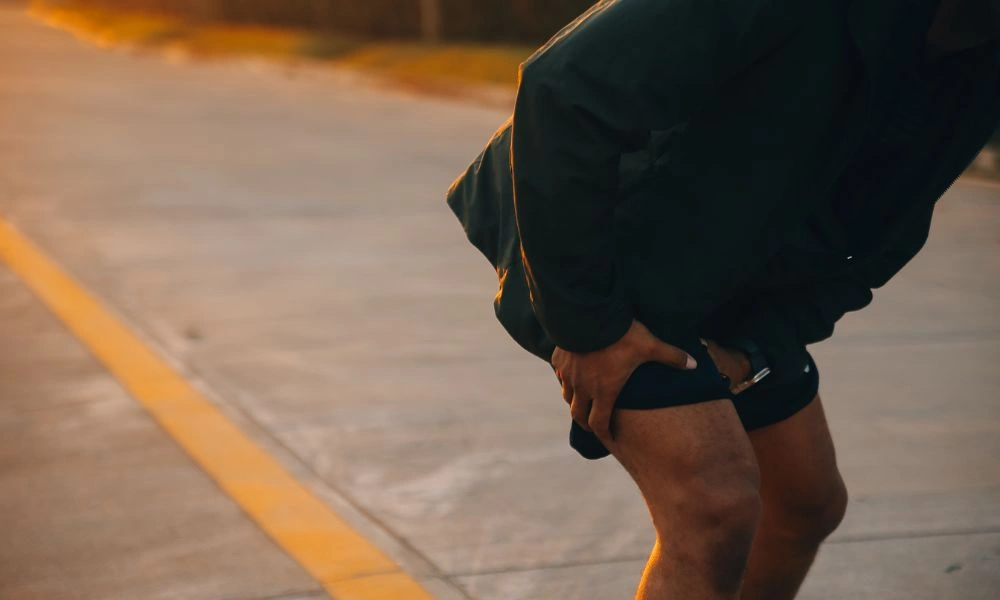
Between 50% and 75% of recreational runners experience at least one injury per year a rate that makes injury management as fundamental to running as training itself. The vast majority of running injuries are overuse injuries driven by two factors: load increasing faster than the body’s tissues can adapt, and biomechanical or strength weaknesses that allow certain structures to be disproportionately stressed. That means most running injuries are predictable, preventable, and manageable without stopping running entirely provided they’re caught and addressed early.
If you’re currently injured and trying to stay fit, use our running calculator to plan alternative aerobic activities based on pace equivalents. And if you’re building mileage toward a goal race, our training plan hub gives you a structured progression that manages load increases systematically.
- The Most Common Running Injuries: Quick Reference
- Should I Run Through This Pain? A Decision Framework
- Cardiac and Neurological Warning Signs: Seek Emergency Care
- Universal Treatment Principles: PEACE & LOVE
- The Principles of Running Injury Prevention
- Return to Running After Injury
- Minor Running Annoyances: Quick Reference
The Most Common Running Injuries: Quick Reference
These are the injuries that account for the majority of running-related pain and lost training time. Each links to a dedicated post with specific causes, diagnosis, and treatment:
| Injury | Primary location | Typical cause |
|---|---|---|
| Runner’s knee (PFPS) | Ankle sprain/tendinopathy | Weak quads/glutes, high mileage increase |
| IT band syndrome | Outer knee and thigh | Weak hip abductors, downhill running, rapid mileage increase |
| Heel and arch of the foot | Ankle and Achilles | Acute roll, overuse, tight calves |
| Plantar fasciitis | Heel and arch of foot | Tight calf complex, sudden mileage increase, unsupportive footwear |
| Shin splints (MTSS) | Inner lower leg | Rapid mileage increase, weak calf and hip muscles |
| Achilles tendinopathy | Back of ankle and lower leg | Overuse, calf tightness, insufficient recovery |
| Lower back pain | Lumbar spine | Weak core/glutes, tight hip flexors |
| Stress fracture | Tibia, fibula, metatarsals | Rapid mileage increase, low bone density, nutritional deficiency |
| Hamstring strain | Back of upper thigh | Speed work, inadequate warm-up, fatigue |
| Hip flexor strain | Front of hip | Overuse, tight hip flexors, inadequate mobility work |
For runner’s knee, ankle pain, and back pain specifically, the dedicated posts cover cause, diagnosis, treatment protocol, and return-to-running criteria in full.
Should I Run Through This Pain? A Decision Framework
This is the question every injured runner faces, and getting it wrong in either direction has consequences: stopping unnecessarily, losing fitness and habit; running through a serious injury turns a 2-week problem into a 3-month one.
Use location, onset pattern, and severity to guide the decision:
Stop Running and Seek Medical Assessment
- Chest pain, tightness, or pressure during running — see below for cardiac warning signs
- Leg weakness, numbness, or tingling — possible nerve involvement (disc herniation, compartment syndrome)
- Inability to weight-bear — possible fracture
- Significant swelling after a specific acute event — possible ligament rupture or fracture
- Pain that is progressively worsening despite 2–3 weeks of load reduction
- Bone-specific pain (pinpoint tenderness on the bone itself, not in surrounding muscle or tendon) — possible stress fracture
- Any pain accompanied by night pain that wakes you from sleep
Modify Training (Don’t Stop Entirely)
- Dull ache that appears in the first 10–15 minutes, then resolves — a common tendinopathy pattern; reduce load and begin loading programme
- Pain under 4/10 that doesn’t worsen during the run or the following day — modify by reducing mileage and avoiding speed work while addressing the underlying cause
- Pain that appears only above a certain pace or distance threshold — train below that threshold temporarily while building strength and capacity
- Muscle soreness 24–48 hours after a harder session — normal DOMS; continue training at easy intensity
Continue Training, Monitor Closely
- General muscle fatigue and aching that resolves within 24 hours — normal training response for the current load
- Mild soreness in a new muscle group after a different route or surface — adaptation; nothing concerning if it resolves quickly
Pain that changes your gait is pain you stop running through. The moment you’re compensating — shortened stride, altered arm swing, head tilt — you’re distributing load to structures that weren’t designed for it, and you’re creating a second injury on the way to treating the first.”
Cardiac and Neurological Warning Signs: Seek Emergency Care
Running-related chest pain is not always cardiac, but it must be treated as potentially cardiac until proven otherwise. Seek emergency medical attention call an ambulance, or go to A&E — for:
- Chest pain, pressure, tightness, or squeezing during or after running, particularly if it stops when you stop running
- Jaw, arm, or shoulder pain during running without a musculoskeletal cause
- Sudden severe headache during a run (“thunderclap headache”)
- Loss of consciousness, near-fainting, or significant dizziness during exertion
- Sudden severe weakness or numbness in any limb during a run
None of these symptoms should be monitored, waited out, or attributed to dehydration before being assessed by a medical professional. Running is overwhelmingly safe, but it does place cardiovascular demand on the body, and these symptoms are red flags.
Universal Treatment Principles: PEACE & LOVE
Current sports medicine guidance (published in the British Journal of Sports Medicine, 2019) has evolved beyond the traditional RICE protocol (Rest, Ice, Compression, Elevation) to a more nuanced framework called PEACE & LOVE. The update reflects accumulated evidence that prolonged rest and early ice used specifically to suppress inflammation can impair the natural healing response that drives tissue repair.
PEACE — The First 1–3 Days
- Protect: Reduce or avoid activities that reproduce the pain for the first few days. This does not mean complete rest it means avoiding the specific load that’s causing the problem.
- Elevate: Keep the injured limb above heart level when resting to reduce fluid accumulation and swelling.
- Avoid anti-inflammatories: Both NSAIDs (ibuprofen, naproxen) and extended icing for anti-inflammatory purposes may slow tissue repair by suppressing the inflammatory response needed for healing. Ice for pain relief in short applications is reasonable; targeted anti-inflammatory use should be discussed with a professional.
- Compress: Bandaging or compression sleeves reduce swelling and provide proprioceptive feedback.
- Educate: Understand that the goal is to return to loading, not avoidance of all movement.
LOVE — From Day 4 Onwards
- Load: Begin progressive loading of the injured structure as pain allows. Early progressive loading promotes better tissue remodelling than prolonged immobilisation.
- Optimism: Positive, realistic recovery expectations are associated with better outcomes across musculoskeletal injury research.
- Vascularise: Low-impact aerobic exercise that doesn’t stress the injured area (cycling, swimming, pool running, rowing) maintains cardiovascular fitness and promotes healing through improved circulation.
- Exercise: Targeted rehabilitation exercises — specific to the injured structure — rebuild strength, proprioception, and movement quality. Generic “rest and return” without rehabilitation is the most common cause of injury recurrence.
What RICE got right: Compression and elevation remain valid. Stopping the aggravating activity immediately is correct. What has changed: extended rest as the primary treatment and ice as an anti-inflammatory agent rather than a short-term pain-management tool.
The Principles of Running Injury Prevention
Most running injuries are not random events; they follow predictable patterns driven by identifiable causes. Prevention is more effective than treatment.
1. Progressive Load Management
The most common single cause of running injuries is increasing training load faster than the body’s connective tissue (tendons, ligaments, and bone) can adapt. Cardiovascular fitness develops faster than structural tissue, which means you can be aerobically capable of more than your tendons and bones can safely handle.
The 10% rule: Increase weekly mileage by no more than 10% per week as a general upper limit. More conservative for beginners; roughly appropriate for experienced runners returning from a layoff. Recovery weeks (every 3–4 weeks, deliberately reduce volume by 20–30%) allow accumulated tissue stress to remodel.
2. Strength Work
The structures that fail in running injuries, the IT band, Achilles, patellar tendon, and lower back, do so because the surrounding musculature isn’t providing adequate dynamic support. Weak glutes cause IT band syndrome and patellofemoral pain. Weak calf and tibialis posterior cause Achilles and plantar fascia problems. Weak core causes lumbar loading.
Two sessions of 20–30 minutes of targeted strength work per week, not heavy gym training, just focused runner-specific work, is the most effective single preventive intervention available to recreational runners.
Priority exercises: Single-leg deadlifts (glutes, hamstrings), single-leg calf raises (Achilles complex), glute bridges and hip thrusts (glutes and posterior chain), Copenhagen adduction (hip adductors, often neglected), bird-dogs and dead bugs (deep core).
3. Warm-Up and Cool-Down Consistency
Arriving at every session with cold, poorly-activated muscles and stopping abruptly at the end sets up both the biomechanical conditions for injury and the tissue recovery conditions for chronic tightness. Our dynamic warm-up guide covers the pre-run activation sequence, and the cool-down guide covers the post-run stretching routine that addresses the tightness patterns that drive most overuse injuries.
4. Running Form
Poor running mechanics increase loading on specific structures. The most injury-relevant form issues:
- Overstriding (foot striking far in front of the centre of mass) increases braking force and patellofemoral loading
- Excessive forward trunk lean increases lumbar compressive forces
- Reduced cadence (below ~170 steps/minute) is associated with higher ground reaction forces and longer braking phases
- Ipsilateral trunk drop (Trendelenburg pattern) indicates weak hip abductors — a major driver of IT band syndrome and runner’s knee
Form improvement is a long process and is best guided by a running analysis from a qualified coach or physiotherapist. Focus on one cue at a time over several weeks rather than attempting a wholesale technique overhaul.
5. Appropriate Footwear
Running in shoes appropriate to your foot mechanics, gait pattern, and terrain reduces injury risk at the ankle, knee, and hip levels. This doesn’t mean the most expensive shoes, or the most supportive, or minimal footwear it means a shoe that matches your specific biomechanics. Getting assessed at a specialist running shop with treadmill gait analysis is worthwhile for runners with recurring lower-limb injuries. For current shoe recommendations, see the Gear We Recommend hub.
Return to Running After Injury
The principles for returning to running after any significant injury:
Criteria before beginning a return-to-run protocol:
- Pain-free at rest and during normal daily activities
- Full or near-full range of motion at the injured joint
- Ability to perform the single-leg version of the injured structure’s key movement without pain (single-leg calf raise for Achilles/ankle; single-leg squat for knee; pain-free walking for back)
The return-to-run structure:
- Begin with walk/run intervals on flat, smooth surfaces
- Increase running duration before increasing pace
- Add intensity (hills, tempo, intervals) only after 3–4 continuous weeks of pain-free easy running at normal volume
- Any recurrence of symptoms at the same site during the return phase is a signal to step back one stage, not push through
Address the cause before resuming normal training: The injury was a symptom that occurred because the load exceeded capacity. After all, a biomechanical pattern was placing disproportionate stress on a structure, or both. Returning to the same training without addressing the underlying cause produces the same injury within weeks.
Minor Running Annoyances: Quick Reference
These are not injuries but are common discomforts that affect training comfort:
| Issue | Cause | Solution |
|---|---|---|
| Blisters | Reduce pace, exhale on foot-strike opposite to the stitch side, build progressively | Properly fitted shoes, moisture-wicking socks, bodyglide on hot spots |
| Chafing | Fabric friction on inner thighs, armpits, nipples | Technical moisture-wicking fabrics, lubricant (Vaseline, bodyglide), nipple covers for long runs |
| Black toenails | Repetitive impact against shoe toebox | Shoes with a half-size extra length, properly tied laces |
| Side stitches | Rapid breathing, eating too close to running, untrained diaphragm | Repetitive impact against the shoe toebox |
| Post-run muscle soreness (DOMS) | Novel exercise stimulus, eccentric loading | Easy aerobic activity 24–48 hours later, adequate sleep and nutrition |