
Advanced GPS running watches come equipped with sport-specific features to track every stride you take and sensors and technology to keep you connected throughout the day.
The Garmin Forerunner 570 is the best overall running watch for 2026, offering the perfect balance of AMOLED clarity and elite multi-band GPS accuracy. For extreme endurance and backcountry safety, the Apple Watch Ultra 3 is the top pick due to its new two-way satellite messaging and 42-hour battery life. Runners seeking the best value should look to the Coros Pace 4, which now features a brilliant AMOLED display and a dedicated “Action Button”.
We are here to help you answer these questions, assessing how they track routes, calories burned, pace, cadence, speed, and more. This information enables you to pace for longer runs or speed up to beat personal records
Best GPS Watches for Running
| 2026 Model | Display Type | Battery (GPS) | Key Feature |
| Garmin Forerunner 570 | AMOLED | 18 hrs | Dynamic Training Readiness |
| Garmin Fenix 8 | AMOLED/Solar | 57 hrs (47mm AMOLED) | Integrated Dive Computer + Flashlight |
| Apple Watch Ultra 3 | LTPO3 OLED | ~20 hrs continuous GPS (42 hrs is total battery, not GPS) | Satellite SOS & 5G |
| Coros Pace 4 | AMOLED | 41 hrs | Action Button + Voice Notes |
| Polar Pacer Pro | MIP | 35 Hours | Advanced Running Power Metrics |
| Garmin Instinct 2 | Monochrome | 30 Hours | Solar Charging (Indefinite) |
1
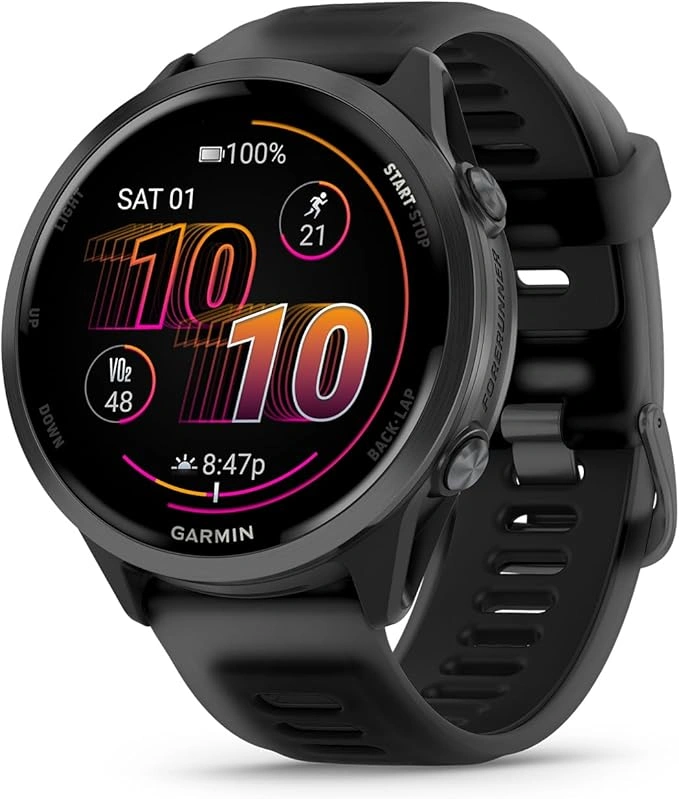
Best Overall – Garmin Forerunner 570
Pros
Cons
Overview
The Garmin Forerunner 570 is a stylish evolution of Garmin’s mid-range running series, serving as the direct successor to the popular Forerunner 265. This version marks a significant shift for the Forerunner line by prioritizing aesthetics alongside performance, introducing a sleek aluminum bezel and a more vibrant, high-resolution AMOLED display that peaks at 2,000 nits. Notably, it brings “lifestyle” hardware previously reserved for the Venu series, such as a built-in speaker and microphone, allowing you to take calls and use voice assistants directly from your wrist when paired with a smartphone.
Internally, the 570 is powered by the Elevate v5 heart rate sensor, which provides improved accuracy during high-intensity intervals and supports potential future health features, such as ECG (though not active at launch). It remains a triathlon-ready powerhouse, supporting over 90 sport modes and featuring advanced training metrics like Training Readiness, HRV Status, and the new Evening Report. It also includes dual-band GPS with SatIQ technology, ensuring top-tier tracking accuracy even in challenging urban or wooded environments.
However, the shift toward a more premium, high-brightness screen has come at a cost to battery life. The Forerunner 570 lasts up to 11 days in smartwatch mode (10 days for the 42mm version), a slight step back from its predecessor’s 15 days. Additionally, at its $549 launch price, it enters a more expensive tier without adding major software breakthroughs or offline mapping (which remains exclusive to the Forerunner 900 series). Ultimately, it is a “fashion-forward” workhorse for serious runners who want elite training data in a lightweight, modern design that finally looks as good in the office as it does on the track.
2
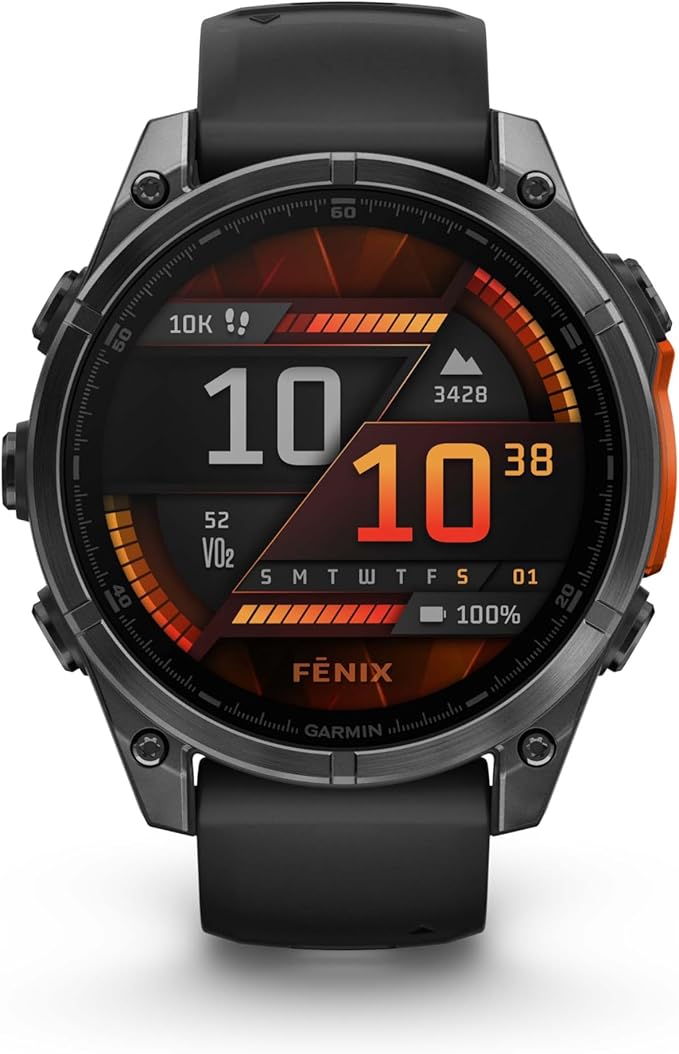
Best Premium – Garmin Fenix 8
Pros
Cons
Overview
The Garmin Fenix 8 packs all the latest features in top-tier running watches. A standout is the new GPS software with “dynamic routing,” which creates directions during workouts. This is perfect for runners or cyclists who like to change their routes on the go.
The watch also features an impressive AMOLED display with a 454 x 454 px resolution. It’s bright, clear, and perfect for runners. You can choose from three sizes: a solar-powered memory-in-pixel display or a brighter AMOLED option.
Waterproofing is upgraded from the Fenix 7, allowing dives up to 40 meters. It even includes a dive computer for scuba activities, making it suitable for more than surface-level swimming.
For safety, especially at night, the watch includes an LED torch that helps attract attention and makes running in the dark safer. With its thoughtful design and robust features, the Fenix 8 truly stands out.
3
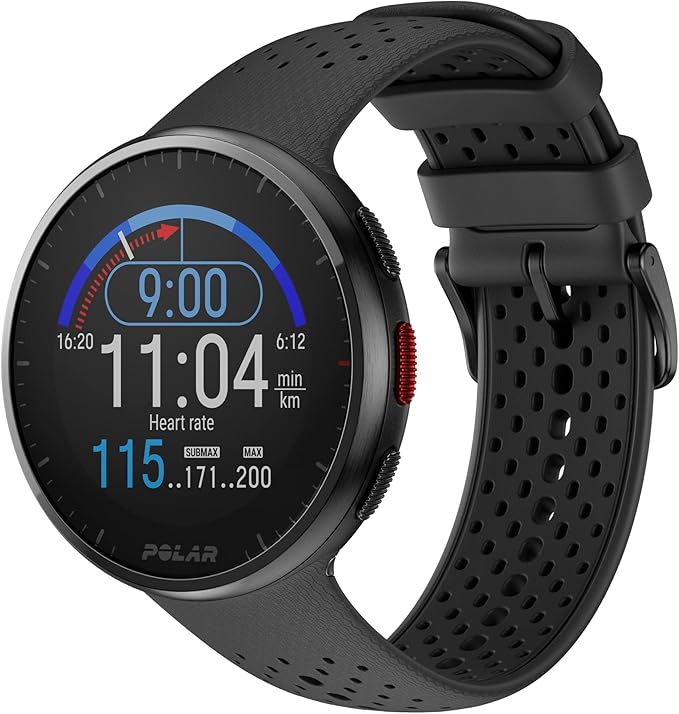
Best Value – Polar Pacer Pro
Pros
Cons
Overview
The Polar Pacer Pro shares many similarities with the Polar Vantage V2 and other Polar watches. It’s a lightweight, no-frills running watch made for runners who don’t care about smartwatch extras. It’s a great watch at a reasonable price, though it lacks some features found in higher-end models.
One of its best features is Polar’s advanced running metrics and suggested workouts. The watch offers excellent training recommendations, a fitness test, and detailed data about your runs, including heart rate zones, calories burned, route maps, hills climbed, and power exerted. The fitness test measures your VO2 max, maximal aerobic power, and speed, helping you track your progress over time.
At just 41 grams, the Pacer Pro is lighter than the Grit X and one of the lightest watches available. Despite its weight, it feels solid and not cheap. However, it doesn’t have music storage or full map displays on the watch face, relying instead on simple directional arrows for navigation, which can be tricky to use. Even with these limitations, it’s a fantastic watch for its price.
4
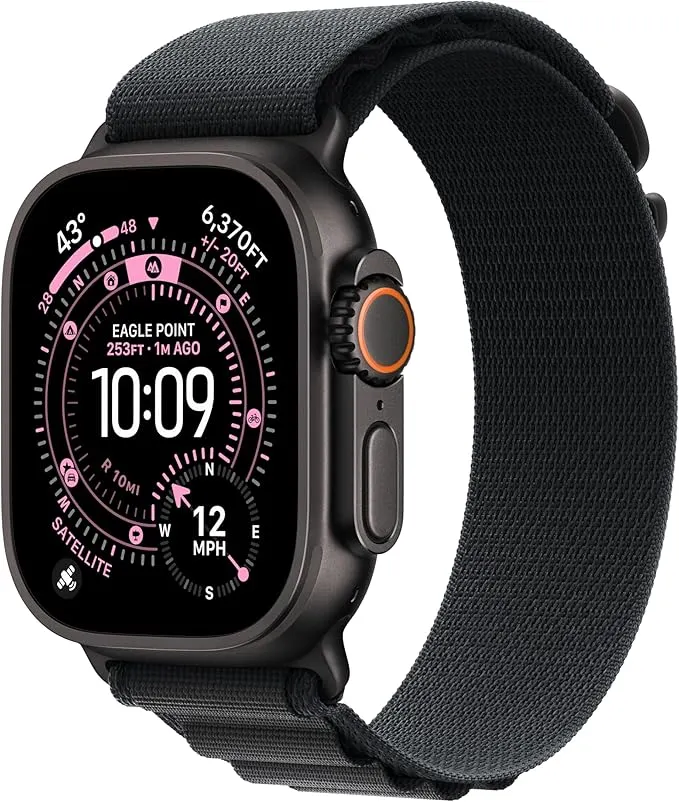
Best for iPhone Users – Apple Watch Ultra 3
Pros
Cons
Overview
The Apple Watch Ultra 3 is the definitive “utility” wearable for 2025/2026, designed to push the boundaries of what a smartwatch can do in remote environments. While it retains the rugged 49mm titanium aesthetic of its predecessors, this version introduces two-way satellite messaging, allowing you to stay in contact and share your location even when you are completely off the grid. This makes it a serious tool for backcountry adventurers, marathoners, and hikers who previously had to carry a separate satellite communicator.
Technical upgrades are centered on connectivity and efficiency. The move to 5G cellular and an improved antenna array provides significantly better signal strength in “dead zones,” while the new LTPO3 display improves visibility at sharp angles and allows for a 1Hz always-on refresh rate. Battery life has seen a meaningful bump to 42 hours (extending to 72 hours in low-power mode), addressing the primary complaint of long-distance athletes. Additionally, the watch introduces sophisticated health monitoring, including hypertension notifications and a detailed Sleep Score powered by Apple Intelligence.
Despite these leaps in communication tech, the Ultra 3 remains a large, “maximalist” device that may feel bulky for casual wear or sleep tracking on smaller wrists. It also carries a premium price tag that reflects its “pro-grade” status. For the dedicated athlete or outdoor enthusiast, however, the combination of industry-leading dual-band GPS accuracy, satellite safety features, and a 3,000-nit screen makes it the most capable and independent sports watch Apple has ever produced.
5
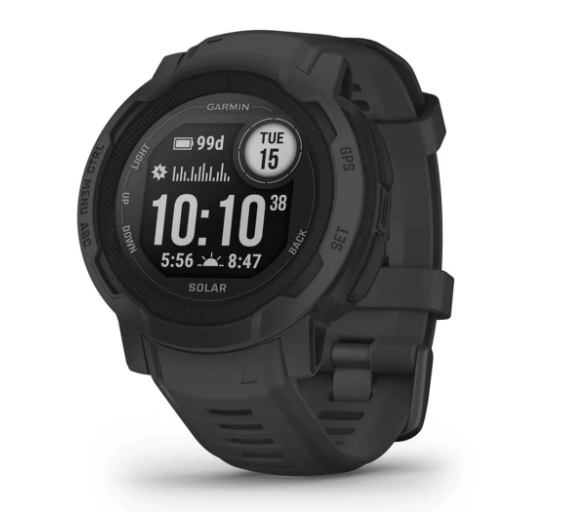
Best for Outdoor Athletes – Garmin Instinct 2
Pros
Cons
Overview
Garmin Instinct 2 is a running watch engineered for endurance and adventure. If you’ve ever worried about your watch dying mid-run, the Instinct 2 puts those concerns to rest with its remarkable battery life, measured not in days or hours but in weeks.
Solar variants are capable of indefinite operation under optimal conditions and are built to keep pace with your active lifestyle. Crafted with a fiber-reinforced resin case and bezel, the Instinct 2 prioritizes durability over flashy aesthetics.
It is exceptionally lightweight and resilient against impacts—perfect for rugged trail runs. Vibrant new color options ensure visibility in any outdoor setting, enhancing safety during woodland explorations.
While its monochrome display limits detailed map viewing directly on the watch, the Instinct 2 compensates with robust tracking capabilities through the Garmin Connect app. For those seeking extensive route exploration, alternatives like the Fenix 7 or Epix may offer more comprehensive mapping features.
6
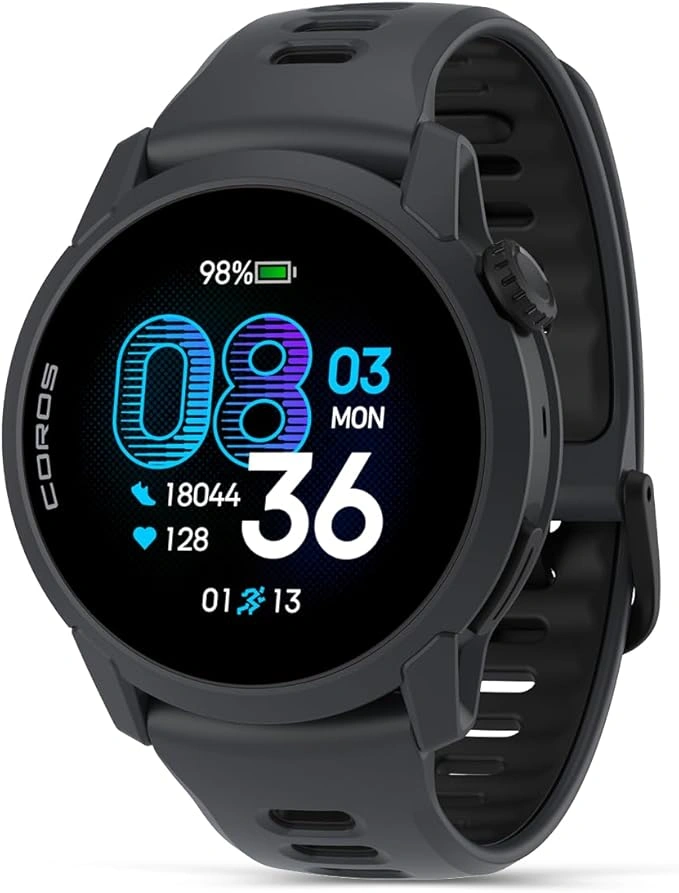
Best Budget Watch – Coros Pace 4
Pros
Cons
Overview
The COROS Pace 4 is a major technical leap for what has long been considered the best “value” series in the running watch market. Released in November 2025, it successfully transitions from the traditional, duller MIP screens of previous models to a vibrant 1.2-inch AMOLED display with 1,500 nits of brightness. Remarkably, COROS has managed this upgrade while maintaining the watch’s signature featherweight design—it remains one of the lightest sports watches in the world at just 32g (with the nylon band).
The hardware updates go beyond just the screen. The Pace 4 introduces a built-in microphone, allowing runners to record voice notes and “Voice Pins” mid-run, which are then automatically transcribed and synced to the COROS app for post-run analysis. It also adds a third physical “Action Button” for quicker navigation and an upgraded optical heart rate sensor for improved accuracy during high-intensity workouts. Despite the power-hungry AMOLED screen, battery life remains industry-leading, offering 19 days of daily use and an impressive 31 hours of dual-frequency GPS tracking.
While the Pace 4 lacks the offline mapping found in the slightly more expensive Pace Pro, it provides nearly every other essential metric, including HRV, training load, and race predictions. At its $249 price point, it undercuts much of the competition from Garmin and Suunto, positioning itself as the ultimate choice for data-driven runners who want a modern, high-resolution interface without the bulk or the premium price tag of a “pro” device.
Ready to Start Training?
Training plans are designed and reviewed by Ilya Tyapkin, Rio 2016 Olympian. Find the plan that matches your goal:
FAQ
Is AMOLED or MIP better for running watches?
AMOLED (like on the Pace 4 or Forerunner 570) has become the standard. While MIP screens are better in direct desert sunlight, modern 1,500-nit AMOLEDs are now bright enough for almost any condition and offer much better mapping detail.
What is “Multi-Band GPS” and do I need it?
Multi-band (or Dual-Frequency) GPS allows your watch to talk to two satellite signals at once. You definitely need it if you run in cities with skyscrapers or on trails with heavy tree cover, as it prevents your pace from “jumping” around.
Can the Apple Watch Ultra 3 replace a Garmin?
For 90% of runners, yes. With the Ultra 3’s 42-hour battery and satellite features, the gap has closed. However, Garmin still wins for “Training Load” analytics and athletes who want a battery that lasts two weeks between charges.