
Curated by Esen Bay, competitive runner (PRs: 5K–marathon). Recommendations based on published specs, independent lab data from RunRepeat, WearTesters, and Doctors of Running, and verified runner feedback. About the author →
If your feet roll inward past neutral when you run, that’s overpronation. The right stability shoe makes a measurable difference to knee, shin, and ankle health over time. The best stability shoe for most overpronators in 2026 is the Brooks Adrenaline GTS 25: reliable GuideRails support, updated foam, and a finally-fixed 10mm drop that produces the smoothest heel transition in the series’ history.
For heavier runners or high-mileage blocks, the ASICS Gel-Kayano 33 brings a complete overhaul with dual-layer FF Blast Max foam and a new FluidSupport stability system. For runners who want something lighter, the Hoka Arahi 8 is the best sub-10 oz stability option available.
How We Selected These Shoes
Each shoe was chosen based on published specs verified against brand official pages, independent lab measurements from RunRepeat and WearTesters (used where stated figures differed from real-world results), and runner feedback from structured communities with overpronation needs. Shoes were not personally tested by the author for this roundup. Where lab data or runner consensus contradicts manufacturer claims, that is noted in the review.
What Is Overpronation — and How Much Stability Do You Need?
Overpronation means your foot rolls inward past neutral during the landing phase of your stride. A small amount of inward roll (pronation) is normal and helps absorb impact. Overpronation is the excess beyond that and the degree matters.
Mild overpronation: Foot rolls slightly inward but corrects before push-off. Signs: minor inner-edge wear on your current shoes, occasional shin or knee discomfort. → Light guidance-based shoes (Guide 19, Arahi 8) are often sufficient.
Moderate overpronation: Clear inward collapse at the ankle during running. Inner-edge wear is significant. Common injuries: shin splints, inner knee pain, plantar fasciitis. → Moderate stability shoes (Adrenaline GTS 25, Kayano 33, Gaviota 6) are the right tier.
Severe overpronation: Ankle collapses substantially inward. Usually associated with flat feet or hypermobile ankles. → High-stability or motion-control shoes, ideally combined with a gait analysis and sometimes custom orthotics.
If you’re unsure of your severity, a 10-minute gait analysis at a running specialty store is the fastest path to the right shoe.
7 Best Running Shoes for Overpronation: At a Glance
| Shoe | Support System | Stability Level | Drop | Buy |
|---|---|---|---|---|
| Brooks Adrenaline GTS 25 | GuideRails | Moderate | 10 mm | Mens / Womens |
| Saucony Guide 19 | CenterPath | Mild–Moderate | 6 mm | Mens / Womens |
| Saucony Tempus 2 | PWRRUN frame | Moderate | 8.5 mm | Mens / Womens |
| ASICS Gel-Kayano 33 | FluidSupport | Moderate–High | 8 mm | Mens / Womens |
| Hoka Gaviota 6 | H-Frame | High | 5 mm | Mens / Womens |
| Hoka Arahi 8 | H-Frame | Mild–Moderate | 8 mm | Mens / Womens |
| ASICS GT-1000 13 | 3D Guidance System | Mild | 8 mm | Mens / Womens |
Prices may vary by retailer and colorway.
See also: Best Running Shoes for Flat Feet → | Best Brooks Running Shoes →
1
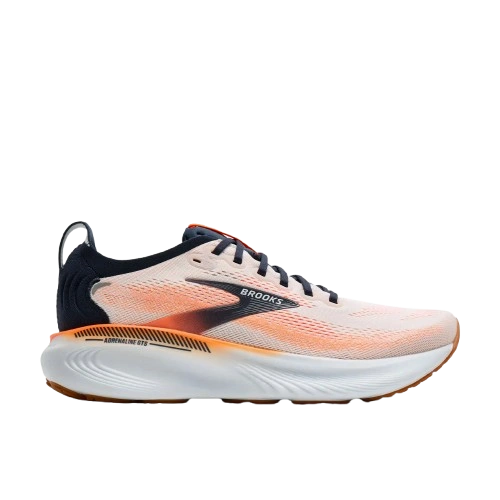
Best Overall – Brooks Adrenaline GTS 25
Pros
Cons
What the Data Shows
The Adrenaline GTS 25, released November 2025, is the world’s most widely trusted stability running shoe and version 25 makes its most meaningful structural update in years. The drop reduction from 12mm to 10mm (the first in the series’ history), combined with a redesigned heel bevel, produces the smoothest rearfoot transition the Adrenaline has ever offered. Runners who found previous versions clunky at heel strike will notice the difference immediately.
The GuideRails system works by adding foam support on both the medial and lateral sides, not just one, allowing natural motion within a guided range rather than forcing correction. Doctors of Running describe it as “adaptive stability” that’s invisible when you don’t need it and effective when you do. For mild-to-moderate overpronators running daily miles, it remains the most consistently effective and widely recommended choice in the category.
Best for: mild to moderate overpronators, heel strikers, daily training and walking, runners needing wide sizing. Not for: forefoot strikers, runners wanting a light or responsive ride, or Achilles-sensitive runners.
2
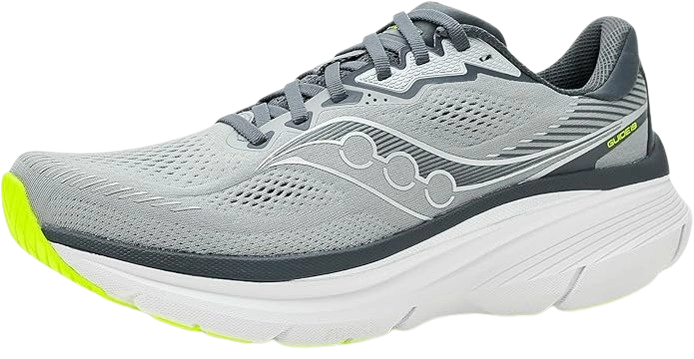
Best Daily Running – Saucony Guide 19
Pros
Cons
What the Data Shows
Guide 19 is the most meaningful update to the Guide series in several generations. The switch to a new compression-molded EVA midsole (replacing the standard PWRRUN EVA of Guide 17 and 18) adds bite and responsiveness that previous versions lacked, particularly on hills and during any faster efforts. Doctors of Running note it’s the first Guide that doesn’t feel “plodding” when you pick up the pace.
CenterPath stability works through geometry rather than foam chemistry: an exceptionally wide platform, raised sidewalls that cradle the foot, and an asymmetric rocker keep the stride centered without the locked-in feeling of a medial post. It’s the right choice for mild overpronators who want support that doesn’t interfere and a good entry point for runners unsure whether they need stability at all.
For runners doing structured training blocks, the Guide 19’s versatility across easy and moderate efforts makes it a strong daily trainer choice. See our 5K training plans → and 10K training plans →.
Best for: mild overpronators, runners wanting the lightest effective stability option, midfoot strikers, daily training, and easy efforts. Not for: moderate-to-severe overpronators, heel strikers needing a high-drop shoe, runners wanting maximum cushion.
3
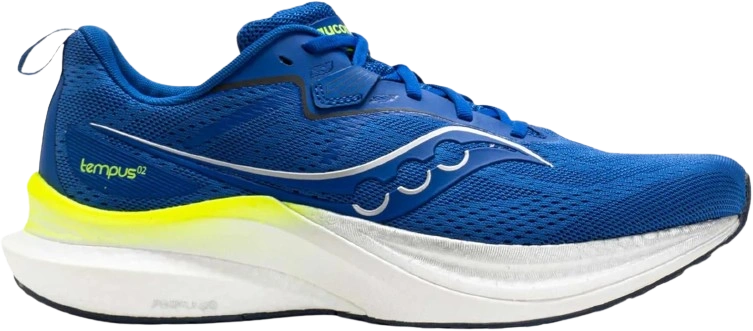
Best Speed Training – Saucony Tempus 2
Pros
Cons
What the Data Shows
The Tempus 2, released late 2025, is the only shoe in this roundup built specifically for runners who overpronate but want to run fast. The PWRRUN PB foam delivers energy return that stability shoes rarely offer — RunRepeat describes it as “lively and responsive,” where most stability foam is protective but dull. The TPU-based PWRRUN frame provides stability through structure rather than foam density, meaning it guides the foot without slowing stride turnover.
At the pace ranges where overpronation matters most, slower training miles, the Tempus 2’s stability holds well. At tempo and threshold efforts, it performs in a way that no traditional medial-post shoe can match. The trade-off is that it’s not the right shoe for runners whose primary need is high-volume cushion or protection for long, easy miles. For that, see the Kayano 33 or Gaviota 6.
Best for: moderate overpronators who want to do speed work and tempo sessions in a stability shoe, experienced runners, midfoot, and forefoot strikers. Not for: severe overpronators, runners wanting maximum cushion, or easy-day-only trainers.
4
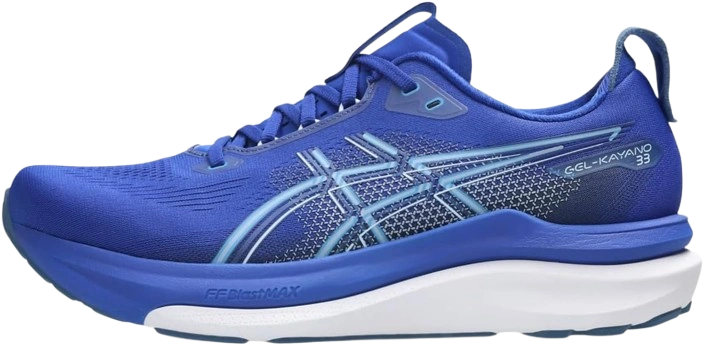
Best Cushioned – ASICS Gel Kayano 33
Pros
Cons
What the Data Shows
The Kayano 33 is the most significant ASICS Kayano update since the Kayano 30 redesigned the stability system. The headline change is dual-layer foam: FF Blast Max on top (soft and genuinely bouncy, finally addressing the Kayano’s long-standing low energy return criticism) with FF Blast Plus underneath for stability structure. The new FluidSupport system replaces the 4D Guidance System with a stability approach based on adaptive geometry and cushioning interaction rather than traditional corrective medial structures.
ASICS positions the Kayano 33 as suitable for underpronators, neutral runners, and overpronators — a signal that FluidSupport is a guidance system rather than a correction system, similar to the direction Brooks and Hoka have moved. For moderate-to-high overpronators who need maximum protection across long miles, the Kayano 33 is the best-cushioned option in this roundup.
Note: as a brand-new release, independent lab testing data (RunRepeat, WearTesters) is not yet available at the time of writing. Specs are sourced from ASICS official pages and pre-release media coverage.
Best for: moderate-to-high overpronators, heavier runners, high-mileage daily training, runners who want maximum cushion with genuine energy return. Not for: speedwork, tempo efforts, budget shoppers, runners wanting a lightweight shoe.
5
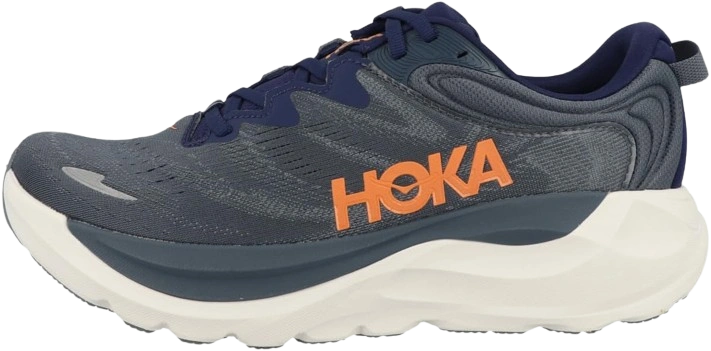
Best for Long Distance — Hoka Gaviota 6
Pros
Cons
What the Data Shows
The Gaviota 6, released January 2026, is the most structurally capable stability shoe Hoka has produced. The redesigned H-Frame wraps medial and lateral sides with a firmer secondary foam (41.6 AC) alongside a softer main midsole (32.6 AC), producing stability that Doctors of Running describe as “borderline motion control” integrated so naturally that even neutral runners could manage it comfortably.
The honest trade-off is the foam. CMEVA is durable and protective but delivers only 45.4% energy return in the heel, among the worst in this roundup. The Gaviota 6 earns its place specifically for runners who need the highest level of stability Hoka makes and don’t prioritize energy return.
The 5mm drop is the lowest in this roundup, better for midfoot strikers but not the right choice for heel strikers who need heel support.
Best for: moderate-to-high overpronators wanting maximum Hoka-style stability, runners with wide feet, long recovery runs, walking, and standing. Not for: heel strikers needing a high drop, runners wanting energy return, budget shoppers, runners switching from the Gaviota 5 who loved its plush softness.
6
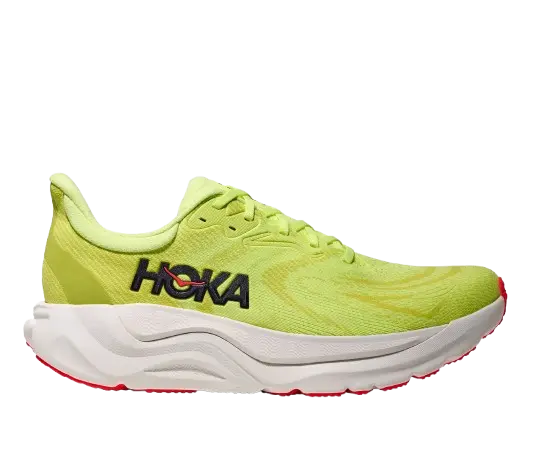
Best Lightweight Stability – Hoka Arahi 8
Pros
Cons
The Arahi 8, released August 2025, addresses the Arahi 7’s core weakness: the foam was too firm and the ride too stiff. The H-Frame stability (replacing the J-Frame) wraps both medial and lateral sides of the midfoot for more centered correction. The foam is meaningfully softer, the stack height is 39mm (up substantially), and the upper is significantly more accommodating.
At 9.3 oz, it’s the lightest effective stability shoe in this roundup. For overpronators who have found traditional stability shoes too heavy or stiff, the Arahi 8 is a genuine step toward a more wearable option. The limitations are the foam’s modest energy return and the rearfoot geometry’s slight clunkiness — trade-offs that matter for runners wanting a faster-feeling shoe.
Best for: mild-to-moderate overpronators seeking a lighter option, runners transitioning from neutral to stability, daily training, and heel strikers. Not for: severe overpronators, runners wanting energy return, hot-weather running.
7
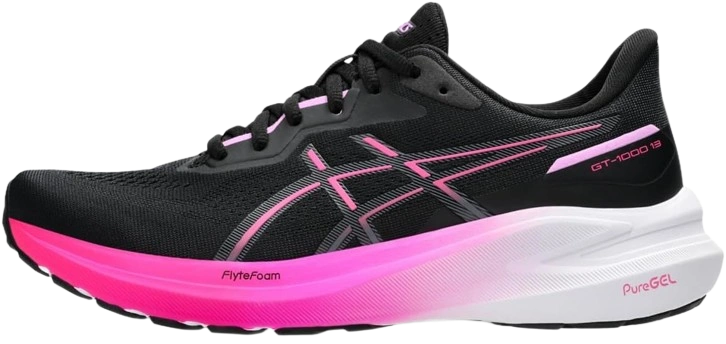
Best Value — ASICS GT-1000 13
Pros
Cons
What the Data Shows
The GT-1000 13 is ASICS’ most accessible stability shoe and represents genuine value for mild overpronators on a budget. The version 13 upgrade from version 12 is meaningful: PureGEL replaces the old GEL technology (positioned under the footbed rather than in the lower midsole), the stack height increases by 3.5mm, and the 3D Guidance System replaces the older LiteTruss support. RunRepeat notes the improvements make it “the best version yet” of the GT-1000.
For beginners, casual runners, or anyone who doesn’t want to spend $150+ on a stability shoe and has mild overpronation, it’s the clearest recommendation. The FlyteFoam midsole and lower stack make it a poor choice for heavier runners or high-mileage weeks.
Best for: mild overpronators, budget-conscious buyers, beginners, casual runners (under 25 miles/week), walkers. Not for: moderate-to-severe overpronators, heavier runners, high-mileage training, runners wanting energy return.
Verdict Box
Prices may vary by retailer and colorway.
| Your Priority | Best Shoe |
|---|---|
| Best overall stability | Brooks Adrenaline GTS 25 |
| Daily mileage — lighter option | Saucony Guide 19 |
| Speed training with stability | Saucony Tempus 2 |
| Maximum cushion | ASICS Gel-Kayano 33 |
| Maximum stability | Hoka Gaviota 6 |
| Lightweight stability | Hoka Arahi 8 |
| Best value | ASICS GT-1000 13 |
For most overpronators: start with the Brooks Adrenaline GTS 25, the most proven, most widely available, most consistently effective moderate stability shoe available. If you need something lighter, try the Hoka Arahi 8. If you want to run fast in a stability shoe, the Saucony Tempus 2 is in a category of its own
How to Evaluate a Stability Shoe Before You Buy
A few quick in-store checks that take under two minutes:
Bend test: Fold the shoe in half lengthwise through the midfoot. A stability shoe should resist bending in the arch zone — that resistance is the structural support at work.
Twist test: Hold the toe and heel and twist in opposite directions. A good stability shoe won’t twist easily through the midfoot — torsional rigidity prevents excessive inward rotation.
Squeeze the heel counter: Press the back of the shoe firmly. A properly built stability shoe has a firm, structured heel counter that doesn’t collapse. Soft, collapsible heel counters won’t hold your heel in place during the landing phase.
Check the outsole: Look for substantial rubber coverage across the inner heel and forefoot. Stability shoes typically have denser outsole material on the medial (inner) side of the high-wear zone for overpronators.
Stability systems by severity:
- Mild: CenterPath (Saucony Guide), 3D Guidance System (ASICS GT-1000) — geometry-based, non-intrusive, works for entry-level needs
- Moderate: GuideRails (Brooks Adrenaline), H-Frame (Hoka Arahi), FluidSupport (ASICS Kayano) — adaptive guidance, works for most overpronators
- High: H-Frame max (Hoka Gaviota), motion-control shoes — structured guidance for significant pronation
Ready to Start Training?
Training plans are designed and reviewed by Ilya Tyapkin, Rio 2016 Olympian. Find the plan that matches your goal:
FAQ
What is overpronation and how do I know if I have it?
Overpronation is when your foot rolls inward past neutral during the landing phase of your stride. Signs include: significant wear on the inner edge of your current running shoes, pain in the inner shin or knee during or after running, and ankles that visibly collapse inward when you’re viewed from behind while running. A gait analysis at a running specialty store confirms it in under 10 minutes.
Do I need a stability shoe if I overpronate but don’t have pain?
Not necessarily. Many overpronators run comfortably in neutral shoes without injury. Stability shoes are most important when overpronation is causing recurring injuries or significant compensatory pain. If you’re injury-free and running well, don’t fix what isn’t broken — but a mild stability shoe like the Guide 19 is a low-risk addition if you’re covering high mileage.
What is the difference between GuideRails and a medial post?
A medial post is a wedge of denser foam on the inside (medial) side of the midsole that physically blocks inward roll. GuideRails adds foam support on both medial and lateral sides, activating only when motion exceeds a natural range — it guides rather than blocks. Most runners find GuideRails less intrusive, especially at faster paces.
Can I do speed work in a stability shoe?
Most stability shoes are not well-suited for speed work — the extra foam and stability features add weight and reduce responsiveness. The Saucony Tempus 2 is the exception: its PWRRUN PB foam and TPU-based stability frame are specifically designed to support overpronators through tempo and threshold efforts without slowing them down.
Should I use custom orthotics instead of stability shoes?
For mild-to-moderate overpronation, a well-fitted stability shoe is often sufficient without orthotics. For severe overpronation, recurring injury, or complex biomechanical issues, a sports podiatrist can assess whether custom orthotics are appropriate. If you use orthotics, confirm the shoe’s insole is removable before buying — most stability shoes in this roundup accommodate orthotics except the Tempus 2 (check with retailer).