
Curated by Esen Bay, competitive runner (PRs: 5K–marathon). Recommendations based on published specs, independent lab data from RunRepeat and WearTesters, and verified runner feedback. About the author →
The best running shoe for flat feet depends on one thing most roundups skip: what kind of flat feet you have.
If your flat arches cause your ankles to roll inward when you run, that’s overpronation. You need a stability shoe with medial support. If your feet are flat but your ankles stay relatively neutral, you need maximum cushioning to protect a larger contact surface, not a corrective stability feature.
Get this wrong, and you’ll be wearing a shoe that fights your gait rather than supporting it.
Six picks below of best running shoes for flat feet, split by gait type, with honest specs and trade-offs.
How We Selected These Shoes
Each shoe was chosen based on published specs verified against brand official pages, independent lab measurements from RunRepeat and WearTesters (used where stated figures differed from real-world results), and runner feedback from structured communities, including flat-footed and overpronating runners. Shoes were not personally tested by the author for this roundup. Where lab data or runner consensus contradicts manufacturer claims, that is noted.
Flat Feet — Which Type Are You?
Before choosing a shoe, identify your gait pattern. A wet-foot test shows your arch shape, but that alone doesn’t tell you whether you overpronate.
Overpronator with flat feet: Your ankle rolls inward past neutral during your stride. Signs include wear on the inner edge of current shoe soles or knee pain that tracks inward. You need a stability shoe (GuideRails, H-Frame, or medial post).
Flat feet with neutral gait: Your feet are flat, but your ankles don’t collapse inward significantly. You need maximum cushioning to protect the larger contact surface of your flat arch not corrective features that fight your natural motion.
If you’re unsure, a gait analysis at a running specialty store takes less than 10 minutes and removes the guesswork.
Best Running Shoes for Flat Feet: At a Glance
| Shoe | Best For | Support Type | Drop | Buy |
|---|---|---|---|---|
| Brooks Adrenaline GTS 25 | Overpronation — overall best | GuideRails stability | 10 mm | Men’s / Women’s |
| Hoka Arahi 8 | Overpronation — lightweight | H-Frame stability | 8 mm | Men’s / Women’s |
| Hoka Clifton 10 | Neutral flat feet — max cushion | Neutral + wide base | 8 mm | Men’s / Women’s |
| Saucony Triumph 24 | Neutral flat feet — long runs | Neutral + IncrediLux foam | 10 mm | Men’s / Women’s |
| Nike Pegasus 42 | Neutral flat feet — daily training | Neutral | 8 mm | Men’s / Women’s |
| ASICS Magic Speed 5 | Flat feet — racing / speed work | Neutral carbon-plated | 8 mm | Unisex |
Prices may vary by retailer and colorway.
Looking for shoes by brand? See our Best Brooks Running Shoes → and Best Nike Running Shoes →.
Best Running Shoes for Flat Feet
1
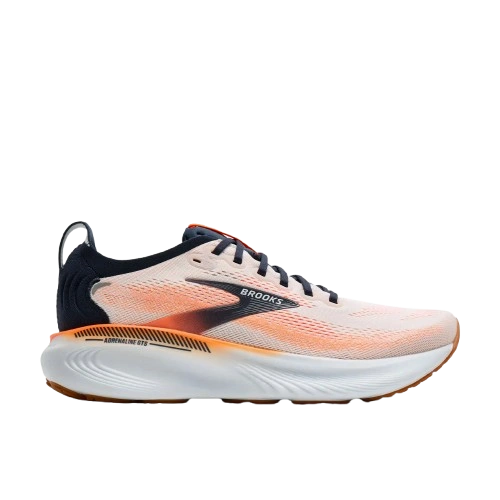
Best Overall – Brooks Adrenaline GTS 25
Weight: 10.6 oz / 301g (men’s) | 9.5 oz / 269g (women’s)
Stack height: 37mm heel / 27mm forefoot
Heel-to-toe drop: 10mm (reduced from 12mm in GTS 24)
Sizing: True to size; slightly snug toebox
Pros
Cons
What the Data Shows
The Adrenaline GTS 25, released in November 2025, is the world’s best-selling stability running shoe and for good reason. The GuideRails system is meaningfully different from a traditional medial post. Instead of a wedge of firmer foam on one side that forces correction, GuideRails adds foam support on both the medial and lateral sides, providing guidance when you deviate, without blocking natural motion when you don’t. Doctors of Running describe the result as “adaptive stability” that feels invisible when you don’t need it.
Version 25 makes the most meaningful structural change in several generations: dropping the heel-to-toe drop from 12mm to 10mm for the first time in the series’ history, combined with a redesigned heel bevel that produces noticeably smoother rearfoot landings. RunRepeat lab data shows shock absorption at 138 SA heel improved from GTS 24, and traction is significantly better on wet surfaces.
For flat-footed runners who overpronate, the GTS 25 remains the benchmark. It’s not exciting, it’s not light, and it won’t make you feel fast, but it will keep your knees and ankles aligned across hundreds of training miles.
Best for: mild-to-moderate overpronators, heel strikers with flat feet, daily training and walking, runners needing wide sizing. Not for: forefoot strikers, runners wanting a lightweight or responsive ride, Achilles-sensitive runners.
2
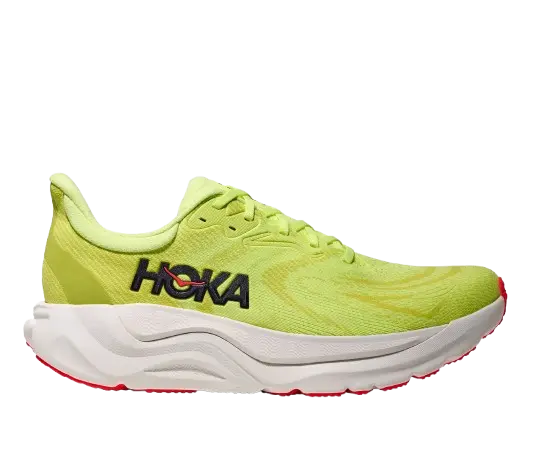
Best Lightweight Stability – Hoka Arahi 8
Weight: 9.3 oz / 264g (men’s) | 7.7 oz / 218g (women’s)
Stack height: 39mm heel / 33mm forefoot
Heel-to-toe drop: 8mm
Sizing: True to Size
Pros
Cons
What the Data Shows
The Arahi 8, released August 2025, is a substantial redesign that finally addresses the Arahi 7’s core problem: its foam was too firm and the ride too stiff. The switch to H-Frame stability (from J-Frame) produces a more centered, natural-feeling correction. The foam is meaningfully softer, the stack is taller at 39mm, and the upper is significantly roomier a meaningful change for flat-footed runners whose feet spread at landing.
At 9.3 oz, it’s about 1.3 oz lighter than the GTS 25, which is a real-world difference on longer runs. The honest trade-off is the foam: CMEVA protects well but returns only 54.4% energy, well below a shoe like the Triumph 24. For runners who prioritize feel and responsiveness over stability, the Arahi 8 will disappoint. For runners who found traditional stability shoes too heavy or rigid, it’s the right step toward something more wearable.
Best for: mild overpronators wanting a lighter stability option, flat-footed runners transitioning from neutral to stability, daily training and walking, heel strikers. Not for: forefoot strikers, runners wanting high energy return, hot-weather running.
3
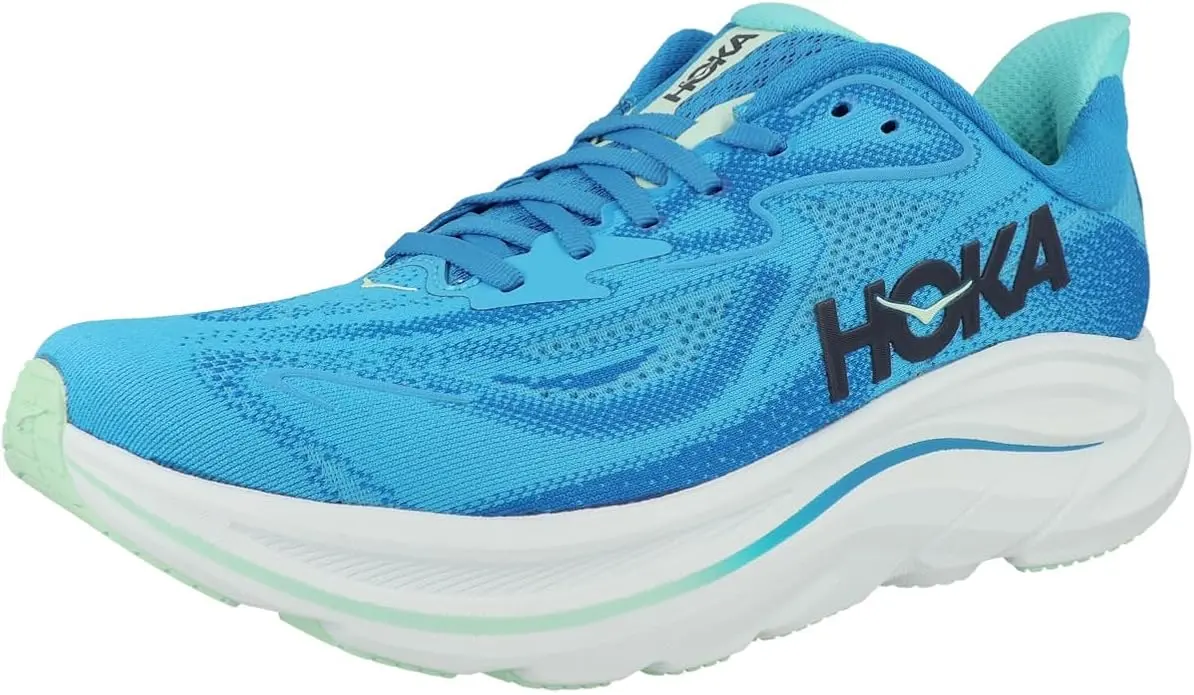
Best Cushion — Hoka Clifton 10
Weight: 9.8 oz / 277g (men’s) | 8.0 oz / 226g (women’s)
Stack height: 42mm heel / 34mm forefoot
Heel-to-toe drop: 8mm
Sizing: True to Size
Pros
Cons
What the Data Shows
The Clifton 10, released April 2025, is the most significant redesign in Clifton history. The 8mm drop (increased from 5mm) is particularly relevant for flat-footed runners it provides more heel volume for a larger contact surface and positions the foot better for the slight inward tracking that flat feet often produce. The wider toebox accommodates natural foot splay at landing in a way no previous Clifton managed.
The 42mm stack delivers exceptional shock absorption, recording 147 SA in the heel per RunRepeat — among the highest in any daily trainer. This matters significantly for flat-footed runners whose arch doesn’t naturally distribute impact forces. The CMEVA foam absorbs what your arch can’t the limitation being that it absorbs rather than returns, producing a protective but energy-draining ride.
For flat-neutral runners whose primary goal is protection and comfort across easy and long miles, the Clifton 10 is the clearest recommendation in this roundup. For runners wanting responsiveness alongside cushion, the Triumph 24 is the better choice.
Best for: flat-neutral runners needing maximum cushion, heel strikers, recovery days and long slow miles, runners with wide feet, runners new to max-stack shoes. Not for: tempo runs, speedwork, runners wanting energy return, or overpronators needing stability features.
4
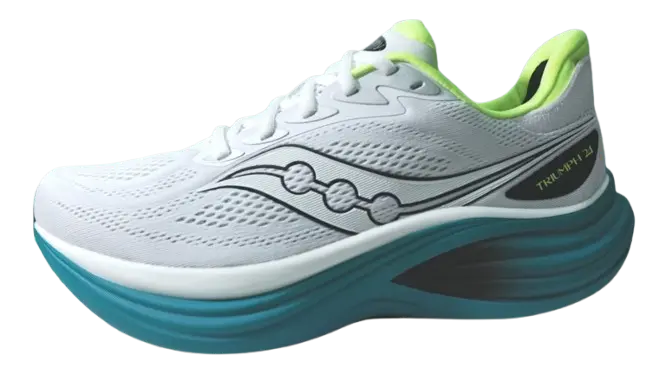
Best for Long Runs – Saucony Triumph 24
Weight: 8.8 oz / 250g (men’s) | 7.6 oz / 216g (women’s)
Stack height: 43mm heel / 33mm forefoot
Heel-to-toe drop: 10mm
Sizing: True to Size
Pros
Cons
What the Data Shows
The Triumph 24 is the most significant redesign in the Triumph line in years. The switch from PWRRUN PB to IncrediLUX (an ATPU foam) fundamentally changes the shoe’s character: the Triumph 23 was protective but heavy and energy-draining. The 24 is protective, bouncy, and 1.4 oz lighter. Doctors of Running describe the IncrediLUX midsole as delivering “one of the softest foams currently on the market” while maintaining the structure and balance that previous Triumphs didn’t achieve.
For flat-neutral runners doing long runs, the Triumph 24 is the best option in this roundup. The 43mm stack and wide platform protect a flat arch across high mileage. The new foam returns that energy back rather than absorbing it meaning your legs feel better at mile 15. Road Trail Run testers describe wearing it to a half-marathon PB after just two tune-up runs.
Best for: flat-neutral runners doing long runs, heel strikers needing cushion with energy return, runners who found the Triumph 23 too heavy or dull. Not for: racing, speedwork, forefoot strikers, all-day standing or walking.
5
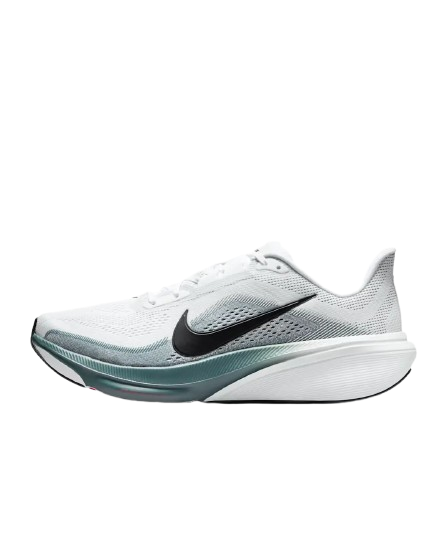
Best for Daily Training — Nike Pegasus 42
Weight: 10 oz / 283g (men’s, approx.)
Stack height: 39mm heel / 31mm forefoot
Heel-to-toe drop: 8mm
Sizing: True to Size
Pros
Cons
What the Data Shows
The Pegasus 42, released April 9, 2026, is not a stability shoe. Flat-footed runners who overpronate should not rely on it as their primary trainer. For flat-neutral gait runners wanting a versatile, affordable daily trainer, it’s the most accessible option in this roundup at $140.
The updates most relevant to flat feet: the drop reduction from 10mm to 8mm produces a more balanced stride feel, and the new anatomical last adds approximately 2mm of toebox room — better for flat feet that spread on landing. Nike’s 15% energy return improvement claim over the Pegasus 41 is directionally confirmed by RunRepeat but is incremental rather than transformative.
If you’re building toward a half-marathon or 10K with flat neutral feet, the Pegasus 42 is the reliable workhorse for training volume. See our half-marathon training plans → and 10K training plans → for structured programs.
Best for: flat-neutral runners, daily training, beginner to intermediate runners, value-conscious buyers. Not for: overpronators, runners wanting maximum cushion, racing.
6
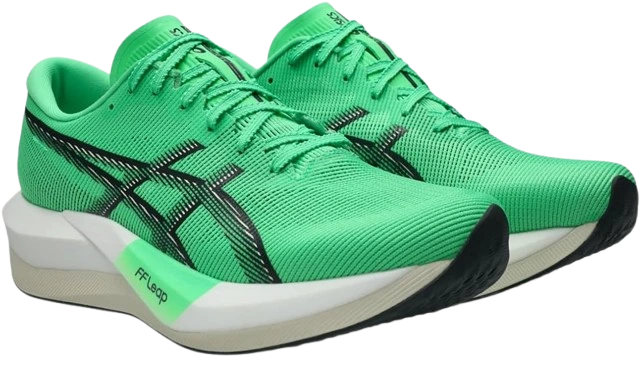
Best for Racing — ASICS Magic Speed 5
Weight: 7.1 oz / 201g (men’s)
Stack height: 35mm heel / 27mm forefoot
Heel-to-toe drop: 8mm
Sizing: True to Size
Pros
Cons
What the Data Shows
The Magic Speed 5 is a complete about-face from the Magic Speed 4. The 4 was a max-stack (43mm) super trainer protective but heavy and unstable. The 5 returns to the line’s original purpose: a lightweight, affordable carbon racing shoe that performs similarly to the Metaspeed at a lower price. RunRepeat notes it “feels agile and nimble again.” The 35mm stack and lighter build restore the ground connection that the 4 had abandoned.
For flat-neutral runners who race or do structured speed sessions, the Magic Speed 5 is the most accessible carbon option in this roundup at ~$170. The more accommodating upper is a meaningful change from the race-tight 4, and the improved stability makes it more appropriate for runners whose flat feet don’t demand a maximalist platform.
Critical limitation: the insole is glued in and not removable, making it incompatible with custom orthotics. This is a common tool for flat-footed runners with biomechanical issues — if you use orthotics, choose the Pegasus 42 or Triumph 24 instead.
Best for: flat-neutral runners racing 5K through marathon, structured speed sessions, runners wanting carbon plate feel without super shoe prices. Not for: overpronators, orthotics users, high-mileage training, wide-footed runners with significant foot spread.
Verdict Box
| Your Goal | Best Shoe |
|---|---|
| Best stability — overpronation | Brooks Adrenaline GTS 25 |
| Lightweight stability — overpronation | Hoka Arahi 8 |
| Max cushion — neutral gait | Hoka Clifton 10 |
| Long runs — neutral gait | Saucony Triumph 24 |
| Daily training — neutral gait | Nike Pegasus 42 |
| Racing / speed — neutral gait | ASICS Magic Speed 5 |
If you overpronate, start with the Brooks Adrenaline GTS 25. It’s the most proven, most widely available, and most consistently effective stability shoe in any lineup. If you need something lighter, the Hoka Arahi 8 is the right next step.
If your gait is neutral, the Saucony Triumph 24 (June 2026) is the best long-run option, the Hoka Clifton 10 if you want maximum protection now, and the Nike Pegasus 42 if $140 matters.
Ready to Start Training?
Training plans are designed and reviewed by Ilya Tyapkin, Rio 2016 Olympian. Find the plan that matches your goal:
FAQ
Do flat feet always need stability shoes?
No. Flat feet and overpronation are not the same thing. If your flat arches cause ankle inward rolling when you run, you need a stability shoe. If your gait stays neutral despite flat feet, you need maximum cushioning, not corrective features. A gait analysis at a running specialty store takes under 10 minutes and gives a definitive answer.
What is the best running shoe for flat feet and overpronation?
The Brooks Adrenaline GTS 25 ($155) is the best-selling and most consistently effective stability shoe for flat-footed overpronators. Its GuideRails system guides natural motion without over-correcting. The Hoka Arahi 8 ($150) is a lighter alternative if the GTS 25 feels too heavy or firm.
What’s the difference between GuideRails and H-Frame stability?
GuideRails (Brooks) supports both medial and lateral sides and activates only when motion exceeds natural range — it guides rather than corrects. H-Frame (Hoka) uses firmer foam along both sides of the midfoot in a more integrated structure. Both are less intrusive than traditional medial posts, but GuideRails tends to feel more invisible during running.
Can flat-footed runners use carbon-plated shoes?
Yes, if their gait is neutral. Carbon-plated shoes provide no stability support and may worsen overpronation. For flat-neutral runners racing or doing speedwork, the ASICS Magic Speed 5 (~$170) is the best-value carbon option. Note: the Magic Speed 5 does not accept removable orthotics.
Should I use custom orthotics for flat feet instead of stability shoes?
It depends on severity. For mild overpronation, a well-fitted stability shoe is often sufficient. For moderate to severe pronation or recurring injury, a sports podiatrist can assess whether custom orthotics are appropriate. If you already use orthotics, note that the ASICS Magic Speed 5 has a glued-in insole — choose the Pegasus 42 or Triumph 24 instead.
How do I know if I need a stability shoe or a neutral shoe for flat feet?
Check the wear pattern on your current running shoes. Significantly more wear on the inner edge (big toe side) than the outer edge indicates overpronation — choose stability. Even wear across the heel and forefoot suggests neutral gait — choose maximum cushion. Inner shin pain, inner knee pain, or posterior tibialis discomfort are also signals of overpronation.