
Affiliate disclosure: This post contains affiliate links. If you buy through them, esenbay.com may earn a commission at no extra cost to you.
The quick answer
For runners, a foam roller and a massage gun do similar jobs, and if you can only buy one, start with the foam roller. It’s about $35 versus $150-plus, the research behind it runs deeper, and it covers the big muscle groups well.
The massage gun earns its price on one thing a roller can’t do: reach the deep calf and soleus, the exact spot that breaks down in a marathon block. Bottom line: budget-limited or new to recovery? Get the roller. High mileage and chasing a time? The gun’s targeted access is worth it, and most serious runners end up owning both.
What to buy
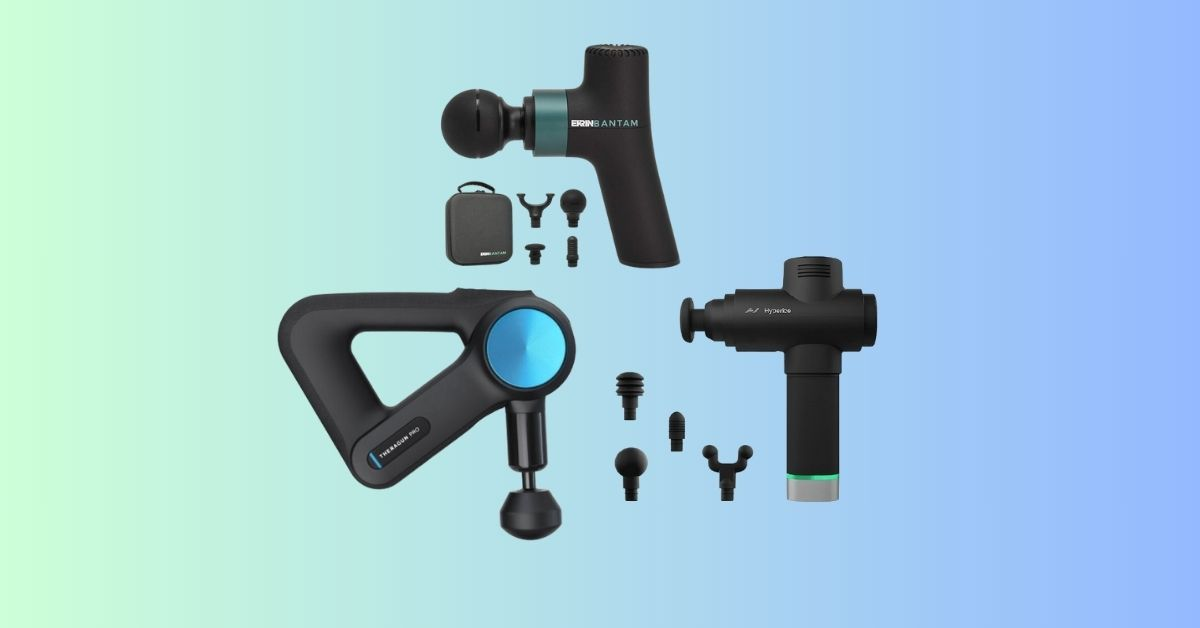
Massage guns (Hyperice):
- Hyperice Hypervolt 3 — Quiet, heated head, pressure sensor. The all-rounder for most runners.
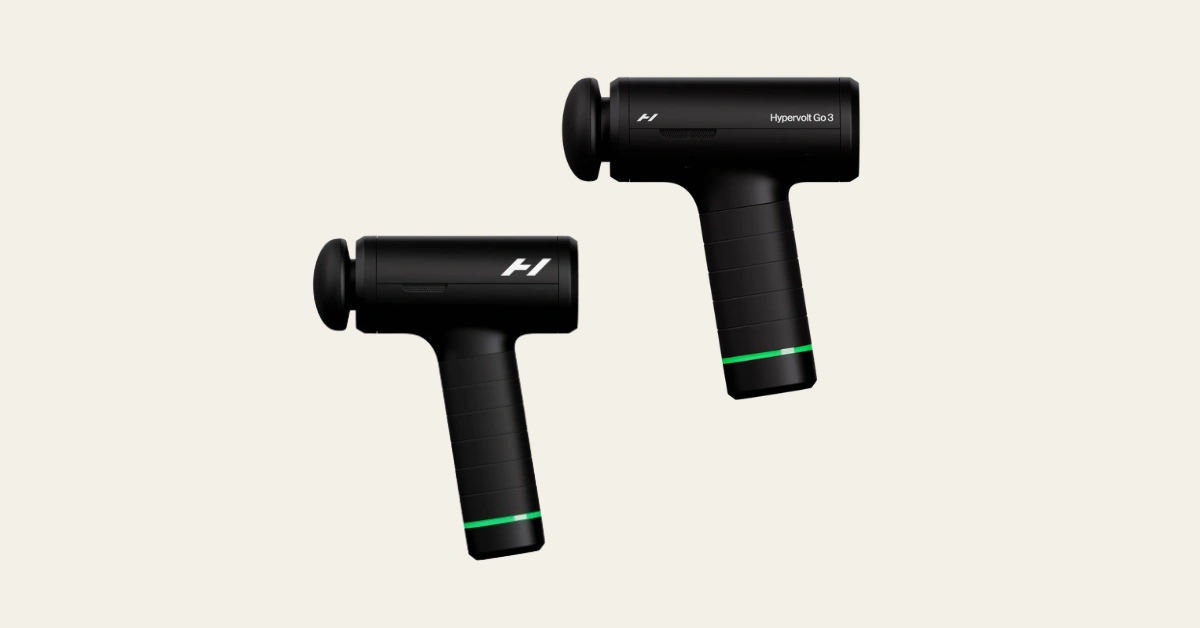
- Hyperice Hypervolt Go 3 — Lighter, USB-C, fewer frills. The value pick.
- See our full picks in the best massage guns for runners roundup.
Foam rollers (Amazon):
- TriggerPoint GRID — The standard firm roller is durable and well-sized. Verify the current price.
- Amazon Basics high-density roller — Does the job for next to nothing.
- Hyperice Vyper 3 — Premium vibrating roller; 3 speeds, cordless, app-connected.
Massage gun or foam roller: which does a runner actually need?
You’ve got a tight calf after a long run and two recovery tools in front of you: one’s a $35 tube of foam, the other’s a $249 percussion device. The honest question isn’t which is “better.” It’s which one does the job you need, and whether the gun is worth roughly five times the price for a runner. Let’s settle it.
Both tools work by applying pressure to the muscle and fascia to reduce stiffness and improve range of motion. The foam roller does it with your bodyweight, rolling over a firm surface. The massage gun does it with rapid percussion from a motor. Same goal, different delivery, and each is genuinely better at different things.
What does the research actually say?
Here’s the honest state of the evidence, because most “versus” articles overstate both.
Foam rolling has the longer track record. Studies going back to a well-cited 2015 trial (Pearcey et al.) show foam rolling reduces delayed-onset muscle soreness and helps recover dynamic performance after hard exercise. More recent work, including a 2025 study, found foam rolling significantly reduces muscle stiffness and improves elasticity. The catch: the benefits are modest, and the bulk of the evidence points to a better range of motion and lower soreness, not faster actual performance recovery.
Massage guns have less research, but it’s growing and positive. Percussive therapy reduces soreness and improves range of motion, and because the pressure is direct and targeted, some studies suggest it’s more effective at relieving specific muscle tension than rolling. One head-to-head found foam rolling edged out percussion for reducing stiffness, while the gun was better at reaching and releasing isolated tight spots.
Now the part nobody tells you, and it matters for runners. A study from La Trobe University found that heavy use of either tool right before an explosive effort can acutely impair performance, lower jump height, and slower sprint times compared to a proper dynamic warm-up alone. So don’t replace your warm-up with either one before a hard session. Keep pre-run use light.
And neither tool erases soreness nor replaces the things that actually drive recovery: sleep, easy running done easy, and fueling. They’re useful additions on top of the basics, not substitutes for them.
Massage gun vs foam roller: head-to-head
| Factor | Foam roller | Massage gun |
|---|---|---|
| Typical price | $15–$40 (vibrating: ~$149) | $149–$399 |
| Best at | Big muscle groups, general flexibility | Targeted, deep, hard-to-reach spots |
| Deep calf/soleus | Hard to isolate | Reaches it easily — the runner’s edge |
| IT band area, glute med, small muscles | Awkward | Precise |
| Speed | Slower; 5–10 min | Faster: 2–3 min |
| Learning curve | Forces you to slow down | Easy, but easy to rush |
| Portability | Bulky (mini rollers travel better) | Compact; minis fit a jacket pocket |
| Evidence base | Deeper, longer-studied | Growing, positive |
| Best for | Budget, beginners, whole-leg maintenance | High-mileage runners, specific tight spots |
Check current massage gun prices →
Where the foam roller wins
Price, first. A solid roller costs $35 and lasts a decade with no battery, no motor, nothing to break. For a new runner or anyone on a budget, it’s the obvious first buy.
It’s also better for broad, general work. Rolling out your quads, hamstrings, and upper back covers a lot of tissue in one slow pass, and the deliberate pace is a feature that can’t rush a foam roller, so you actually spend time on the tight areas. The evidence base is deeper, too. If you want the most-studied recovery tool for the least money, it’s the roller.
The honest downside: it’s awkward on your own calves and nearly useless for pinpoint work on small or deep muscles. Try isolating your soleus on a roller, and you’ll see the problem.
Where the massage gun wins (and why it matters for runners)
One word: access. A massage gun reaches the deep calf and soleus, the IT band region, the glute medius, and the small muscles around the shin, the exact spots a foam roller glances over. For a runner, that calf-and-soleus access is the whole argument. That’s the tissue that tightens over weeks of mileage and feeds Achilles problems, and it’s the hardest area to hit with bodyweight on a roller.
It’s faster, too. Two minutes per muscle group and you’re done, which for most runners means they’ll actually do it. And it travels well, a mini like the Bob and Brad Q2 fits in a race bag where a full roller won’t.
The honest downsides: it’s five to ten times the price of a basic roller, it’s easy to rush (you skip the slow, deliberate pressure that does the work), and the cheapest ones have motors that quit when you press hard. You’re paying for targeting and convenience, not a fundamentally better outcome.
Coach’s Take
If a runner on a budget asked me what to buy first, I’d say a foam roller every time. Then I’d tell them what it can’t do.
In my athletes’ marathon blocks, the tissue that breaks down first is almost always the lower leg, the soleus, and the deep calf. Weeks of volume pile up there, it gets tight, and that tightness travels into the Achilles. A foam roller can’t isolate the soleus; you can lean on it all you want, and you’re mostly hitting the bigger calf muscle. A massage gun gets right into it. That single capability is why I’ll tell a high-mileage marathoner the gun is worth the money, even though, on paper, the roller has more research behind it.
Here’s my reservation, and it cuts against how most people use these. Neither tool belongs in your warm-up as a replacement for moving. The research is detailed that hammering a muscle with percussion or heavy rolling right before a hard session can leave you slightly worse off than a proper dynamic warm-up. So I keep pre-run use to light, brief passes, and save the real work for after. Roll or gun hard post-run, not pre-session. And keep your easy days genuinely easy. Our heart rate zone calculator keeps recovery runs in the right zone because no amount of rolling fixes easy runs you ran at tempo.
The truth most gear reviews won’t say: the tool matters far less than whether you use it. A $35 roller you reach for four times a week beats a $249 gun in a drawer. Pick the one you’ll actually use, build it into the recovery your training plan already schedules, and stop overthinking it.
How to use both in a runner’s routine
If you own both and plenty of serious runners do, here’s the split I give athletes.
- Daily maintenance and general flexibility: Foam roller. 5–10 minutes on quads, hamstrings, glutes, and upper back. Slow passes, pause on tight spots.
- A specific tight spot (calf, soleus, glute med, IT band region): Massage gun. 1–2 minutes, targeted, moderate speed.
- Pre-run: Light only. A quick roll or a 30-second gun pass per muscle to bring blood in — never a deep session, and never instead of a dynamic warm-up.
- After a long run or hard session: The high-value window. Gun the calves and soleus first, then roll the quads, hamstrings, and back.
- Before bed: Either on a low setting, to take the edge off heavy legs.
Hard rules for both: keep it off the spine, off bony areas, off the Achilles tendon and the IT band itself (work the muscles around them), and stop at sharp pain.
Which should you buy first? And do you need both?
Buy the foam roller first if you’re new to recovery, on a budget, or running lower mileage. It covers 80% of what most runners need for $35.
Add the massage gun when you’re running; lower-leg tightness is a recurring problem, roughly when you’re deep in a half or full marathon block, or when you specifically want to target your calves and soleus, which the roller can’t reach well. If you’ve got the budget and you’re chasing time, owning both is the complete setup: roller for broad maintenance, gun for targeted access.
One middle path worth knowing: a vibrating foam roller like the Hyperice Vyper 3 splits the difference, adding percussion-style vibration to a roller’s broad coverage. It’s pricier than a basic roller and doesn’t reach small spots like a gun, but some runners like it as a one-tool compromise.
See everything we recommend in our Gear We Recommend hub, and match your recovery to a goal with our training plans.