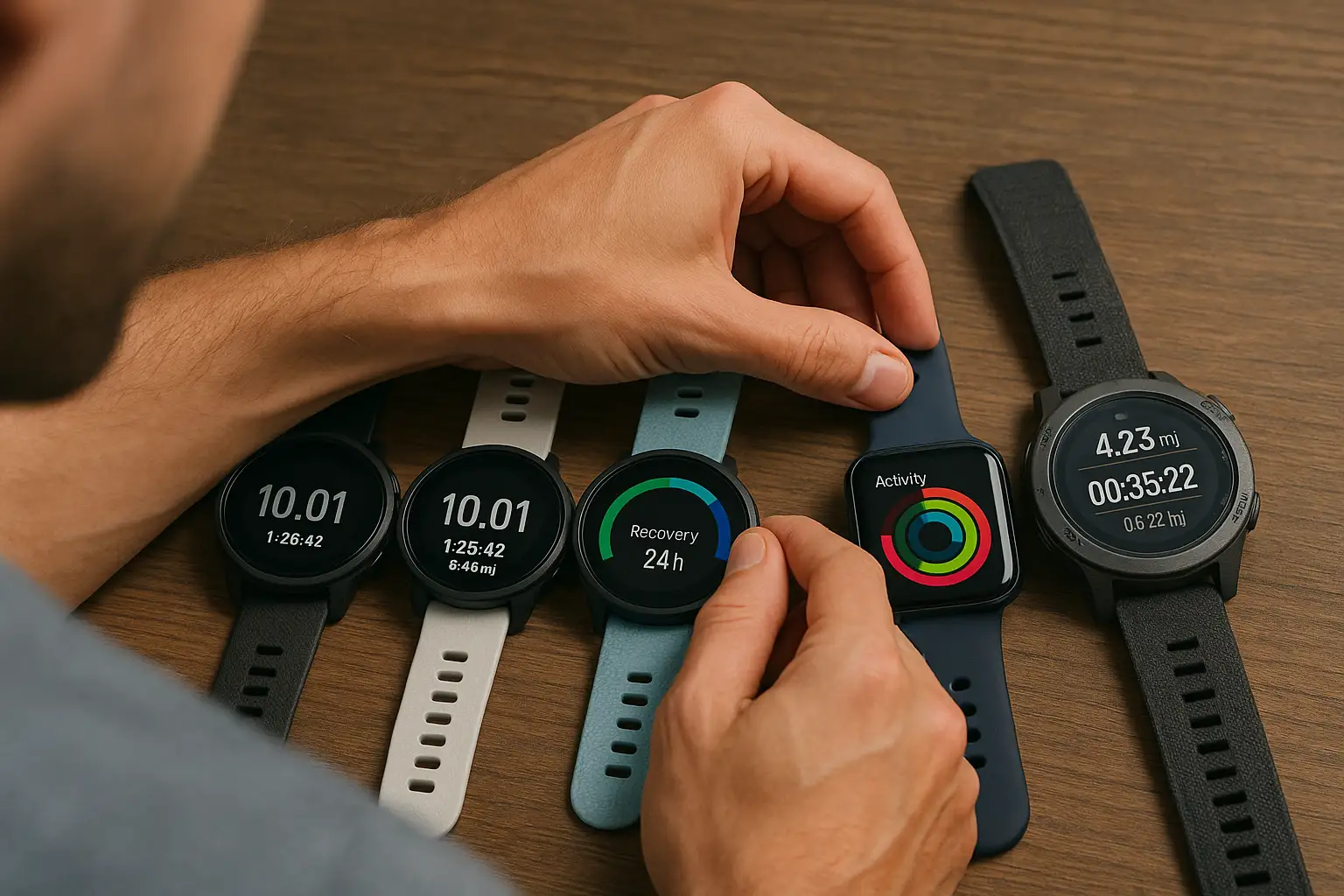

We have collected the best affordable GPS watches for first-time marathoners and runners overall. Today, even budget watches have pro features like dual-band GPS for accuracy in big cities and heart rate recovery.
What to Look For In a Running Watch
When picking your watch, don’t worry about “advanced” maps or music storage if you always run with your phone. Focus on battery life and GPS accuracy. You need a watch that stays powered for at least 4 to 6 hours on race day while accurately tracking exactly how far you’ve gone.
Additionally, touchscreens are beautiful but fail when your fingers are sweaty, when you’re wearing gloves, or when it’s raining. The watch should have physical buttons to start, stop, and mark “laps.” It’s much more reliable when you’re pushing hard.
Related: Best Brooks Running Shoes , Best Nike Running Shoes
Affordable GPS Watches For First-time Marathoners
1
Best Overall – Coros Pace 3
Pros
Cons
Overview
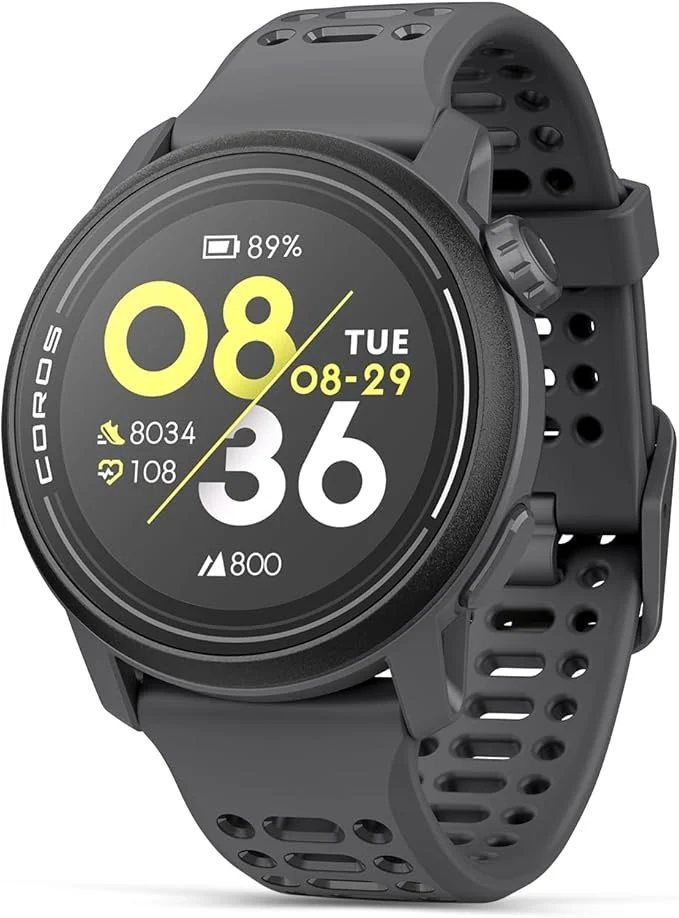
The COROS Pace 3 is widely celebrated as the ultimate “value” champion for serious road runners. The Pace 3 remains a top choice for those who prefer an always-on, sunlight-readable Memory-in-Pixel (MIP) display. At just 32g with a nylon band, it is remarkably lightweight, yet it manages to pack in professional-level training metrics that typically cost twice as much.
The technical core of the Pace 3 is its dual-frequency GPS, which significantly improves tracking accuracy in areas with tall buildings or heavy tree cover. It also introduced a redesigned heart rate sensor array that provides 24/7 monitoring, including Heart Rate Variability (HRV), to help you gauge your daily recovery. For those who like to run without a phone, it features 4GB of music storage, though it cannot notably control music playing on your smartphone or support streaming services like Spotify.
Battery life is a standout “pro” feature of this device, offering an impressive 24 days of daily use or 38 hours of continuous GPS tracking, outlasting even many of Garmin’s mid-range watches. While its plastic, “fiber-reinforced polymer” build and simplified notification system make it feel less like a luxury “lifestyle” smartwatch and more like a dedicated training tool, its “Bang for your Buck” ratio is nearly unbeatable. It is the perfect choice for the pragmatic runner who wants elite data, a “set-it-and-forget-it” battery, and a watch that won’t weigh them down on race day.
2
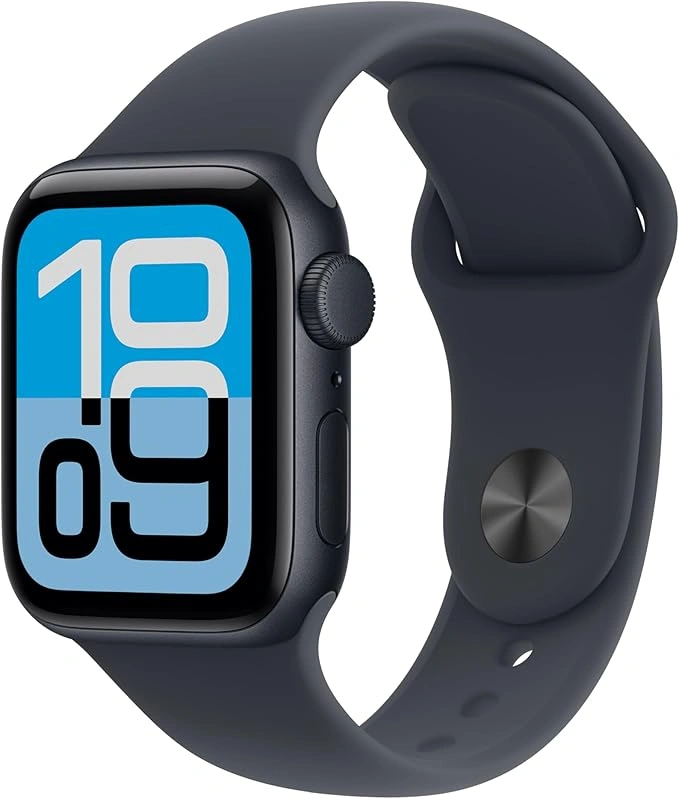
Best Apple Running Watch – AppleWatch SE 3
Pros
Cons
Overview
The Apple Watch SE 3 is widely considered the “best value” choice for most people, successfully trickling down premium hardware and software into a more affordable, entry-level package. While it maintains a familiar, older aesthetic with thicker bezels, it closes the gap with flagship models by finally introducing an Always-On Retina display and utilizing the same powerful S10 chip found in the more expensive Series 11 and Ultra 3.
Technically, the SE 3 is a powerhouse for its price. The inclusion of the S10 chip ensures that navigation, app loading, and system responses are indistinguishable from the top-tier models. It fully supports watchOS 26, including modern gesture controls like Double Tap (pinching fingers to answer calls or stop timers) and the new Wrist Flick to return to previous screens. It also receives a major durability boost with Ion-X glass that is reportedly 4x more crack-resistant than the SE 2, making it a rugged choice for children or active users who don’t want to worry about every bump.
The main trade-offs remain in the health and display categories. To keep the cost at $249, Apple has omitted the ECG, Blood Oxygen sensor, and the new Hypertension notifications found on the Series 11. The screen, while now “always on,” is not as bright (1,000 nits vs. 2,000 nits) and lacks the wide-angle visibility of its pricier siblings. Battery life is rated for a standard 18 hours, though fast charging can get you to 80% in about 45 minutes. Ultimately, the SE 3 is the perfect “no-compromise” entry point for first-time buyers or those upgrading from much older models like the Series 4 or 5.
3
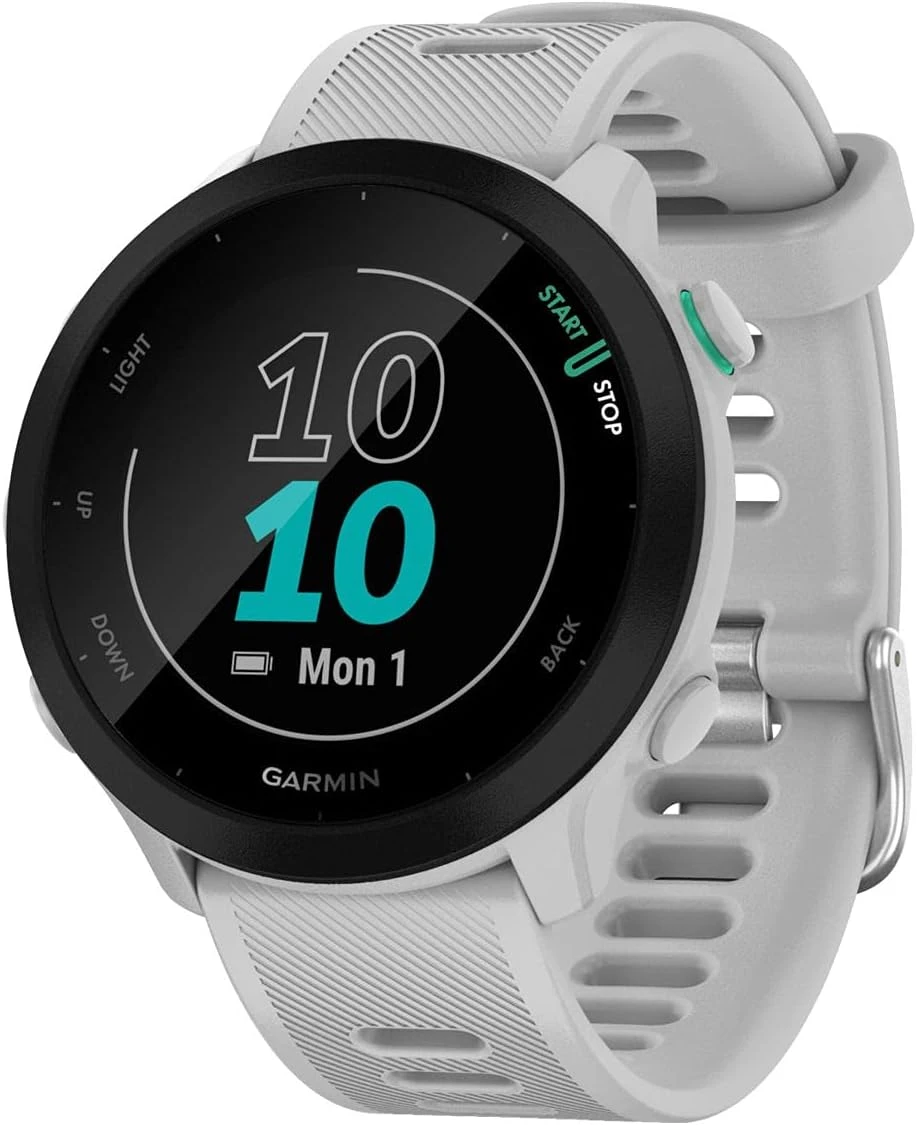
Best Garmin Running Watch – Garmin Forerunner 55
Pros
Cons
Overview
The Garmin Forerunner 55 is the quintessential entry-level running watch, designed for those transitioning from basic fitness trackers to serious, data-driven training. While it retains the classic, rugged aesthetic and non-touch Memory-in-Pixel (MIP) display of its predecessor, it introduces a suite of high-end software features—like Daily Suggested Workouts and PacePro Lite—that were previously reserved for Garmin’s much more expensive models. This makes it a powerful, “coaching-first” wearable that helps beginners structure their runs and manage their recovery effectively.
Technical performance is centered on reliability rather than flash. It features a highly accurate GPS with a specialized Track Run mode that snaps your data to a standard 400m oval for pinpoint interval tracking. The watch also prioritizes long-term utility, boasting a battery that lasts up to 2 weeks in smartwatch mode or 20 hours of continuous GPS tracking, ensuring it can handle marathon-length efforts with ease. For safety, it includes Garmin’s incident detection and “LiveTrack,” allowing friends or family to monitor your location in real-time during solo sessions.
The primary trade-off for its $199 price point is the display technology; the screen is functional and perfectly legible in direct sunlight, but it lacks the vibrant colors and high resolution of modern AMOLED smartwatches. It also lacks a barometric altimeter, meaning elevation data is calculated via GPS rather than air pressure. Ultimately, the Forerunner 55 is a “no-nonsense” performance tool for the runner who values accurate metrics and specialized training guidance over lifestyle features like music storage or mobile payments.
4
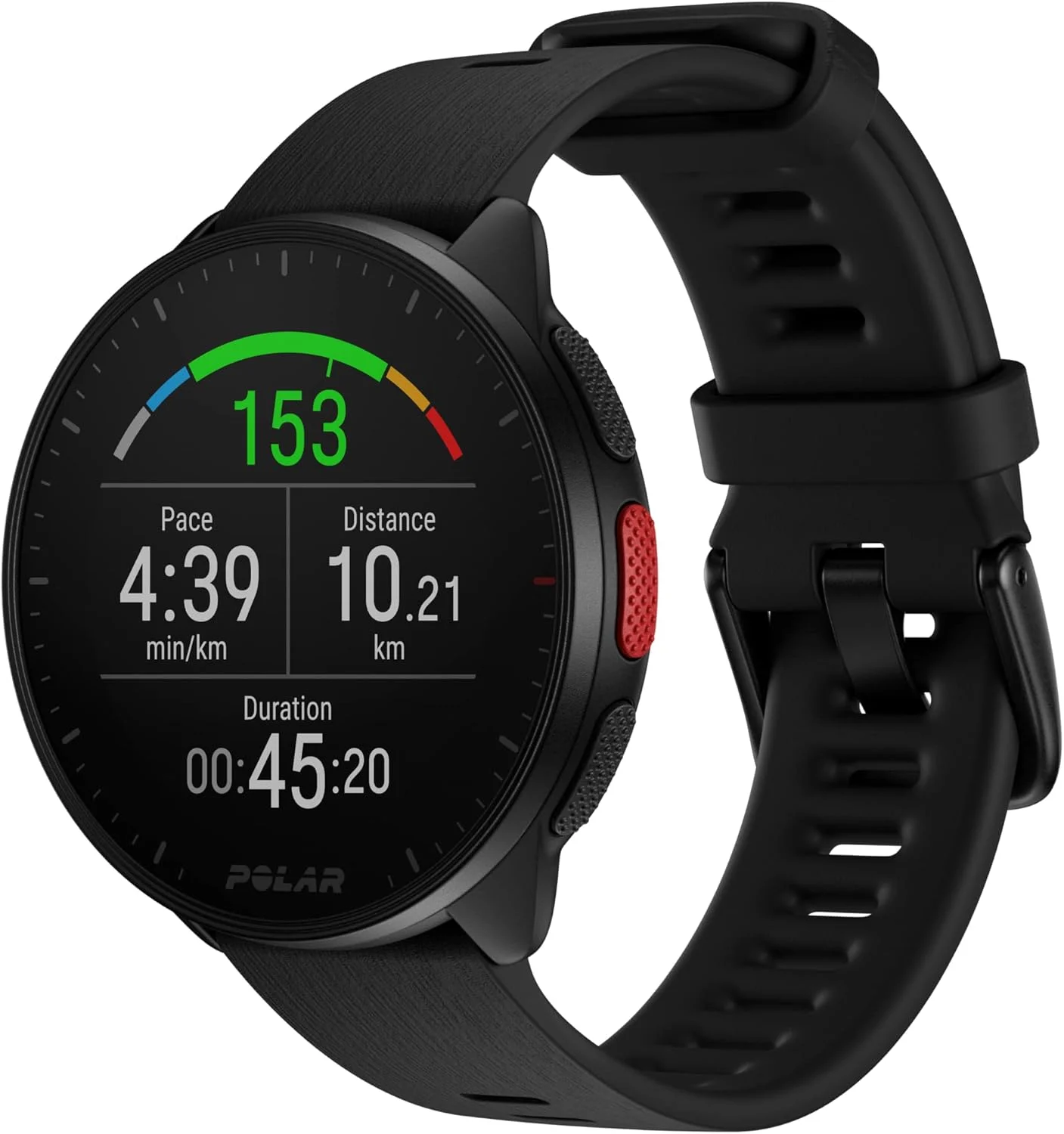
Best Polar Running Watch – Polar Pacer
Pros
Cons
Overview
The Polar Pacer is a “no-nonsense” training tool designed specifically for runners who want a focused, stripped-back experience without the clutter of unnecessary lifestyle features. Positioned as an entry-level watch, it prioritizes essential data and ease of use, making it an ideal first investment for those new to the sport or for veterans who prefer a minimalist interface. At just 40g, it is exceptionally lightweight and features a slim profile that fits comfortably on any wrist, ensuring it never feels cumbersome during high-cadence strides or long efforts.
Technically, the Pacer excels at the fundamentals of heart rate and effort management. It utilizes Polar’s Precision Prime™ sensor technology for highly reliable heart rate tracking, with a color-coded display that changes based on your current HR zone—allowing you to gauge your intensity with a glance. A standout feature is the FuelWise™ nutrition assistant, which provides smart “fuel alarms” to remind you to consume carbs and liquids during long runs, helping you avoid hitting the wall. The watch also includes specialized fitness tests for walking and running to help you baseline your fitness and track improvements over time.
While the design is intentionally basic with its plastic case and five physical buttons, the internal processing power is snappy, ensuring smooth navigation through menus even with sweaty hands. Battery life is solid, offering up to 35 hours of full GPS and heart rate tracking, which is more than enough for a week of training. While it lacks the advanced navigation maps or premium materials found in the “Pro” version, the Polar Pacer’s value lies in its commitment to the “basics done well,” providing a reliable, distraction-free companion for every mile.
5
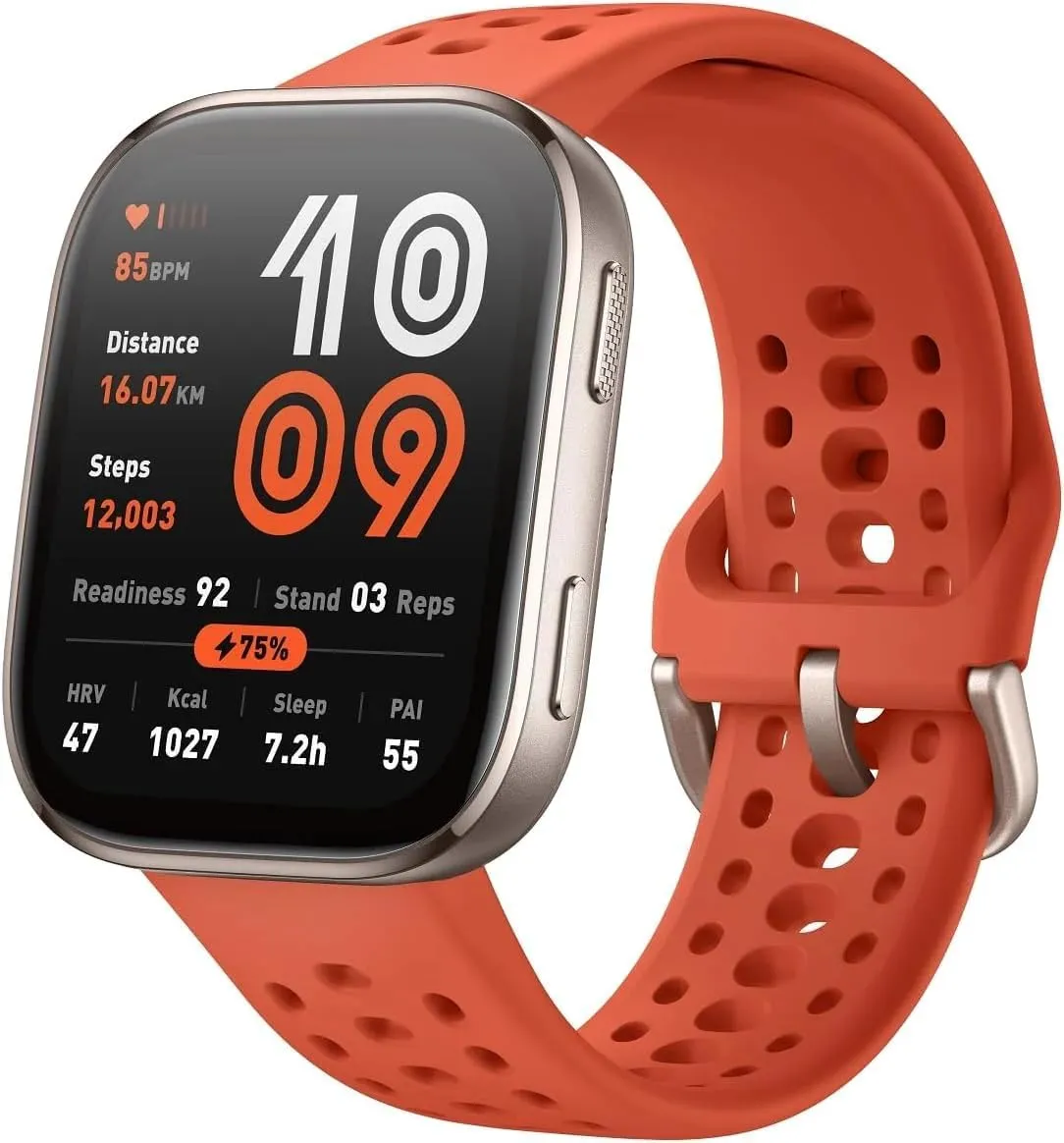
Best Watch Under 100$ – Amazfit Bip 6
Pros
Cons
Overview
The Amazfit Bip 6 is the definitive “budget king” of 2025, offering a premium experience that punches well above its $79.99 price tag. While the Bip series was historically known for basic plastic builds and dull screens, the Bip 6 shifts the narrative with a stunning 1.97-inch AMOLED display that hits a peak brightness of 2,000 nits. This makes it one of the few entry-level watches that remains perfectly legible in direct sunlight, rivaling the display quality of watches costing three to four times as much.
The most impressive technical addition is Zepp Flow, an AI-powered voice assistant that allows for remarkably fluid, natural-language control. Unlike the clunky voice commands of previous budget wearables, Zepp Flow enables you to reply to texts, set alarms, or start workouts using intuitive speech. For outdoor enthusiasts, the watch surprisingly includes offline map support, allowing you to download map data directly to the device for navigation in areas without cellular reception—a feature usually reserved for “Pro” or “Ultra” sport watches.
Despite these high-end features, it retains the legendary battery life of the Bip line, offering up to 14 days of typical use (or about a week with the Always-On Display enabled). It tracks over 140 sports modes and includes advanced health metrics like a “Readiness Score” and sleep apnea risk detection. While the GPS and heart rate sensors are “single-frequency” and may lack the surgical precision of a Garmin for elite athletes, they are more than adequate for casual fitness tracking. The Bip 6 is the ideal choice for anyone who wants the “Apple Watch look” and essential smart features without the high cost or the burden of nightly charging.
6
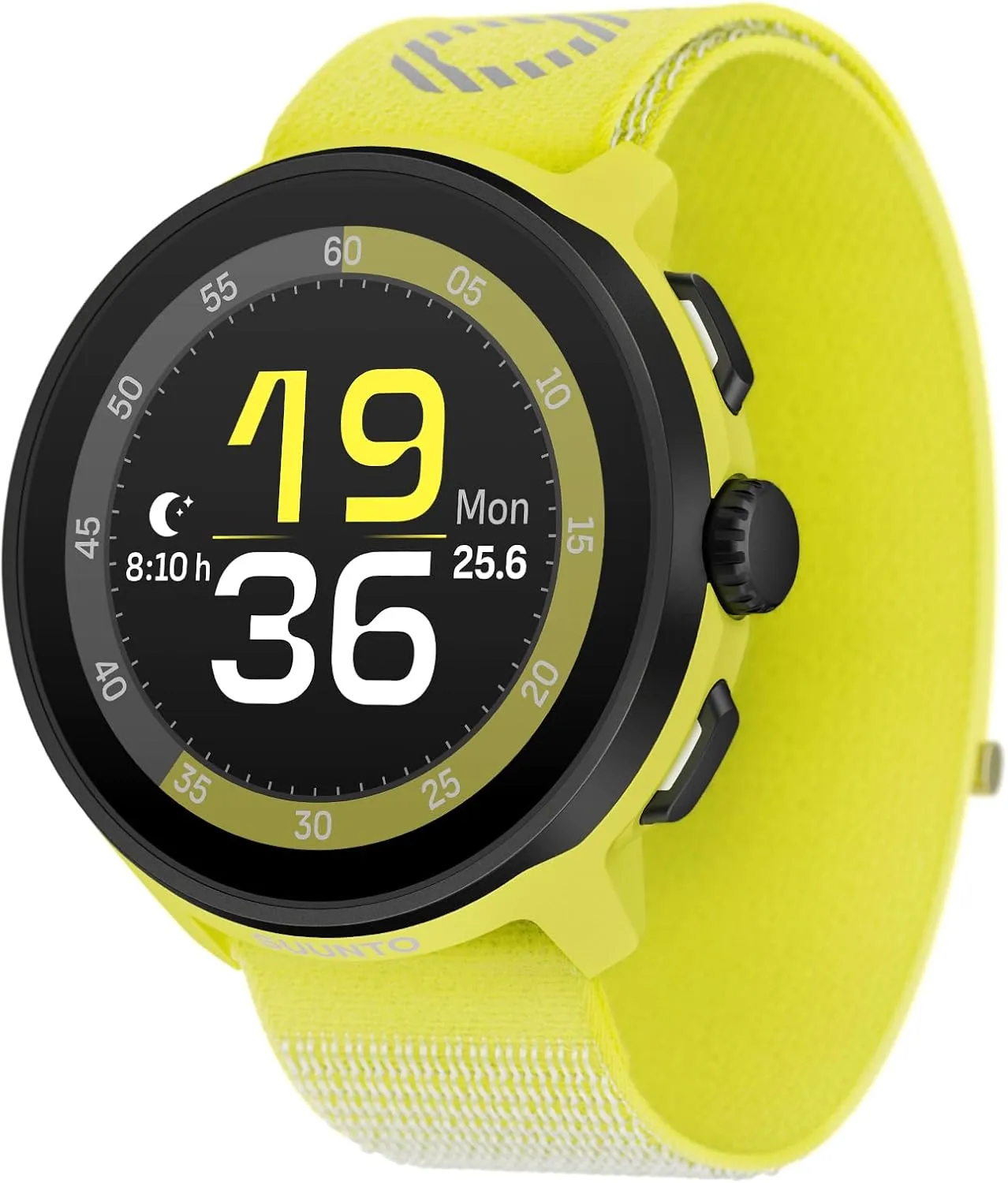
Best Suunto Watch – Suunto Run
Pros
Cons