
So Coros did something a little unusual. They launched the Pace 4, made it clearly better than the Pace 3 in almost every way, and then kept the Pace 3 around at a lower price instead of quietly discontinuing it.
We’ve reviewed both watches extensively, and the honest answer isn’t as obvious as you might think. The Pace 4 wins on hardware. But the Pace 3 at $199 is still a remarkable watch, and for some runners, the $50 saving is the right call.
Here’s everything you need to know to choose.
Quick Comparison Table
| Feature | Coros Pace 3 | Coros Pace 4 |
|---|---|---|
| Price | $199 | $249 |
| Display | 1.2″ MIP (color) | 1.2″ AMOLED |
| Resolution | 240×240 | 390×390 |
| Weight | 30g (nylon) | 32g (nylon) |
| Battery (Smartwatch) | 17 days | 19 days (raise-to-wake) |
| Battery (GPS Standard) | 38 hours | 41 hours |
| Battery (All Systems GPS) | 25 hours | 31 hours |
| Battery (UltraMax) | 60 hours | Not specified |
| GPS | Dual-frequency | Dual-frequency |
| HR Sensor | 5-LED optical | Redesigned, larger LEDs |
| Action Button | ❌ | ✅ |
| Microphone | ❌ | ✅ (Voice Pins) |
| Speaker | ❌ | ❌ |
| Music | MP3 storage | MP3 storage |
| Charging | Proprietary magnetic | USB-C |
| Maps | Breadcrumb only | Breadcrumb only |
| Water Rating | 5 ATM | 5 ATM |
| Display flashlight | ❌ | ✅ |
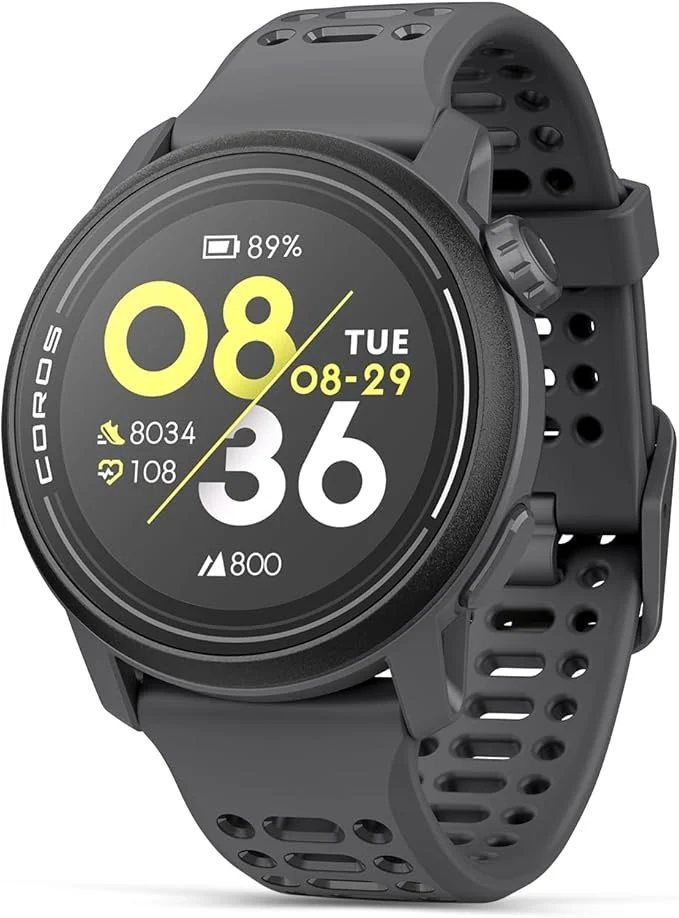
Coros Pace 4
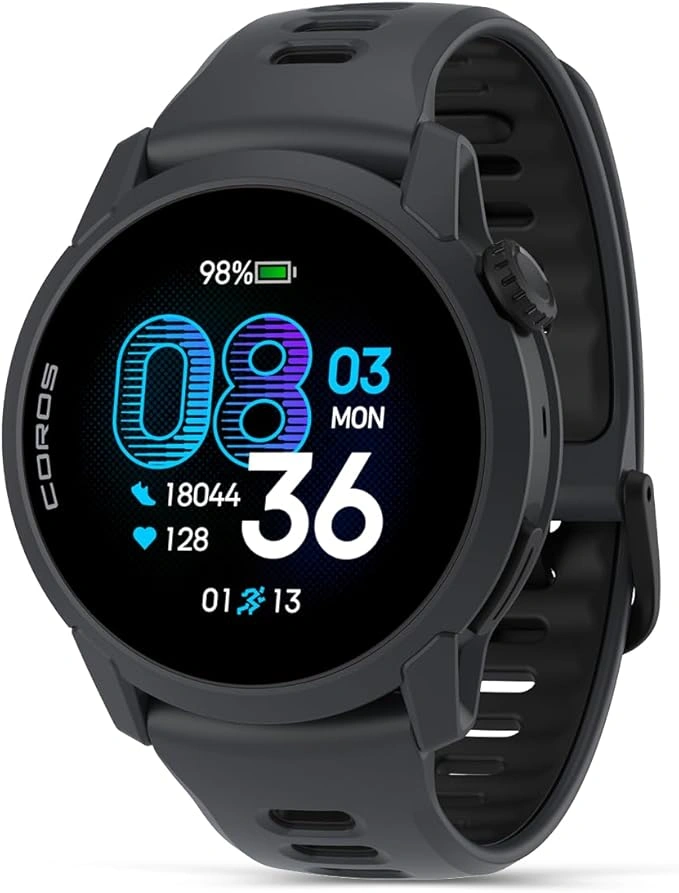
Coros Pace 3
Price – Is $50 Worth It?
Let’s get the most practical question out of the way first: Is the $50 difference meaningful?
At $199, the Coros Pace 3 is already an exceptional value. At $249, the Coros Pace 4 adds real upgrades, not just a spec bump on paper. But $50 is still $50, and for some runners, that buys two race entry fees, a new pair of running socks, or a month of a training plan subscription.
The honest framework: if you’re going to be wearing this watch for two to three years, $50 breaks down to roughly $1.50–$2 per month. Over that horizon, the AMOLED display and USB-C charging probably justify themselves. If budget is tight right now or you’re not sure running watches will become a long-term habit, the Pace 3 at $199 is a safe and smart buy.
Related: Best GPS Running Watches / Best Affordable watches
Display — The Biggest Difference Between These Two Watches
The Coros Pace 3 uses a 1.2-inch color MIP display at 240×240 resolution. It’s always-on, sunlight-readable, and functional. It looks exactly like a $199 GPS running watch should look. Not exciting, but never a problem.
The Coros Pace 4 uses a 1.2-inch AMOLED touchscreen at 390×390 resolution a 164% jump in pixel density over the Pace 3. Colors pop. Blacks are deep. The interface feels modern. At the same screen size, the Pace 4 looks like a different generation of device compared to its sibling.
Does display quality affect your running? Not directly. But you look at this watch 50+ times a day during training, sleep tracking, notifications, and general life. The AMOLED makes all of those moments noticeably better.
The Pace 4 also adds a display-based flashlight maximum brightness mode acts as a usable flashlight for pre-dawn or post-sunset runs. Small addition, but genuinely useful.
Winner: Coros Pace 4, not even close on display.
Weight & Design
Both watches are built around the same philosophy: stay out of your way.
The Pace 3 weighs 30g with the nylon band. The Pace 4 weighs 32g with the nylon band. That’s a 2g difference, roughly the weight of a paperclip. You will not notice this on your wrist.
Both use plastic cases without metal bezels or sapphire glass. Both ship with nylon and silicone band options. Both are 5 ATM water-resistant.
The most meaningful design difference is the Action button on the Pace 4, a third physical control that gives instant access to breadcrumb navigation, media controls, or Voice Pins without navigating menus mid-run. Once you’ve used it during a race or interval session, going back to the two-button layout of the Pace 3 feels like a step back.
The Pace 4 also swaps to USB-C charging, meaning you can grab any cable from your desk, phone charger, or laptop bag. The Pace 3’s proprietary magnetic cable requires carrying a specific cable on trips, which is a minor but recurring inconvenience.
Winner: Coros Pace 4, Action button, and USB-C are quality-of-life improvements that add up.
GPS Accuracy
Both the Pace 3 and Pace 4 support dual-frequency GPS with five satellite systems: GPS, GLONASS, Galileo, BeiDou, and QZSS. This is genuinely unusual at these prices and is one of the strongest arguments for both watches over competitors like the Garmin Forerunner 165 (single-band only at $249).
In real-world use across road runs, open trail sessions, and urban environments, both watches deliver strong, consistent GPS accuracy. The dual-frequency mode improves performance in challenging conditions, dense forests, urban canyons, and narrow valleys compared to single-band alternatives.
The Pace 4 has a slightly improved GPS battery in dual-frequency mode (31 vs 25 hours), a meaningful difference for athletes who train in technical terrain regularly and want multi-band accuracy without cutting GPS life short.
Winner: Draw same chipset technology, both excellent. Pace 4 wins on dual-frequency battery endurance.
Heart Rate Accuracy
The Pace 4 features a redesigned optical HR sensor with larger LEDs, specifically aimed at addressing the occasional spikes and inconsistencies that frustrated some Pace 3 users during high-intensity efforts.
In real-world testing, the Pace 4’s sensor shows improvement during interval sessions and intense efforts. The Pace 3’s sensor is solid for steady-state running and general training, but can occasionally drift during rapid intensity changes.
For most runners doing easy and moderate training, both sensors perform comparably. For athletes doing structured heart rate zone training with hard intervals, the Pace 4’s improved sensor is a real-world upgrade worth considering.
Both watches support external sensor pairing via Bluetooth and ANT+ chest straps, arm-based monitors, and power meters are all compatible for athletes who want maximum accuracy.
Winner: Coros Pace 4, meaningfully improved sensor for intensity work.
Battery Life
Battery life is where the Pace 3 punches back hard.
| Mode | Coros Pace 3 | Coros Pace 4 |
|---|---|---|
| Smartwatch | 17 days | 19 days |
| GPS Standard | 38 hours | 41 hours |
| All Systems GPS | 25 hours | 31 hours |
| UltraMax GPS | 60 hours | Not specified |
The Pace 4 is marginally better across all modes 3 more hours in standard GPS, 6 more hours in All Systems mode, and 2 more days in smartwatch mode. These are real improvements, even if not dramatic ones.
The bigger picture: both watches have exceptional battery life for their display tier. The Pace 4’s AMOLED display consumes more power than the Pace 3’s MIP and Coros has still managed to deliver longer battery life. That’s impressive engineering.
For ultramarathon athletes, the Pace 3’s UltraMax GPS mode at 60 hours is a key consideration; it’s not yet specified whether Pace 4 matches this. If 60+ hour GPS endurance is critical, the Pace 3 remains the clearer option.
Winner: Coros Pace 4 for most runners. Coros Pace 3 for ultramarathon-specific UltraMax battery needs.
Training Features
Good news: both watches run the same Coros software and training ecosystem. Everything in the Coros platform, Training Load, Recovery Timer, Race Predictor, Virtual Pacer, Strava Live Segments, PacePro-style pacing tools, Strava, TrainingPeaks, and Stryd integrations is available on both.
The Pace 4 adds two features that the Pace 3 doesn’t have:
Voice Pins: Record a voice note mid-run, pinned to your GPS location. Review and transcribe in the Coros app after your run. Useful for course notes, coaching observations, or marking points of interest on unfamiliar routes. Requires the built-in microphone, which the Pace 3 doesn’t have.
Post-activity voice log: Record a verbal debrief immediately after finishing a workout. Automatically saved and transcribed in your activity summary. A small but genuinely thoughtful feature for athletes who want to capture how a session felt while the memory is fresh.
Both watches receive the same Coros firmware updates meaning new features added to the platform (PacePro pacing, ClimbPro-style tracking, HYROX support) arrive on both watches equally.
Winner: Draw on core training Pace 4 adds Voice Pins and a voice log for athletes who’ll use them.
Who Should Buy the Coros Pace 3?
The Pace 3 at $199 is the right choice if:
- Budget is the priority. $50 genuinely matters right now, and you want to maximize value
- You’re comfortable with an MIP display and don’t care about AMOLED vibrancy
- You’re training for ultramarathons and rely on UltraMax 60-hour GPS mode
- You’re a first-time GPS watch buyer who isn’t sure how central running analytics will become to your training try the ecosystem first before spending more
- You already have USB adapters everywhere, and the proprietary cable isn’t a frustration
- You want a proven, well-updated watch. Two years of firmware additions have made the Pace 3 significantly better than it launched
Who Should Buy the Coros Pace 4?
The Pace 4 at $249 is the right choice if:
- You’ll be wearing this watch every day for 2–3 years — the AMOLED and USB-C make daily life noticeably better
- The AMOLED display matters to you — you want your watch to look modern and feel premium on the wrist
- You do structured interval training and want the most accurate wrist HR possible without a chest strap
- The Action button appeals — quick access to navigation or voice notes mid-run without fumbling through menus
- USB-C charging is important for travel simplicity
- You want a watch that feels future-proofed — the Pace 4 is the current generation
Ready to Start Training?
Training plans are designed and reviewed by Ilya Tyapkin, Rio 2016 Olympian. Find the plan that matches your goal:
Final Verdict — Which Should You Buy?
Here’s the honest answer: for most runners, buy the Coros Pace 4.
The AMOLED display, improved HR sensor, Action button, USB-C charging, and better GPS battery in dual-frequency mode together represent a meaningful generational upgrade. Spread across 2–3 years of ownership, $50 is a small price for a noticeably better daily experience.
But the Coros Pace 3 at $199 is not a compromise or a runner-up. It’s one of the best GPS running watches available at its price, and if budget is tight, if MIP displays don’t bother you, or if ultra-distance racing with UltraMax GPS is your world, it’s still a completely justified choice.
You genuinely can’t make a wrong decision here. Coros has built two excellent running watches. Pick the one that fits your budget and priorities, and go run.
Both watches were researched using aggregated expert testing data, long-term user reports, and technical specifications. We compile the most accurate information so you can make a confident buying decision without reading 10 different sources.
FAQ
Is the Coros Pace 4 worth the upgrade from the Pace 3?
Yes, for most runners, the AMOLED display, improved HR sensor, Action button, and USB-C charging are meaningful upgrades for $50 more. If you already own a Pace 3, the upgrade is less compelling unless display quality or HR accuracy are frustrating you.
Does the Coros Pace 4 have better GPS than the Pace 3?
Both use dual-frequency GPS with five satellite systems. The chipset is essentially the same generation. The Pace 4 delivers 31 hours of dual-frequency GPS vs 25 hours on the Pace 3 a meaningful improvement for athletes who run in challenging terrain.
Which is lighter — Coros Pace 3 or Pace 4?
The Pace 3 is 30g with a nylon band. The Pace 4 is 32g. A 2g difference you will not notice during running or daily wear.
Does Coros Pace 3 still get software updates?
Yes, Coros continues to update both watches with the same firmware. New features added to the Coros platform arrive on the Pace 3 and Pace 4 equally.
Can both watches stream Spotify?
Neither watch supports Spotify or streaming music services. Both support MP3 file storage, transfer music files to the watch via computer and play through Bluetooth headphones. If Spotify streaming is important, consider the Garmin Forerunner 265 instead.
Which is better for ultramarathons — Pace 3 or Pace 4?
The Pace 3’s UltraMax GPS mode offers 60 hours of continuous GPS — more than enough for most ultramarathon events. If multi-day GPS endurance is your primary concern, the Pace 3 is still the clearer choice.