

Running burns more calories than walking in the same amount of time — roughly twice as many at comparable speeds. For a 70kg person, 30 minutes of running at 8 km/h burns approximately 288 kcal; 30 minutes of brisk walking at 6.4 km/h burns approximately 150 kcal. Running also produces a meaningful afterburn effect (EPOC) that continues elevating metabolism for hours post-run. On paper, running wins for weight loss. In practice, the best exercise for weight loss is the one you’ll do consistently over months — and for many people, particularly beginners, walking or a walk-run combination is the more sustainable starting point.
Use our Calories Burned calculator to estimate your personal calorie expenditure by pace, distance, and body weight.
Note: For significant dietary changes as part of a weight loss plan, speak with a GP or registered dietitian. Exercise is one component of weight management, not a substitute for clinical guidance where needed.
- The Science of Calorie Burn: Running vs Walking
- Fat Burning: Does Intensity Matter?
- EPOC: The Running Afterburn Advantage
- The Appetite Compensation Problem
- Running and Muscle Preservation
- Who Should Walk, Who Should Run, and Who Should Do Both
- Tips to Maximise Weight Loss Through Running or Walking
- Final Comparison Table
The Science of Calorie Burn: Running vs Walking

Weight loss occurs when you expend more calories than you consume — the energy balance principle. Both running and walking contribute to the “calories out” side, but at significantly different rates.
Data from Harvard Medical School comparing calorie expenditure by activity and body weight:
| Activity | Speed | 57 kg | 70 kg | 84 kg |
|---|---|---|---|---|
| Walking | 4.8 km/h (3 mph) | 198 kcal/hr | 232 kcal/hr | 266 kcal/hr |
| Walking | 6.4 km/h (4 mph) | 255 kcal/hr | 300 kcal/hr | 345 kcal/hr |
| Running | 8 km/h (5 mph) | 480 kcal/hr | 576 kcal/hr | 672 kcal/hr |
| Running | 9.7 km/h (6 mph) | 600 kcal/hr | 720 kcal/hr | 840 kcal/hr |
Running at 8 km/h burns approximately 2.5× the calories of walking at 4.8 km/h per hour. For the same 30-minute time investment, running produces a substantially larger calorie deficit.
For a personalised, pace-based calorie estimate, our how many calories does running burn guide breaks it down by body weight and running speed.
Fat Burning: Does Intensity Matter?
Walking and running engage fat metabolism differently, and this distinction matters for understanding which is actually better for fat loss.
At low intensity (walking): The body draws a higher proportion of energy from fat — typically 60–70% of fuel comes from fat oxidation at easy walking pace. Research published in the American Journal of Clinical Nutrition confirms that fat oxidation rates peak at lower exercise intensities.
At higher intensity (running): The proportion of fuel from fat decreases (more comes from carbohydrate), but the total calories burned — and therefore total fat calories burned in absolute terms — is higher. Running burns more fat per session despite using a lower fat percentage, because the total energy expenditure is so much greater.
The “fat burning zone” myth: Many fitness trackers promote a “fat burning zone” at low intensity. While the proportion of fat burned is higher at low intensity, this doesn’t mean it’s the superior fat loss strategy. Total caloric expenditure is the more reliable predictor of fat loss over time. A 60-minute walk burns fewer total fat calories than a 30-minute run, even though the walk’s percentage of fat utilisation is higher.
Bottom line: Focus on total calories burned across the week, not the percentage of those calories from fat.
EPOC: The Running Afterburn Advantage
Running produces a meaningful afterburn effect that walking largely does not.
EPOC (Excess Post-Exercise Oxygen Consumption) refers to the elevated metabolic rate that continues after a hard run as the body restores oxygen stores, clears metabolic byproducts, and repairs muscle tissue. Research published in the Journal of Sports Science & Medicine found that high-intensity aerobic exercise like running can elevate metabolism for up to 24 hours post-workout.
The practical consequence: a 30-minute run at moderate-to-hard effort doesn’t just burn calories during the run — it produces additional expenditure in the hours that follow. Walking at low intensity produces a much smaller EPOC effect.
This advantage compounds across a weekly training schedule. Runners who complete three 30-minute runs per week burn meaningfully more total calories than the run sessions alone account for, through the cumulative EPOC across each week.
The Appetite Compensation Problem
Here’s what most running-for-weight-loss articles don’t tell you: both running and walking reliably increase appetite — and this partially compensates for the calorie deficit exercise creates.
Research published in the British Journal of Sports Medicine (2023) and multiple preceding meta-analyses consistently show that exercise alone — without dietary changes — produces more modest weight loss than simple calorie arithmetic predicts. The typical response to increased aerobic training is increased hunger, which drives increased calorie intake. For some individuals, the compensation is near-complete — they eat almost exactly as many additional calories as they burned.
Practical implications:
- Exercise for weight loss works best when combined with dietary attention — not necessarily restriction, but awareness of what and how much you’re eating
- Running’s calorie advantage over walking is real, but appetite may partially offset it
- The non-scale benefits of running and walking — cardiovascular health, mood, energy, sleep quality — are meaningful regardless of weight outcomes
Weight loss through running or walking is achievable — but it requires the dietary side to be addressed alongside the exercise side. Our best carbohydrates for runners guide covers the nutritional fundamentals that support both training and body composition goals simultaneously.
Running and Muscle Preservation
One advantage of running over walking that’s often overlooked in weight loss discussions: running preserves muscle mass better during a calorie deficit.
When the body is in an energy deficit, it can draw on both fat stores and muscle protein for fuel. Resistance training is the most effective intervention for preserving muscle during weight loss — but aerobic exercise like running, which engages more muscle mass than walking and places greater mechanical demand on the body, also contributes to muscle preservation relative to lower-intensity activity.
Walking, while genuinely beneficial for health, engages the lower leg muscles at lower mechanical loading. Running’s engagement of the glutes, core, hip flexors, and leg musculature at higher loads produces more of a muscle-preservation stimulus.
Why muscle preservation matters for weight loss: Muscle tissue is metabolically active — it burns calories at rest. Losing muscle during a calorie deficit lowers resting metabolic rate, making sustained weight loss progressively harder. Preserving muscle while losing fat maintains metabolic rate and produces better body composition outcomes.
Who Should Walk, Who Should Run, and Who Should Do Both
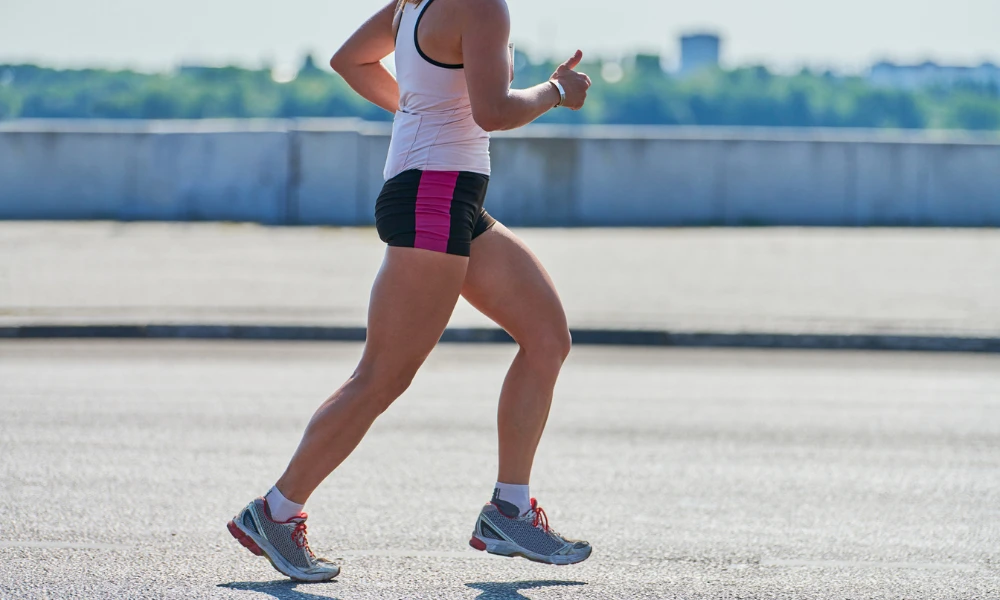
Start with Walking If:
- You’re new to exercise and haven’t been active for 6+ months
- You have significant joint pain, osteoarthritis, or a recent lower limb injury
- You are significantly overweight (BMI over 35) — running’s impact forces are 2–3× body weight per stride, which substantially elevates joint loading
- You have a cardiovascular condition and are working with medical guidance on exercise intensity
Start Running When:
- You can walk briskly for 45–60 minutes without significant discomfort
- Your joints tolerate the increased impact of running
- You want faster calorie burn and cardiovascular adaptation
- You have a specific fitness or performance goal a structured plan addresses it
The Walk-to-Run Approach (Best Starting Point for Most People)
The most effective weight loss strategy for many beginners is neither pure walking nor pure running — it’s a structured walk-to-run programme that builds running capacity over 6–8 weeks while maintaining consistent activity throughout.
A beginner 5K plan using walk-run intervals — alternating walking and running segments that progressively shift toward continuous running — allows the body to adapt to running’s impact forces gradually, reduces injury risk, and produces consistent calorie burn from day one. Our 5K training plans use exactly this structure.
Head coach Ilya Tyapkin, who represented Kyrgyzstan at the Rio 2016 Olympics, coaches runners at every starting level: “When someone comes to me wanting to lose weight through running, the first thing I tell them is: don’t run yet. Walk first. Build the habit, build the joints, build the aerobic base. When you can walk briskly for 45 minutes three times a week without pain, that’s when we start adding running. The runners who skip this step get injured and stop. The ones who do it don’t.”
Tips to Maximise Weight Loss Through Running or Walking
For walkers:
- Aim for brisk walking (6+ km/h) — the calorie gap between a stroll and a brisk walk is significant
- Add incline: walking uphill increases calorie burn by 30–50% compared to flat-ground walking at the same speed
- Increase duration before increasing speed — volume drives weight loss more than intensity at walking pace
- Consider interval walking: alternating 1 minute brisk and 1 minute moderate pace elevates heart rate and calorie burn
For runners:
- Combine easy runs (3–4 sessions per week) with occasional harder efforts or interval sessions
- Strength training twice per week preserves muscle during a calorie deficit and improves running efficiency
- Prioritise sleep — sleep deprivation increases ghrelin (hunger hormone) and undermines both training quality and dietary control; see our sleep and running guide
- Consistency over intensity: running three times per week every week produces better weight loss outcomes than running daily for two weeks and stopping
For everyone:
- Track food intake for at least 2–4 weeks — most people underestimate calorie intake and overestimate exercise expenditure
- Hydration affects both performance and appetite regulation — see our hydration guide
- The mental health benefits of both running and walking — stress reduction, mood improvement, better sleep — are independent of weight and meaningful on their own terms; see our running and mental health guide
Final Comparison Table
| Factor | Running | Walking |
|---|---|---|
| Calories per hour (70 kg) | 576–720 kcal | 232–300 kcal |
| EPOC afterburn | Significant (up to 24 hrs) | Minimal |
| Injury risk | Moderate (impact activity) | Low |
| Joint impact | 2–3× body weight per stride | 1–1.5× body weight |
| Muscle preservation | Better | Moderate |
| Weight loss speed | Faster | Slower but sustainable |
| Suitable for beginners | With walk-to-run progression | Immediately |
| Suitable for joint pain | Consult GP | Yes |
| Long-term sustainability | High once adapted | Very high |